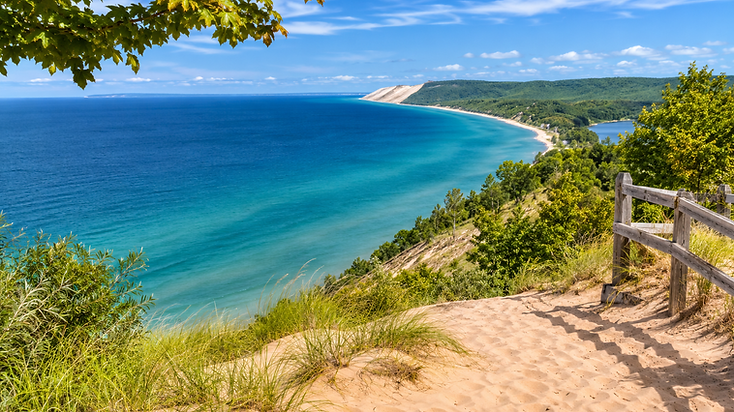
The Leelanau Peninsula extends into Lake Michigan northwest of Traverse City, with Grand Traverse Bay along its eastern shore and the open waters of Lake Michigan to the west.
Its geography gives the region a distinctive character.
One moment you're driving through wooded hills and farmland. A few miles later, you're looking across a broad expanse of blue water. Small villages appear between orchards and vineyards, while the western shoreline reveals beaches, dunes, and forested bluffs.
The region is especially beautiful because it has retained so much of its rural and coastal identity.
But its history extends far beyond the scenic highway and the villages visitors know today.
The Odawa and Ojibwe peoples have longstanding connections to this landscape. Their communities and travel routes existed long before modern highways, resort towns, and commercial orchards. Today, the Grand Traverse Band of Ottawa and Chippewa Indians remains an important part of the region's cultural life.
Understanding that history adds another dimension to a drive that might otherwise be remembered only for its scenery.
M-22 is more than a road connecting tourist destinations. It passes through a landscape shaped by generations of people, by agriculture and fishing, and by the powerful natural forces that created the Great Lakes.
For this itinerary, we'll begin in Suttons Bay, travel toward Leland, continue south to Glen Arbor, and finish at Sleeping Bear Dunes National Lakeshore.
The drive is flexible enough to fit into one full day, but a weekend gives you more time to explore.
| Stop | Destination | Main experience |
|---|
| 1 | Suttons Bay | Grand Traverse Bay waterfront and walkable village |
| 2 | Leland and Fishtown | Historic fishing waterfront, shops, and maritime heritage |
| 3 | Glen Arbor | Small-town exploring, Glen Lake, and outdoor recreation |
| 4 | Sleeping Bear Dunes | Sand dunes, scenic overlooks, and Lake Michigan views |
Recommended time: One full day for the highlights, or two days for a more relaxed adventure.
Best seasons: Late spring through fall, with summer offering the broadest range of visitor services and autumn providing colorful scenery.
Starting point: Suttons Bay, with Traverse City serving as a convenient regional gateway.
Important: The main route uses public roads, but some park attractions, businesses, and scenic drives operate seasonally. Check conditions before traveling.
Suttons Bay is an excellent place to begin.
Located along the eastern side of the Leelanau Peninsula, the village sits beside the protected waters of Grand Traverse Bay.
The atmosphere is relaxed, with a compact downtown, local shops, galleries, restaurants, and waterfront parks.
It's the kind of place where you can park the car, walk around for a while, and enjoy being somewhere different without needing an elaborate itinerary.
Start with a walk through downtown.
Explore the small businesses along the village streets, grab a coffee or breakfast, and make your way toward the waterfront.
Marina Park offers views across the bay and a pleasant place to enjoy the water. In warmer months, the nearby beach and marina bring more activity to the shoreline.
If you enjoy biking, Suttons Bay is also connected to Traverse City by the Leelanau Trail, a paved recreational corridor that passes through farmland and wooded landscapes.
You don't need to ride the entire trail to appreciate the area. Even a short walk or bike ride can provide another perspective on the peninsula.
- Walk through the village downtown.
- Visit Marina Park and enjoy the Grand Traverse Bay shoreline.
- Explore local galleries, stores, and seasonal businesses.
- Take a short walk or bike ride on the Leelanau Trail.
- Stop for breakfast or coffee before continuing.
Suggested visit: 45–90 minutes.
Leaving Suttons Bay, the peninsula's scenery becomes part of the experience.
The broader M-22 corridor includes views of farmland, orchards, vineyards, wooded hills, and small communities.
If you have extra time, you can extend your route north toward Omena and Northport before looping back toward Leland.
For this shorter itinerary, continue toward Leland using the connecting roads across the peninsula.
The goal isn't to cover every mile.
It's to enjoy the changing landscape without rushing through it.
Leland is one of the most distinctive stops on the peninsula.
The village sits where the Leland River meets Lake Michigan, and its best-known landmark is Historic Fishtown.
Unlike a recreated historic attraction, Fishtown preserves a genuine working-waterfront landscape.
Weathered wooden fishing shanties stand along the river. Fishing boats and docks reflect the area's commercial fishing history, while small businesses occupy many of the old waterfront buildings.
Walking through Fishtown feels different from walking through a typical shopping district.
The buildings are closely connected to the water, and their original purpose remains visible.
These were places where people worked, maintained fishing equipment, handled their catch, and built livelihoods around Lake Michigan.
Today, Fishtown Preservation works to protect this historic district and its maritime character.
One of the best ways to experience Fishtown is simply to walk.
Follow the riverfront, look at the fishing shanties, watch the water, and explore the shops that are open.
Stop for a sandwich, something sweet, or a locally prepared fish specialty.
The small scale of the area makes it easy to explore without a rigid schedule.
But the history is worth more than a quick photograph.
Commercial fishing helped shape communities across the Great Lakes, and places like Fishtown preserve an increasingly uncommon connection to that working past.
The waterfront is also a reminder that Michigan's shoreline has always been more than a place for recreation.
For generations, it has been a place of labor, transportation, food, and community.
- Walk through Historic Fishtown.
- Photograph the riverfront and historic fishing shanties.
- Explore the businesses operating in the waterfront buildings.
- Learn about the area's commercial fishing heritage.
- Walk into downtown Leland.
- Visit the Lake Michigan shoreline if time and conditions permit.
Suggested visit: 1–2 hours, longer if you stop for lunch.
Many Fishtown businesses operate seasonally, so verify individual opening dates and hours before visiting.
For a deeper look at the waterfront's history, read our companion article:
Fishtown in Leland: A Historic Michigan Fishing Village Worth Exploring
That guide explores the history, preservation, and character of one of Michigan's most recognizable historic fishing communities.
From Leland, continue south toward Glen Arbor.
The drive passes through another beautiful stretch of the peninsula, with wooded roads, glimpses of Lake Michigan, and landscapes shaped by the region's glacial history.
Glen Arbor is smaller than many first-time visitors expect.
But its location makes it a natural base for exploring the surrounding lakeshore.
The village is close to Glen Lake, the Crystal River, the Sleeping Bear Heritage Trail, and several areas within Sleeping Bear Dunes National Lakeshore.
It's also a good place to stop for food, browse local businesses, or simply walk around before heading into the park.
One of the area's most striking natural features is Glen Lake.
The lake system includes Big Glen Lake and Little Glen Lake, connected at a narrow passage.
The water can appear remarkably clear and blue, especially on bright days.
The surrounding hills, forests, and dunes create a landscape that looks almost unreal from certain viewpoints.
One particularly memorable perspective is available from the Glen Lake Overlook on Pierce Stocking Scenic Drive when that road is open.
From above, you can appreciate how the inland lakes, forested terrain, and surrounding sand formations fit together.
If you're making this a two-day trip, Glen Arbor offers plenty of reasons to stay longer.
The Crystal River provides opportunities for paddling, while nearby trails allow visitors to explore forests, dunes, and the shoreline.
The Sleeping Bear Heritage Trail also connects several areas around the national lakeshore.
You can make this stop as relaxed or adventurous as you want.
Some travelers will enjoy an afternoon of shopping and a meal.
Others will want to rent bicycles, paddle the river, or spend several hours exploring nearby trails.
- Walk through the village and visit local shops.
- Explore views around Glen Lake.
- Bike or walk part of the Sleeping Bear Heritage Trail.
- Consider a Crystal River paddling trip when conditions and services allow.
- Stop for food before entering the national lakeshore.
Suggested visit: 45–90 minutes for a short stop, or half a day if you add outdoor activities.
There are beautiful places all along the Leelanau Peninsula.
But Sleeping Bear Dunes National Lakeshore provides a remarkable ending to this scenic drive.
Here, the landscape changes dramatically.
Enormous sand dunes rise above Lake Michigan. Forests cover rolling hills. Inland lakes sit beside sandy formations created by glaciers, wind, and water.
The scale is difficult to appreciate until you see it for yourself.
Standing at an overlook above Lake Michigan, the horizon can seem almost endless.
On a clear day, the contrast between the pale sand, green forests, and deep blue water is extraordinary.
Sleeping Bear Dunes isn't a single viewpoint or attraction.
It's a large national lakeshore with beaches, hiking trails, historic sites, and several different ways to experience the landscape.
For this road trip, two experiences are especially worth considering.
Pierce Stocking Scenic Drive is one of the most memorable scenic roads in Michigan.
The approximately 7.4-mile one-way loop passes through forested hills and dune landscapes, with a series of interpretive stops and overlooks.
Highlights include views of Glen Lake, the dunes, and Lake Michigan.
The Lake Michigan Overlook is especially dramatic.
The elevated viewpoint reveals the enormous scale of the dunes and the open water beyond them.
It's a place worth visiting slowly.
Rather than rushing through every stop, choose a few viewpoints and spend time appreciating the landscape.
The National Park Service estimates that visiting all twelve stops can take approximately two hours.
Seasonal warning: Pierce Stocking Scenic Drive generally opens to vehicles from late May through late October. It is closed to vehicles during winter and spring, and weather or maintenance can affect access.
Trailers are not permitted on the scenic loop. If you're traveling with a camper or small trailer, use designated parking and confirm current restrictions before entering.
Some overlooks involve steep paths or loose sand. Not every viewpoint is equally accessible.
The Dune Climb offers a completely different experience.
Instead of admiring the sand formations from a scenic overlook, you can walk directly onto one of them.
The initial climb is steep enough to make your legs work, especially in loose sand.
But reaching the top provides a rewarding perspective across the surrounding landscape.
For families, this can be a memorable shared adventure.
Children and adults alike often enjoy the simple challenge of climbing a giant dune.
Just remember that walking uphill through deep sand is more demanding than ordinary hiking.
Bring water, wear suitable footwear, and allow enough time to return comfortably.
The full route from the Dune Climb toward Lake Michigan is a much longer, strenuous undertaking. Don't confuse reaching the first dune crest with completing that hike.
If you have additional time, explore Glen Haven Historic Village, nearby beaches, or one of the national lakeshore's hiking trails.
These stops can easily turn a one-day scenic drive into a full weekend.
Suggested visit: 2–4 hours for selected park highlights, longer if you plan substantial hiking or beach time.
A park entrance pass is required for recreational use of the national lakeshore. Check current National Park Service fees and access conditions before your visit.
The peninsula is beautiful in every season, but each one offers a different experience.
Spring brings fresh greenery and, depending on the weather, blossoms across the region's orchards.
The landscape begins waking up after winter, and the villages gradually transition into their busier visitor season.
Some shops and attractions may still have limited hours.
Summer is ideal for travelers who want the fullest range of outdoor activities.
Beaches, paddling, scenic overlooks, and seasonal village businesses are major attractions.
It's also the busiest time.
Popular areas such as Fishtown and Sleeping Bear Dunes can become crowded, particularly on weekends.
Autumn may be the most visually dramatic season for a peninsula road trip.
Forested hills turn shades of gold, orange, and red. Orchards and vineyards add color to the landscape, and cooler temperatures can make walking more comfortable.
Fall is an excellent season for photography and scenic driving.
However, seasonal attractions may begin closing, and Pierce Stocking Scenic Drive eventually closes to vehicles.
Winter offers a completely different atmosphere.
Snow-covered villages, frozen landscapes, and quiet roads can make the region beautiful in a more subdued way.
But winter visitors should plan carefully.
Some businesses close or reduce their hours, and certain park roads and facilities are unavailable.
Always check weather, road conditions, and park closures before traveling.
Yes.
A focused visit to Suttons Bay, Leland, Glen Arbor, and Sleeping Bear Dunes is realistic in one full day.
But there's a difference between completing a route and enjoying it.
If you stop for breakfast, explore the Fishtown waterfront, spend time around Glen Lake, and visit multiple dune overlooks, the hours add up quickly.
A comfortable one-day itinerary might look like this:
| Time | Suggested activity |
|---|
| 9:00 AM | Arrive in Suttons Bay; breakfast and waterfront walk |
| 10:30 AM | Continue toward Leland |
| 11:15 AM | Explore Fishtown and enjoy lunch |
| 1:00 PM | Drive to Glen Arbor and explore the village |
| 2:30 PM | Visit Sleeping Bear Dunes |
| Late afternoon | Enjoy a scenic overlook or short dune walk |
Times are illustrative, not verified travel durations or business opening hours. Adjust the schedule for traffic, season, weather, and the activities you choose.
If you want to spend meaningful time hiking, paddling, swimming, or visiting additional communities, consider staying overnight.
A weekend gives you the freedom to slow down.
On the first day, explore Suttons Bay, Leland, and the surrounding peninsula.
Add Omena or Northport if you want to experience more of the northern shoreline.
Spend the second day around Glen Arbor and Sleeping Bear Dunes, leaving enough time for a longer hike or an afternoon at the beach.
This is especially appealing for families who enjoy camping, outdoor recreation, or traveling with a small camper.
The national lakeshore has designated camping facilities, but overnight parking for sleeping and dispersed camping outside authorized campsites are not permitted.
Reserve appropriate accommodations and check campground availability before traveling.
Start early. You'll have more flexibility for village stops, meals, parking, and the national lakeshore.
Don't rush through Fishtown. Its history and working-waterfront character deserve more than a photograph.
Bring layers. Conditions along Lake Michigan can feel different from those farther inland, especially when the wind picks up.
Pack water and snacks. Some of the best scenic stops are away from restaurants and stores.
Check seasonal access. Pierce Stocking Scenic Drive, seasonal businesses, and certain facilities may be closed.
Respect private property. Orchards, vineyards, docks, and waterfront homes are not automatically public-access areas.
Stay on designated paths. Dune vegetation is fragile, and steep sandy slopes can be hazardous.
Leave time for unexpected stops. Sometimes the best part of a road trip is a viewpoint, village street, or quiet place you didn't originally plan to visit.
The Leelanau Peninsula isn't memorable because of one famous attraction.
It's memorable because of how many different experiences fit into one relatively compact region.
Suttons Bay offers a peaceful waterfront village.
Leland preserves an important part of Michigan's commercial fishing heritage.
Glen Arbor provides access to inland lakes, forests, and outdoor adventures.
And Sleeping Bear Dunes reveals the extraordinary natural landscape of the Lake Michigan shoreline.
Together, these destinations tell a larger story about Michigan.
A story of water, forests, agriculture, communities, and the people who have lived and worked along the Great Lakes for generations.
You can explore the highlights in a day.
But the best reason to visit may be the opportunity to slow down, spend time outdoors, and discover something new along the way.
Because sometimes the most memorable adventures don't require a plane ticket or a complicated itinerary.
Sometimes they begin with a full tank of gas, an open road, and the decision to see a little more of the place you call home.
If you're exploring the Leelanau Peninsula, continue your journey with these related guides:
- Fishtown in Leland: A Historic Michigan Fishing Village Worth Exploring — discover the waterfront's history and preservation.
- The Ultimate Lake Michigan Lighthouse Road Trip — explore historic lights and coastal communities.
- Michigan Lighthouses You Can Climb — find memorable lighthouse experiences.
- Scenic Michigan Road Trips for Every Season — discover more routes throughout the state.
Explore Michigan is an ongoing collection of destination guides, outdoor adventures, and travel stories celebrating the places worth discovering across the Great Lakes State.
- Michigan Department of Transportation — Pure Michigan Byways Driving Guide, M-22 Byway.
- Michigan tourism — Traverse City and Leelanau Peninsula Road Trip.
- National Park Service — Pierce Stocking Scenic Drive.
- National Park Service — Sleeping Bear Dunes Current Conditions.
- National Park Service — Sleeping Bear Dunes Frequently Asked Questions.
Editorial note: This is a researched destination guide, not a claim that the author personally completed this exact itinerary. Operating schedules and seasonal conditions should be verified before travel.