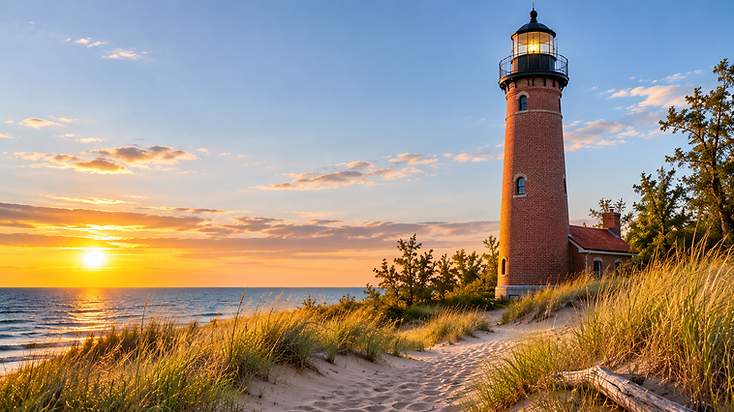
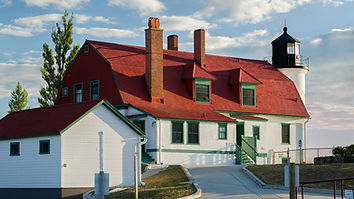
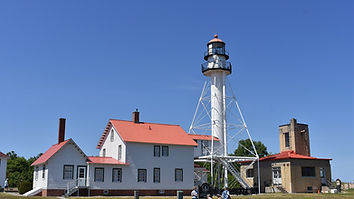
Michigan's shoreline is full of lighthouses worth stopping to see. Some stand at the ends of long piers. Others rise above sandy dunes, rocky stretches of coast, or quiet harbor entrances. You can admire plenty of them from the beach. But a smaller number offer something different: the chance to step inside, climb the tower, and see the Great Lakes from the perspective of the people who once tended the light.
That climb changes the experience. The stairs can be narrow, the wind can be strong, and the view at the top makes you appreciate why these structures mattered to sailors long before navigation fit on a phone.
If you're planning a Michigan road trip, start with a region rather than a checklist. A tower climb can become the centerpiece of a beach day, a shoreline hike, or a weekend exploring a harbor town. These eight stops offer established tower-climb programs, but the approach to each one is part of the adventure.
Before you go: Most tower climbs operate in warmer months, and a lighthouse may be open to view from outside when its tower is closed. Wind, waves, maintenance, and staffing can change access with little notice. Always confirm the current operator schedule before leaving; this article is a planning guide, not a promise of same-day access.
Big Sable is the lighthouse I'd put near the top of a Michigan climbing itinerary if you enjoy combining a hike with a historic destination.
Its black-and-white tower stands beyond the dunes in Ludington State Park. Reaching it is part of the experience: the usual access route is approximately 1.8 miles each way, so plan for roughly 3.6 miles of walking or cycling round-trip before adding time to explore the grounds and climb.
The landscape feels open and remote, with sand, trees, and Lake Michigan stretching in different directions. The tower is 112 feet tall, and the climb offers a striking perspective on the shoreline. There's also a gift shop in the keeper's quarters.
Know before you go: Bring water, wear walking shoes, and leave enough time for the return trip. Limited special bus-access days may be offered, but they should not be assumed. Tower admission and park entry may be separate costs. The operator requires climbers to be at least 40 inches tall and prohibits carrying children up the tower.
Official planning: https://lakeshorekeepers.org/big-sable-point/
Little Sable Point is a strong choice when you want a classic Lake Michigan lighthouse visit without the long approach hike required at Big Sable.
The tall, pale brick tower rises beside a sandy beach near the Silver Lake area. Its setting makes it easy to build a relaxed afternoon around the lighthouse, the lake, and nearby dunes.
When tower climbs are operating, the view gives you a different appreciation for the broad sweep of the lakeshore. Even if you choose not to climb, the surrounding beach is a worthwhile place to spend time.
Know before you go: The tower is approximately a 100-foot walk from the parking area, but entering Silver Lake State Park may require a Recreation Passport or day pass. Expect stairs and possible waits during busy summer periods. Verify current climb hours and beach conditions with Lakeshore Keepers.
Official planning: https://lakeshorekeepers.org/our-lights/
Not every lighthouse adventure begins with a trail through dunes. The Ludington North Breakwater Light sits at the end of a harbor breakwater, where a walk along the water becomes part of the outing.
On a calm day, the walk offers views of the harbor, boats, and the open lake. The lighthouse has been part of Lakeshore Keepers' public climb program, making it a useful companion stop if you're already visiting Big Sable.
But piers and breakwaters deserve extra caution. Waves can sweep across them, and conditions can change quickly. Never venture onto a pier during high surf, ice, or posted closures.
Know before you go: Check both tower-tour availability and lake conditions. If the breakwater is unsafe, enjoy the view from shore instead.
Official planning: https://lakeshorekeepers.org/our-lights/
Manistee offers another memorable combination of harbor history and a walk out toward the lake. Its North Pierhead Light has been opened for tower climbs under Lakeshore Keepers' seasonal program.
The appeal here is the setting: a working harbor, a long view along the pier, and the feeling of standing at the boundary between town and open water. It's a good stop for travelers exploring the Lake Michigan coast north of Ludington.
Know before you go: This is a pier visit, not an all-weather activity. Confirm that the tower is open and follow any posted pier restrictions.
Official planning: https://lakeshorekeepers.org/our-lights/
White River Light Station offers a different kind of lighthouse visit. Rather than standing alone at the end of a pier, the historic station invites visitors to think about the lives of the keepers and the families who lived near the light.
Lakeshore Keepers includes White River among its seasonal lighthouse-tour and tower-climb locations. It's an appealing stop for anyone who enjoys the stories behind the buildings as much as the view from above.
Know before you go: The light station is roughly 50 feet from the parking area. Tower climbs and museum admission are offered through the gift shop. Allow time for the exhibits as well as the stairs; verify the operating calendar before setting out.
Official planning: https://lakeshorekeepers.org/our-lights/
Point Betsie is one of those places where the setting alone makes the visit memorable. The lighthouse sits close to Lake Michigan, with a broad beach and a shoreline that invites you to linger.
The site offers guided visits that include the keeper's residence, exhibits, and a 34-step tower climb. That shorter climb can make Point Betsie especially appealing to visitors who want a lighthouse-tower experience without committing to one of the taller climbs.
The surrounding history is just as interesting as the stairs. The station's buildings and exhibits help explain how keepers worked and how the light and fog signals helped mariners navigate the coast.
Know before you go: Point Betsie requires tower climbers to be at least 3½ feet tall, and children cannot be carried up in slings or backpacks. Tours use timed tickets; check current dates, admission, and availability before making the drive.
Official planning: https://pointbetsie.org/tours
At St. Joseph, the paired pier lights are familiar landmarks along the southwest Michigan coast. The Inner Light has offered public tower climbs, while the first-floor exhibits have also been accessible during scheduled tours.
The visit combines harbor history with a walk along the pier. On clear days, the views toward Lake Michigan and the shoreline make the climb worthwhile.
Know before you go: Tour dates can be limited to particular days of the week, and weather can cancel access. The outer light should not be assumed to offer the same tower access as the inner light.
Official planning: https://stjoetoday.com/lighthouse
If your lighthouse trip takes you to the Upper Peninsula, Au Sable offers a particularly rewarding mix of walking, history, and Lake Superior scenery.
The light station is part of Pictured Rocks National Lakeshore. The National Park Service has offered ranger-guided tower climbs during the summer and fall season, including a 98-step climb. From above, visitors can see Lake Superior and the Grand Sable Dunes.
This is not a quick roadside stop: from the Hurricane River area, the walk is approximately 1.5 miles each way, or 3 miles round-trip. Bicycles are not permitted on the access road. Plan for changing weather and the possibility that tour capacity will fill. The experience is best approached as a half-day outdoor outing rather than a rushed detour.
Know before you go: The National Park Service's 2026 guided climbs were free and first-come, first-served, with limited spaces. Climbers must be over 42 inches tall, children under 16 need an accompanying adult, and shoes must have secure heel straps. The spiral staircase and small hatch near the top can be challenging for some visitors. Check the NPS page for the next season's dates and rules.
Official planning: https://www.nps.gov/piro/planyourvisit/au-sable.htm
A good lighthouse itinerary doesn't need to be expensive or complicated. What matters is choosing a few locations that fit together geographically and leaving room for the unpredictable conditions that come with the Great Lakes.
For a western Lower Peninsula weekend, you could focus on the Ludington and Manistee area, with Big Sable, Ludington North Breakwater, and Manistee North Pierhead as possible stops. If you're traveling farther south, Little Sable Point, White River, and St. Joseph can form another route. Point Betsie fits naturally into a northern Lake Michigan shoreline trip.
Au Sable is a separate Upper Peninsula adventure; it deserves its own travel time rather than being squeezed into a Lower Peninsula day trip.
Check the operator, not just a travel article
Schedules change between years. A lighthouse may be open for grounds visits but closed for tower climbs, or a climb may stop early because of wind or staffing. Lakeshore Keepers currently lists 2027 seasonal dates for its five featured lights, with tower admission of $8 for adults and $5 for visitors age 17 and younger; check for updates before travel. Point Betsie and the National Park Service operate their own programs, so their prices and requirements differ.
Wear secure shoes suitable for stairs and outdoor walking. Bring water, sun protection, and a layer for wind. Keep both hands available when climbing and follow the instructions of volunteers or rangers. Height rules differ: Lakeshore Keepers specifies at least 40 inches, while Point Betsie and Au Sable specify 42 inches. Do not assume a child can be carried up a tower.
A pier that looks inviting in calm weather can become dangerous when waves rise. Stay off closed or wave-swept piers, and never treat a lighthouse photo as worth a risky approach. If the tower or pier is closed, the shoreline can still make for a beautiful visit.
It's tempting to focus only on reaching the top. But the keeper's quarters, exhibits, and volunteers often provide the part of the visit that stays with you. The view is memorable; the history gives it meaning.
I enjoy places that encourage you to slow down and pay attention. Michigan's lighthouses do that in a way few roadside attractions can.
They were built for a practical purpose: helping people find their way through uncertain water. Today, the towers offer another kind of perspective. From the top, the shoreline looks different, the distances feel larger, and it's easier to imagine the patience and responsibility that keeping a light once required.
You don't need to climb every lighthouse in Michigan to appreciate them. Choose one or two, make a day of it, learn something about the people who kept the lights burning, and enjoy the journey as much as the view.