Location: Tahquamenon Falls State Park, near Paradise
Region: Eastern Upper Peninsula
Hiking experience: Short paved walk with optional longer trails
Best for: First-time visitors, dramatic scenery, photography
If you're going to explore Michigan's waterfalls, Upper Tahquamenon Falls is one of the best places to begin.
The waterfall is enormous by Michigan standards, stretching more than 200 feet across as the Tahquamenon River drops roughly 50 feet.
Its distinctive amber-colored water comes from natural tannins released by vegetation in the surrounding wetlands and forests.
The result is a waterfall that looks different from almost anything else in the state.
The walk from the main visitor area leads through beautiful northern forest toward several viewing opportunities.
A newer accessible boardwalk provides an impressive view near the brink of the falls, while additional paths and stairs lead toward the gorge.
For a longer adventure, the park also offers miles of hiking trails through its expansive forest landscape.
You can make this a quick scenic stop or spend much of the day exploring.
Why it's special: One of Michigan's most powerful and recognizable waterfalls, surrounded by beautiful old-growth forest.
Planning tip: Visit early in the morning if you prefer a quieter experience. Allow extra time if you plan to explore the gorge or longer trails.
Location: Tahquamenon Falls State Park, near Paradise
Region: Eastern Upper Peninsula
Hiking experience: Accessible bridge and island walk
Best for: Families, scenic walks, multiple waterfall viewpoints
Just a few miles downstream from Upper Tahquamenon Falls is another destination that deserves its own stop.
Lower Tahquamenon Falls is a series of smaller cascades that flow around an island in the Tahquamenon River.
While the Upper Falls impresses visitors with its size and power, the Lower Falls offers a different kind of experience.
Here, the water splits and tumbles through multiple channels, creating scenic views from different angles.
The Ronald A. Olson Island Bridge provides pedestrian access to the island, allowing visitors to explore the falls without renting a rowboat.
The island walk is a wonderful way to experience the river more closely.
The forest, flowing water, and multiple overlooks make this an excellent place to slow down and enjoy the scenery.
Why it's special: A series of cascades surrounding a forested island, with multiple viewing opportunities.
Planning tip: Combine the Upper and Lower Falls into one day, but allow enough time to enjoy both rather than rushing between them.
Location: Pictured Rocks National Lakeshore, near Munising
Region: Central Upper Peninsula
Hiking experience: Approximately 1.2 miles round trip
Best for: Forest hiking, photography, accessible-to-many trail distances
Miners Falls is one of the most rewarding short waterfall hikes in the Pictured Rocks area.
The trail begins in a northern hardwood forest and follows a gently rolling path toward the Miners River.
As you approach the waterfall, the sound of rushing water becomes more noticeable.
Then the forest opens toward a dramatic overlook.
Miners Falls drops approximately 50 feet over a sandstone ledge, sending water into a rocky gorge below.
Two viewing platforms offer different perspectives.
The lower platform requires descending a substantial staircase, but the upper viewpoint provides an opportunity to enjoy the waterfall without taking those additional steps.
This is a great choice for people who want an actual forest hike without committing to a full-day adventure.
Why it's special: A powerful waterfall reached by a beautiful woodland trail.
Planning tip: The trail can be muddy, particularly after rain. Wear shoes with good traction, and remember that you'll need to climb the stairs again if you visit the lower platform.
Location: Pictured Rocks National Lakeshore, near Munising
Region: Central Upper Peninsula
Hiking experience: Approximately 2.4 miles round trip to the falls
Best for: Longer forest walks, quieter scenery, adventurous day hikes
Chapel Falls is a great destination for hikers who want something more substantial than a short roadside waterfall walk.
Located within Pictured Rocks National Lakeshore, the trail begins along a rustic road-accessible trailhead and travels through northern Michigan forest.
The route follows an old roadbed with gentle hills and stretches of beautiful woodland scenery.
After approximately 1.2 miles, you'll reach viewpoints overlooking Chapel Falls.
The waterfall drops about 60 feet as the water cascades toward Chapel Lake.
It's a beautiful setting, especially when the surrounding trees are filled with spring greenery or autumn color.
For hikers who want to continue exploring, the trail extends farther toward Chapel Rock and Lake Superior.
That longer route makes Chapel Falls an excellent starting point for a more ambitious hiking day.
Why it's special: A scenic waterfall reached through one of Michigan's most beautiful national lakeshore landscapes.
Planning tip: Chapel Road is rough, and the parking area often fills early during busy seasons. Arrive early, bring drinking water, and remember that pets are not permitted on Chapel-area trails.
Location: Pictured Rocks National Lakeshore, near Grand Marais
Region: Central Upper Peninsula
Hiking experience: Approximately 0.4 miles round trip, including a long staircase
Best for: Waterfall photography, Lake Superior scenery, short adventures
Sable Falls offers something that makes it especially memorable: a waterfall hike that can continue all the way to Lake Superior.
Located near Grand Marais, the waterfall tumbles roughly 75 feet over layers of sandstone.
The main viewing area is reached by descending a staircase with 168 steps.
From the lower viewpoint, you can appreciate the shape of the cascading water and the rock formations surrounding it.
But the experience doesn't have to end there.
Continue along Sable Creek and you'll reach a rocky and sandy stretch of Lake Superior shoreline.
It's a wonderful combination of forest, waterfall, creek, and Great Lakes scenery packed into a relatively short outing.
Why it's special: A beautiful sandstone waterfall with an optional continuation to Lake Superior.
Planning tip: The trail is short, but the stairs make it more physically demanding than the mileage suggests. Take your time on the return climb.
Location: Wagner Falls Scenic Site, near Munising
Region: Central Upper Peninsula
Hiking experience: Approximately 0.1 mile to the viewing platform
Best for: Easy scenic stops, photography, relaxed exploration
Not every memorable waterfall requires a long hike.
Wagner Falls is proof of that.
Located just outside Munising, this scenic site features a short gravel path and boardwalk leading into a shaded forest.
The waterfall flows over a series of rocky ledges, creating a beautiful collection of smaller cascades.
Unlike some of Michigan's larger waterfalls, Wagner Falls feels intimate.
The surrounding trees, mossy rocks, and flowing creek create a peaceful atmosphere that invites you to slow down.
It's an excellent stop for visitors exploring the Munising area, especially if you're already planning to visit Pictured Rocks.
The short approach also makes it a good option when you have limited time.
Why it's special: A beautiful, easily reached cascade in a quiet forest setting.
Planning tip: Parking is limited, and the trail includes a few steps. Visit outside peak hours when possible and remain on the designated walkway.
Location: Bond Falls Scenic Site, near Paulding
Region: Western Upper Peninsula
Hiking experience: Short walks and accessible boardwalk viewpoints
Best for: Photography, families, waterfall enthusiasts
Bond Falls is one of those places that can make you stop in your tracks.
Instead of dropping in one narrow stream, the Middle Branch of the Ontonagon River spreads across layers of fractured rock.
The water divides into multiple channels, creating a broad, intricate cascade.
The overall drop is approximately 50 feet, but the waterfall's shape is what makes it particularly memorable.
A system of boardwalks and viewing areas allows visitors to experience the falls from several perspectives.
You can admire the larger cascade, look for smaller channels of flowing water, and enjoy the surrounding forest.
It's a great destination for photographers because the waterfall offers so many different compositions.
Why it's special: A wide, multi-tiered waterfall with numerous viewing opportunities.
Planning tip: Check seasonal vehicle access. Trails may remain accessible outside the main season, but boardwalks and paths are not maintained for winter ice.
Location: Agate Falls Scenic Site, near Trout Creek
Region: Western Upper Peninsula
Hiking experience: Approximately half-mile trail to an overlook
Best for: Scenic walks, geology, historic infrastructure
Agate Falls combines natural beauty with a distinctive piece of Michigan history.
Located along the Middle Branch of the Ontonagon River, the waterfall spreads across a wide shelf of sandstone.
Rather than a single vertical drop, the water flows through a collection of smaller cascades and rocky terraces.
An observation trail provides a view of the upper portion of the waterfall.
One of the area's most recognizable features is the old railroad trestle crossing above the river corridor.
The combination of flowing water, forest scenery, and historic infrastructure makes this a memorable stop.
The trail is relatively short, making Agate Falls a good addition to a western Upper Peninsula road trip.
Why it's special: A broad sandstone waterfall in a scenic gorge beneath a historic railroad structure.
Planning tip: The scenic site has reopened, but the ORV and snowmobile routes above the falls remain closed while the DNR designs a fix for the trestle footings, with repairs expected in 2027. The observation trail itself is open and accessible. Check current DNR notices before visiting.
Location: Ocqueoc Falls area, Presque Isle County
Region: Northeastern Lower Peninsula
Hiking experience: Short accessible waterfall approach, with longer pathway loops available
Best for: Families, Lower Peninsula adventures, hiking and picnicking
When people talk about Michigan waterfalls, the Upper Peninsula usually dominates the conversation.
But the Lower Peninsula has a beautiful waterfall destination of its own.
Ocqueoc Falls is located in Presque Isle County, surrounded by forest and the flowing Ocqueoc River.
The falls are smaller than many Upper Peninsula waterfalls, but that's part of their charm.
Water moves over a series of rock ledges, creating a scenic place to enjoy the river and surrounding woods.
The developed waterfall area includes an accessible approach, while the Ocqueoc Falls Bicentennial Pathway offers longer hiking options for visitors who want more time on the trail.
This makes Ocqueoc Falls an appealing destination for a day trip, a family outing, or a stop during a northern Lower Peninsula camping adventure.
Why it's special: One of the Lower Peninsula's most distinctive waterfall destinations, with accessible viewing features and nearby forest trails.
Planning tip: Check the current pathway map before choosing a longer route. Conditions and accessibility can vary beyond the developed waterfall viewing area.
Location: Near Lake Linden, Keweenaw Peninsula
Region: Western Upper Peninsula
Hiking experience: Developed approach followed by rugged, undeveloped terrain
Best for: Experienced visitors, dramatic scenery, Keweenaw exploration
The Keweenaw Peninsula is one of Michigan's most remarkable landscapes.
Its rocky ridges, forests, historic mining communities, and Lake Superior shoreline make it a wonderful place to explore.
Houghton-Douglass Falls adds another impressive natural feature to that list.
The waterfall drops approximately 110 feet into a steep gorge, making it Michigan's tallest waterfall according to the DNR.
The surrounding scenic site is being developed to improve public access and honor military veterans.
An accessible trail leads to a pedestrian bridge over Hammell Creek, but the route beyond the bridge remains rugged and undeveloped.
There are not yet developed observation platforms or protective barriers around the waterfall area.
That makes this a destination where caution is especially important.
The scenery is dramatic, but visitors should not treat it like a fully developed roadside waterfall park.
Why it's special: A towering waterfall in the rugged Keweenaw landscape.
Planning tip: The DNR describes the site as still under development and will officially open it as a completed scenic site once the remaining improvements are finished. Stay within your abilities, respect closures, and avoid approaching exposed gorge edges. Check current DNR access guidance before visiting.
Location: Ocqueoc Falls area, Presque Isle County
Region: Northeastern Lower Peninsula
Hiking experience: Loop options of approximately 3–6 miles
Best for: Hikers who want more mileage, forest scenery, and a waterfall stop
For people who enjoy hiking as much as seeing the waterfall itself, the Ocqueoc Falls Bicentennial Pathway offers another way to experience the area.
Instead of making a quick stop at the developed waterfall overlook, you can turn the visit into a longer forest outing.
The pathway includes several loop options that travel through the surrounding woodland.
Depending on your chosen route, you can enjoy a few miles of hiking before returning to the waterfall area.
This is an especially appealing option if you live in the Lower Peninsula and want a waterfall-centered hiking trip without traveling all the way to the Upper Peninsula.
It's also a reminder that a familiar destination can offer a completely different experience when you explore beyond the main overlook.
Why it's special: A longer hiking experience connected to one of the Lower Peninsula's most interesting waterfalls.
Planning tip: Bring a current trail map and choose your loop before starting. The longer forest routes should not be confused with the accessible waterfall approach.
Location: Tahquamenon Falls State Park
Region: Eastern Upper Peninsula
Hiking experience: Approximately 5.1 miles one way between the Upper and Lower Falls
Best for: Experienced day hikers, forest exploration, waterfall-to-waterfall adventures
If you're looking for a waterfall experience that feels like a true hiking adventure, the Tahquamenon River Trail deserves your attention.
Rather than driving between the Upper and Lower Falls, this route connects the two areas on foot.
The trail travels through the forested landscape of Tahquamenon Falls State Park, giving hikers a much deeper experience of the park.
Along the way, you'll encounter the sights and sounds of northern Michigan's forest ecosystem.
The reward is the opportunity to experience two of the state's best-known waterfall areas as part of one continuous outdoor adventure.
But this is not the same as taking a short paved walk to an overlook.
The route requires preparation, appropriate footwear, and enough time to complete the hike safely.
You'll also need to plan transportation if you intend to hike only one way.
Why it's special: A substantial forest hike connecting the Upper and Lower Tahquamenon Falls.
Planning tip: Check trail conditions and transportation options before setting out. The River Trail is not maintained during winter, and shuttle availability may be seasonal.
One of the best things about Michigan's waterfall destinations is the variety.
You can plan a quick scenic stop, a relaxed family walk, or a much more demanding hiking adventure.
For first-time waterfall visitors: Upper Tahquamenon Falls, Bond Falls, and Miners Falls are excellent choices.
For short, scenic walks: Wagner Falls, Bond Falls, and the developed Ocqueoc Falls viewing area are worth considering.
For a combination of waterfalls and Lake Superior: Sable Falls is particularly appealing.
For longer hikes: Chapel Falls, the Ocqueoc Falls Bicentennial Pathway, and the Tahquamenon River Trail offer more time on foot.
For dramatic scenery: Houghton-Douglass Falls and Upper Tahquamenon Falls stand out, although Houghton-Douglass requires considerably more caution.
For a western Upper Peninsula road trip: Bond Falls and Agate Falls make an appealing combination.
The best destination isn't necessarily the tallest or most famous waterfall.
Sometimes it's the one that matches the kind of day you want to have.
Michigan's waterfalls can be beautiful throughout the year, but each season offers a different experience.
Spring is an excellent time to see waterfalls with strong flow from melting snow and seasonal rainfall.
The surrounding forests begin to come alive, and cooler temperatures can make hiking comfortable.
However, trails may be muddy, and water levels can create hazardous conditions near rivers and gorge edges.
Summer offers long daylight hours and opportunities to combine waterfall hikes with camping, swimming where permitted, kayaking, and exploring nearby towns.
It's also the busiest season at many popular destinations.
Start early, bring plenty of drinking water, and expect more visitors at well-known waterfall sites.
Autumn might be the most beautiful time to explore Michigan's waterfalls.
The combination of flowing water, colorful hardwood forests, and cooler temperatures creates outstanding scenery.
The Upper Peninsula is particularly beautiful during fall color season.
Just remember that daylight hours become shorter and some seasonal facilities may close.
Winter transforms Michigan's waterfalls into dramatic landscapes of ice and snow.
But winter waterfall exploration requires additional preparation.
Trails may be icy, roads may be unplowed, and some viewing areas may be inaccessible.
Never assume that a trail is safe simply because the waterfall is open to visitors. Winter conditions across the state are covered in Winter Camping in Michigan.
You don't need expensive equipment to enjoy most of Michigan's waterfall destinations, but a few essentials can make a big difference.
Good hiking shoes: Wet rocks, muddy trails, and wooden stairs can become slippery.
Water and snacks: Even short hikes can take longer when you're stopping for photographs and enjoying the scenery.
Weather-appropriate layers: Conditions can change quickly, especially near Lake Superior.
Offline maps: Cell service may be unreliable in remote Upper Peninsula locations.
A small first-aid kit: Useful for minor cuts, blisters, and other common hiking problems.
A camera or phone: Michigan's waterfalls offer countless opportunities for memorable photographs.
A backup plan: Trail closures, road conditions, and seasonal access restrictions can change your itinerary.
And perhaps most importantly, bring a little patience.
Some of the best moments happen when you stop rushing and simply enjoy being outdoors.
Waterfalls are beautiful, but they can also be dangerous.
Wet rock surfaces are often slippery, and river currents can be much stronger than they appear.
Stay on designated trails and viewing platforms.
Do not climb over barriers or approach unstable gorge edges.
Avoid entering water above waterfalls, where a slip can quickly become life-threatening.
Respect posted swimming restrictions, trail closures, and seasonal warnings.
If you're hiking with children, keep them close near steep slopes and moving water.
And remember that a photograph is never worth putting yourself or someone else at risk.
Michigan's waterfalls are spectacular from the places designed for visitors to enjoy them.
Waterfall hiking is just one of the many ways to experience Michigan's incredible natural landscapes.
If you enjoy discovering new outdoor destinations, consider exploring more of our Michigan adventure guides:
You can also use the Explore Michigan Adventure Map to discover hiking trails, campgrounds, waterfalls, state parks, and other destinations across the state.
Before traveling, consult the agencies responsible for each destination.
Trail conditions, access restrictions, parking, seasonal facilities, and park rules can change.
Always check official information before heading out.
There's a reason waterfalls make such memorable hiking destinations.
You spend time walking through the forest, following a trail, listening to the sounds around you.
Then, somewhere ahead, you begin to hear the water.
The sound gets louder.
The trees open up.
And suddenly you're standing in front of something beautiful that has been shaped by nature over thousands of years.
For a few moments, the emails, schedules, responsibilities, and distractions of everyday life seem a little less important.
You're simply there.
Enjoying the view.
Listening to the water.
Remembering how good it feels to get outside.
Michigan is full of places that offer that experience.
Some are famous. Others are tucked away in forests or along quiet rivers.
And there are always more waiting to be discovered.
Sometimes the best reason to take a hike isn't how far you'll travel. It's what you'll find when you finally stop and look around.
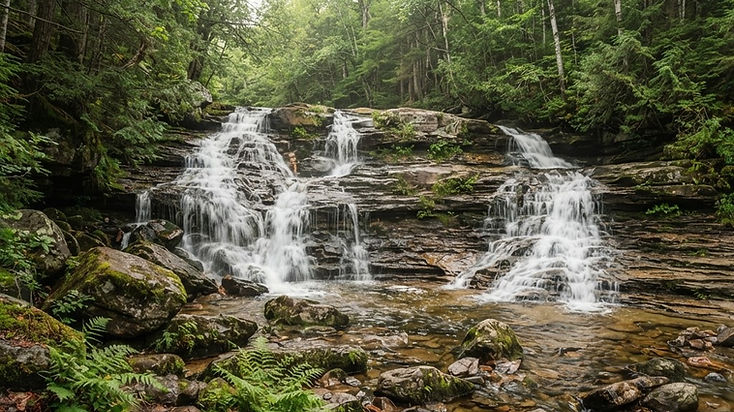
Editor's note: This guide includes both short waterfall walks and longer hiking routes. Some entries describe different ways to explore the same waterfall area. Trail conditions, access, accessibility, and seasonal restrictions can change. Always verify current information with the managing agency before visiting. The featured image is an illustrative rendering, not a photograph of a named waterfall.