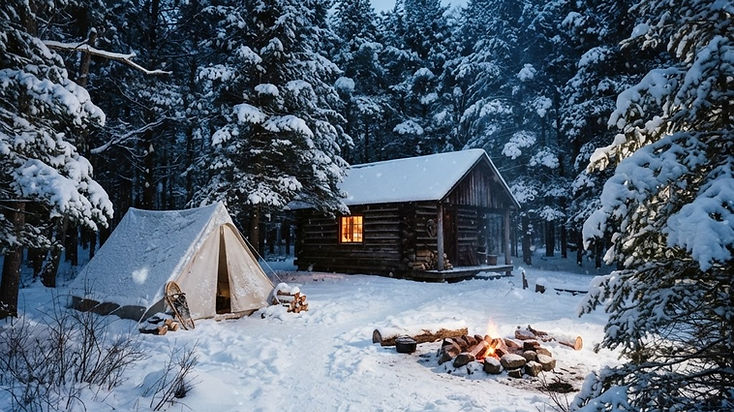
Michigan does not close for the season. The trails empty out, the lakes settle under ice, and the campgrounds that hum in July go quiet. Winter camping is how you get onto the other side of that quiet.
It is a different kind of trip. Days are short. Water freezes. Some roads are not plowed until spring. But a winter night in a Michigan pine stand, with woodsmoke hanging in cold air and stars that seem closer than they do in summer, is one of the most memorable campsites the state offers.
This guide covers why winter camping is worth the planning, six Michigan destinations worth researching for a cold-weather trip, and the preparation that separates a great night out from a long one.
The quiet is the point. Summer camping in Michigan comes with company. Winter campgrounds are close to empty, and trails that see thousands of boots in July see a handful of skis in January. This is the season that gives you the park to yourself.
The landscape changes completely. Dunes become white ramps, rivers narrow into dark ribbons of open water between shelves of ice, and hardwood forests turn into something you can read. Animal tracks are everywhere after fresh snow, and a stand of pines that looks ordinary in August looks deliberate in February.
The days get simpler. With only nine or ten hours of usable daylight, a winter trip trims itself down: walk, eat, make water, sleep. There is less to do and more room to notice what you are doing.
You can choose your comfort level. Want a tent in the snow? The state has rustic forest campgrounds that stay open all year. Want a roof and a woodstove? Several state parks rent rustic cabins, yurts, and mini-cabins in winter. The DNR's winter camping page exists precisely because both kinds of trips are possible.
Every destination below is one the Michigan Department of Natural Resources lists as available outside the summer season, either as a state park campground or as a state forest campground marked open all year. That is a starting point, not a reservation. Winter loops, plowed roads, and open restrooms change with the season and with the weather, so confirm current status before you plan the drive. Nothing here promises that a specific site is open on a specific night.
The Upper Peninsula park spans nearly 50,000 acres and 13-plus miles of the Tahquamenon River, with the Upper and Lower Falls at its center. The DNR lists rustic campsites here and grooms cross-country ski trails in the Upper Falls area, including the one-mile Lantern Loop and the 3.8-mile Giant Pines Loop. Snowmobiling and snowshoeing are both part of the park's winter season, and the department has promoted winter camping at Tahquamenon in recent years.
It is the classic first Upper Peninsula winter trip: a fire, a frozen river, and a waterfall that sounds different under ice. Confirm which campground and which services are open for your dates.
The Porcupines are as remote as Michigan camping gets: old-growth forest, Lake Superior shoreline, and interior trails that fill in with snow early and stay that way. The DNR lists backcountry camping in the park, and Union Bay Campground has appeared on the department's winter camping lists.
This is not the destination for a first cold-weather night. Access roads, trailheads, and facilities are limited in winter, snow depths are serious, and self-rescue is the expectation. For an experienced winter camper it is one of the best nights the Midwest offers.
On the west side of the state, Muskegon State Park keeps its Muskegon Lake Michigan Campground open year-round, divided into two loops on either side of a large dune, with a stairway through to Lake Michigan. The DNR tags the campground for winter camping.
The park's distinctive winter option is the yurt at the Muskegon Luge Adventure Sports Park: 20 feet across, sleeping seven on log bunks and cots, heated by a woodstove with firewood provided, lit by a solar lantern, and deliberately without electricity or running water. The park has also listed mini-cabins among its winter options. If you want to try a cold-weather night without buying a winter tent, this is the place to do it.
In Crawford County near Hartwick Pines State Park, this small rustic campground on the AuSable is marked open all year in the DNR's state forest campground matrix. Expect vault toilets, hand-pump water in season, and no electricity; winter here is a tent, a stove, and whatever you carried.
The trade is a famous river at its quietest, with cross-country ski trails a short drive away at Hartwick Pines. If the seasonal roads are unplowed, plan on a walk-in approach.
Another year-round rustic option, and the clearest example of why you read the fine print: the DNR's page for Big Knob says the campground is open all year but that neither the campground nor the seasonal roads are plowed. That single sentence should shape your whole plan, from the vehicle you drive to how far you are willing to carry your gear.
Trout Lake is listed open all year with the same caution about unplowed roads, and it carries the state's winter camping designation along with snowshoeing, a vault toilet, and water access. State forest campgrounds like this one are the least formal winter camping in Michigan and often the least crowded, which is exactly the appeal.
Plan around short daylight. Setting up camp in the dark is unpleasant in July and genuinely hard in January. Arrive with at least two hours of light, and carry a headlamp with spare batteries for the walk back from wherever you park.
Expect unplowed roads. Several of the campgrounds above state plainly that roads are not plowed. A front-wheel-drive sedan can turn a short drive into a long walk. Check road conditions and know your vehicle's limits.
Bring your own water or a way to make it. Hand pumps are seasonal and often shut off. Melting snow works but is slow and fuel-hungry; a few gallons carried in is usually cheaper than the stove fuel it takes to melt the same amount.
Treat ice as unknown. Lake ice in Michigan is variable, especially near inlets, outlets, and pressure ridges. Unless you have current local information and the gear and training to match, stay off it.
Know how registration works. State forest campgrounds are largely first-come, first-served with self-registration, while state park campsites and lodging are reserved through MiDNRReservations.com, where you can see real-time availability.
Tell someone your plan. Cell coverage is thin across much of the northern Lower Peninsula and most of the Upper Peninsula. Leave an itinerary with someone at home.
- Sleep system. A sleeping pad with a real insulation rating matters more than the bag's temperature label; the ground pulls heat out of you all night. Pair a warm pad with a bag rated below the coldest temperature you expect, and consider a liner.
- Shelter. A four-season or well-braced three-season tent, stakes that hold in snow (or deadmen made from buried stuff sacks), and ventilation. Condensation is the enemy; a sealed tent is a wet tent by morning.
- Clothing. Layers you can shed, nothing cotton next to your skin, and a dry set kept in the bottom of your pack for sleeping. Change out of anything damp before you get into the bag.
- Cooking and fuel. Cold degrades canister fuel, so keep canisters in a jacket pocket before use and expect longer boil times. A liquid-fuel stove is more reliable in deep cold.
- Light and power. Batteries lose capacity in the cold. Keep spares warm and carry a headlamp plus a small backup light.
- Food. Calorie-dense, easy to eat without cooking, and more than you think. Your body is heating itself all night.
- Firewood. Buy it locally. Moving firewood is how invasive pests travel, and the restrictions exist for good reason.
- Repair and emergency kit. Duct tape, a spare stake or two, a first-aid kit, hand warmers, and a way to signal for help.
If the tent-in-the-snow version sounds like a great story and a terrible night, Michigan has a middle path. Several state parks rent rustic cabins, yurts, and mini-cabins through the winter, and the DNR's own winter camping page treats them as camping rather than lodging.
Wilderness State Park, west of Mackinaw City, has rustic cabins, some of them Civilian Conservation Corps-era, along with 20-plus miles of trails and a dark sky designation. Muskegon's yurt comes with a woodstove and firewood. Cabins like the year-round rustic ones at Bald Mountain Recreation Area give you walls, bunks, and a fire ring without electricity or running water.
The trade is the one camping always asks for: fewer amenities, more quiet.
The state publishes more information than most people realize, and it stays current in a way this article cannot:
- The DNR's winter camping page for state parks, state forest campgrounds, and overnight lodging.
- The state forest campground amenity table, where each rustic campground lists its seasonal closure dates; look for open all year.
- RecSearch, which filters overnight options by winter availability.
- Rates and operating dates, the clearest table of what is open when.
- MiDNRReservations.com, for real-time availability up to six months out.
Most people meet Michigan in July: the dunes, the lakes, the long bright evenings. Winter camping shows you the same state with the volume turned down. The water is still there under the ice, the pines still smell like pines, and the only schedule is the one the light sets.
Start with a yurt or a rustic cabin if that is what it takes to get outside in January. Then, when you are ready, take a tent to a forest campground where the roads are not plowed and the sites are first come, first served. You will not have the place entirely to yourself. You will have it nearly to yourself, and that is the point.
Campground operations, seasonal services, and accessibility may change. Confirm current information with the Michigan DNR or the individual park before planning your trip.