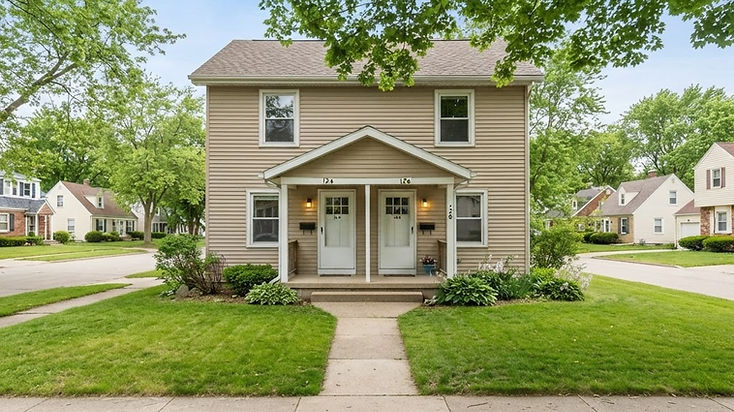
What If Your Property Could Help Pay for Itself?
When most people think about buying a home, they think about having a place to live.
They imagine having their own kitchen, backyard, bedrooms, and a space they can make their own. They think about building equity, making improvements, and eventually paying off the mortgage.
But there's another way to think about owning residential real estate.
What if the property you owned could also help generate income?
What if you rented out a spare bedroom to help cover your monthly housing expenses?
What if you purchased a duplex, lived in one unit, and rented the other?
Or what if you eventually purchased a second home specifically to generate rental income?
These are all legitimate ways people explore making money through residential real estate.
And here's something I want you to understand right from the beginning:
You don't have to own ten houses, become a professional landlord, or have hundreds of thousands of dollars saved to begin learning how rental property investing works.
You can start by understanding the opportunities available to you.
I own residential property in Michigan. I've rented bedrooms within my primary residence, used short-term rental arrangements, and owned a duplex with two rental units.
Those experiences have given me a practical understanding of something that isn't always obvious when people first start exploring rental properties.
Collecting rent and actually making money are two very different things.
That's what we're going to explore in this article.
By the time you're finished reading, you'll understand how rental property can generate income, what it actually costs to own and operate a rental, and how to begin evaluating whether a property could make financial sense for you.
1. How Do People Actually Make Money From Rental Property?
There are several ways residential property can contribute to your financial position.
Some benefits are immediate. Others take years to develop.
And none of them are guaranteed.
Let's look at the four main ways.
Rental Income
This is the most obvious one.
Rental income is money someone pays you to occupy or use your property.
That could mean renting:
- A spare bedroom in your primary residence.
- One unit of a duplex.
- An entire single-family home.
- A furnished property for a longer temporary stay.
- A property for short-term stays, where legally permitted.
For example, imagine you own a three-bedroom house.
You live in one bedroom and rent the other two for $700 per month each.
Your monthly rental income would be:
| Rental income | Amount |
|---|---|
| Bedroom 1 | $700 |
| Bedroom 2 | $700 |
| Total monthly rent | $1,400 |
| Potential annual gross rent | $16,800 |
That's $16,800 per year if both rooms remain occupied and all rent is collected for twelve months.
But don't confuse that number with profit.
You may have additional utility expenses, maintenance costs, insurance considerations, and periods when a bedroom sits empty.
There may also be tax consequences and local requirements governing room rentals.
The income is real.
But so are the expenses.
Mortgage Principal Paydown
When you have a typical amortizing mortgage, part of each monthly principal-and-interest payment reduces the amount you owe.
That reduction is called principal paydown.
As your mortgage balance decreases, your equity can increase, assuming the property's value doesn't decline enough to offset the progress.
Rental income may help you afford the mortgage payments that contribute to that equity.
But there's an important distinction.
Your tenant isn't legally responsible for paying your mortgage. You are.
If your property sits vacant or someone doesn't pay rent, the lender still expects your payment.
That's why rental income should be treated as a potential source of financial support, not a guarantee that your property will pay for itself.
Property Appreciation
Appreciation is the increase in a property's market value over time.
Imagine you purchase a property for $200,000.
Several years later, comparable properties suggest it's worth $240,000.
That's a potential $40,000 increase in value before selling costs, improvements, and other considerations.
However, property values can also decline.
Neighborhoods change. Housing markets change. Interest rates influence buyer affordability.
I don't recommend evaluating a rental property solely on the assumption that it will appreciate.
If appreciation happens, that's a potential benefit.
But I want you to understand whether the property makes financial sense based on realistic numbers today.
Potential Tax Benefits
Rental property ownership can involve tax deductions and other tax considerations.
Depending on the circumstances, certain operating expenses, mortgage interest, depreciation, and other eligible costs may affect taxable rental income.
However, the rules vary based on how a property is used and your personal circumstances.
Renting part of your primary residence, for example, may require allocating certain expenses between personal and rental use.
A tax deduction also doesn't mean an expense becomes free.
If you spend $1,000 on an eligible repair, you still spent $1,000.
The tax treatment may reduce your tax liability, but it doesn't eliminate the original cost.
We'll explore rental-property taxes in more detail later in this series.
2. Three Realistic Ways to Get Started
One of the biggest misconceptions about rental property is that you need to buy a separate investment property before you can begin generating rental income.
That's not necessarily true.
There are several different starting points.
Strategy A: Rent Rooms in a Home You Already Own
Let's say you own a home with a monthly mortgage payment of $1,500.
You have two bedrooms you aren't using.
You decide to explore renting those rooms for $700 per month each.
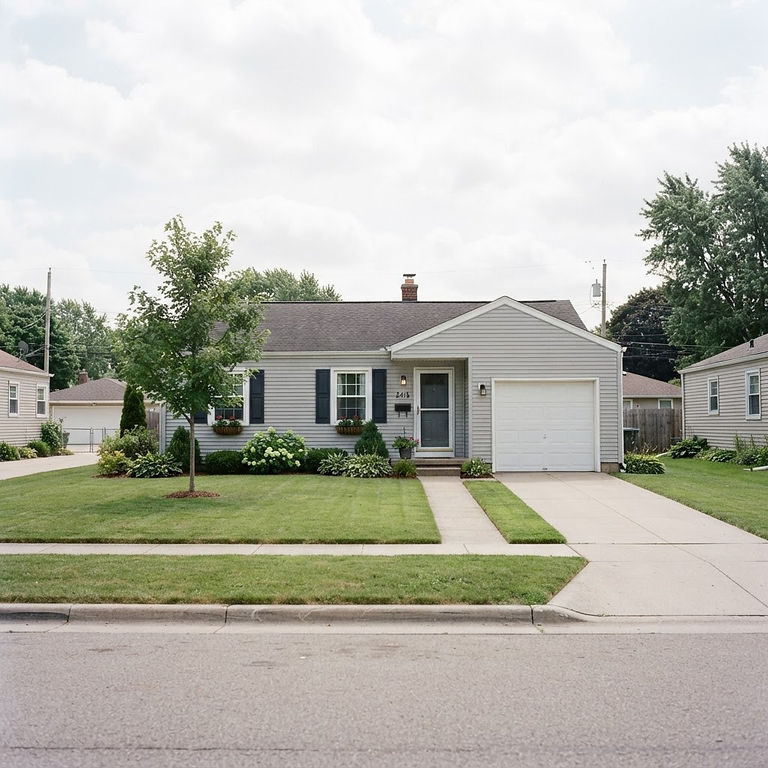
Illustrative image. It does not depict a property owned by the author.
Here's the basic picture:
| Item | Monthly amount |
|---|---|
| Mortgage payment | $1,500 |
| Bedroom 1 rent | $700 |
| Bedroom 2 rent | $700 |
| Mortgage payment less gross rent | $100 |
At first glance, it looks like you've reduced your mortgage burden from $1,500 to $100.
But that's not the complete financial picture.
You still have utilities, maintenance, property taxes and insurance if they aren't already included in your mortgage payment, and other household expenses.
You may also have increased wear and tear, additional insurance costs, and occasional vacancies.
And you're sharing your personal living space with other people.
That means privacy, household expectations, schedules, and compatibility become important considerations.
Still, for the right homeowner, renting rooms can provide meaningful financial flexibility without purchasing another property.
The important question isn't simply how much rent you can collect. It's how much financial benefit remains after the additional costs and responsibilities.
Strategy B: Buy a Duplex and Live in One Unit
A duplex is a residential property with two separate housing units.
One strategy is to buy a duplex, live in one unit, and rent the other.
This is often called house hacking.
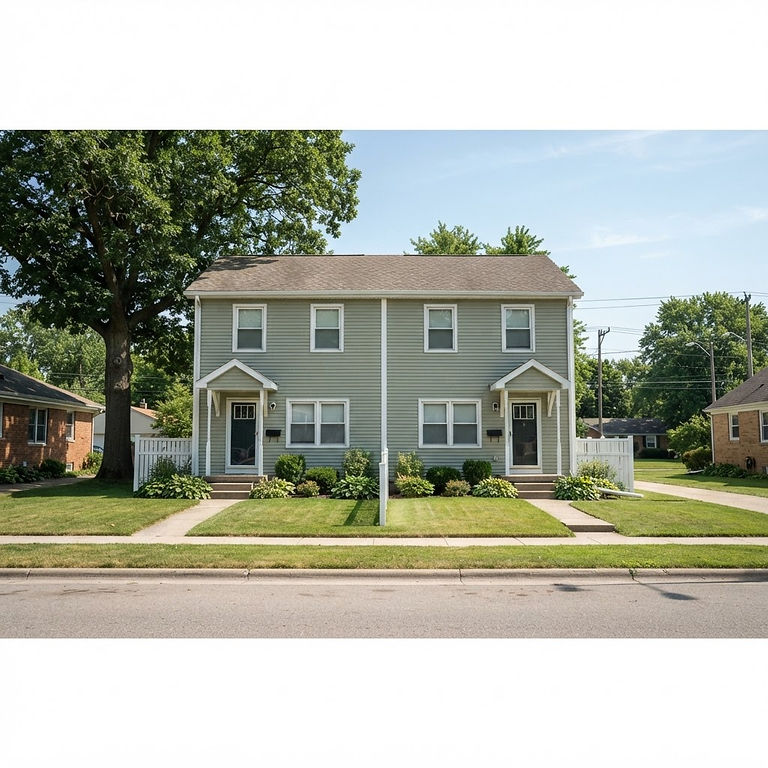
Illustrative image. It does not depict a property owned by the author.
Let's look at a simplified example.
Imagine your monthly mortgage principal, interest, property taxes, and insurance total $2,200.
The other unit rents for $1,300.
| Item | Monthly amount |
|---|---|
| Mortgage, taxes, and insurance | $2,200 |
| Rent from second unit | $1,300 |
| Housing payment less gross rent | $900 |
The rent could help reduce the amount you personally contribute toward your monthly housing payment.
But the property still has operating expenses.
You may have to pay for maintenance, major repairs, vacancy periods, and other costs.
And purchasing a duplex involves understanding financing requirements, property condition, local rental demand, and occupancy obligations.
The benefit is that you're combining housing with an income opportunity.
The tradeoff is that you're also taking responsibility for another household's rental unit.
Strategy C: Buy a Separate Rental Property
Now imagine purchasing a single-family home specifically to rent to someone else.
You don't plan to live in it.
Your goal is to generate rental income while potentially building equity over time.
This strategy can work, but it often requires more available capital and different financing than purchasing a primary residence.
You'll need to consider:
- Down payment and closing costs.
- Mortgage payments.
- Property taxes and insurance.
- Expected rent.
- Vacancy and maintenance.
- Major repairs and replacements.
- Property management.
- Cash reserves.
- Local rental regulations.
Unlike renting a spare bedroom, you're taking on an entirely separate property with its own financial obligations.
This is why understanding the numbers becomes so important.
3. The Most Important Lesson: Rental Income Is Not Profit
If there's one thing I want you to remember from this article, it's this:
The amount of rent you collect is not the amount of money you make.
Let's work through a hypothetical example.
Imagine you own a single-family rental property that collects $1,800 per month.
Here's what the financial picture might look like.
Example: A Rental Property Collecting $1,800 Per Month
| Item | Monthly amount |
|---|---|
| Gross rental income | $1,800 |
| Vacancy allowance (5%) | -$90 |
| Property taxes | -$250 |
| Property insurance | -$125 |
| Maintenance allowance | -$125 |
| Property management allowance | -$150 |
| Net operating income (simplified) | $1,060 |
| Mortgage principal and interest | -$850 |
| Capital expenditure reserve | -$125 |
| Estimated monthly cash flow | $85 |
This example assumes the tenant pays utilities and that there are no additional operating expenses. Real properties may have other costs, including association fees, licensing, utilities, landscaping, snow removal, or leasing fees.
Hypothetical example
Where Does $1,800 in Monthly Rent Actually Go?
- Gross rental income$1,800
- Operating expenses
- Vacancy allowance−$90
- Property taxes−$250
- Property insurance−$125
- Maintenance allowance−$125
- Property management allowance−$150
- Simplified NOI$1,060
- Mortgage debt service
- Mortgage principal and interest−$850
- Capital reserve
- Capital expenditure reserve−$125
- Estimated monthly cash flow$85
- Rental income
- Operating expenses
- Mortgage debt service
- Capital reserve
Every figure is an assumption for illustration only, not a forecast or a promise of performance. The capital reserve is money set aside for future replacements, not a bill paid every month.
| Item | Monthly amount |
|---|---|
| Gross rental income | $1,800 |
| Vacancy allowance | -$90 |
| Property taxes | -$250 |
| Property insurance | -$125 |
| Maintenance allowance | -$125 |
| Property management allowance | -$150 |
| Simplified NOI | $1,060 |
| Mortgage principal and interest | -$850 |
| Capital expenditure reserve | -$125 |
| Estimated monthly cash flow | $85 |
Notice what happened.
The property generated $1,800 in monthly rent.
But after accounting for the listed expenses, mortgage payment, and money reserved for major future repairs, the estimated monthly cash flow is only $85.
That's $1,020 per year if the assumptions hold.
And the actual result could be better or worse.
A major repair, longer vacancy, unexpected insurance increase, or tax adjustment could eliminate that cash flow entirely.
The $125 capital expenditure reserve is money we are setting aside for future replacements, not necessarily an expense paid every month. That's why it's shown separately from net operating income.
What Is Net Operating Income?
Net operating income, often called NOI, is the income remaining after subtracting operating expenses from effective rental income, before mortgage debt service and certain other costs.
NOI is useful because it helps you evaluate the property's operations separately from how you financed the purchase.
Cash flow then considers mortgage payments and additional cash requirements, including reserves.
For beginners, here's the simplest way to remember it:
Gross rent tells you what comes in. Operating expenses tell you what it costs to run the property. Cash flow tells you what may remain after the property's financial obligations and planned reserves.
Even that cash flow isn't necessarily your after-tax profit.
We'll explore these distinctions in much greater detail later in the series.
4. From the Field: Lessons From a Real Property Owner
I've experienced rental property income through more than one arrangement.
I've rented bedrooms within my primary residence, used Airbnb, and owned a duplex with two rental units.
Those experiences involve different decisions and responsibilities.
Renting rooms in your own home means you're combining your personal living environment with a rental arrangement.
You have to think about how other people will use the space, what household expectations should be established, and whether the financial benefit is worth sharing your home.
A duplex presents a different situation.
You're responsible for separate rental units, the condition of the property, and the expenses associated with ownership.
In both cases, the amount of rent collected is only one part of the financial picture.
I think that's one of the most important things a beginner needs to understand.
It's easy to look at rental income and imagine how much additional money it could provide.
But you also need to consider the expenses, responsibilities, and potential disruptions that come with owning property.
I'm not interested in convincing someone to buy rental property simply because it sounds like a good investment.
I want people to understand what they're getting into.
The goal isn't to own as many properties as possible. The goal is to make property ownership work for your financial situation.
5. What Beginners Often Miss
There are several common assumptions that can make rental property appear more profitable than it really is.
Mistake 1: Comparing Rent Only to the Mortgage
A property rents for $1,800.
The mortgage principal and interest payment is $1,200.
Someone assumes they'll make $600 per month.
But they haven't included taxes, insurance, repairs, vacancies, and other expenses.
That isn't a complete investment analysis.
Mistake 2: Assuming the Property Will Always Be Occupied
Even in a strong rental market, occupants eventually move.
There may be cleaning, repairs, advertising, and time between tenants.
Your mortgage doesn't stop during a vacancy.
That's why vacancy assumptions and cash reserves matter.
Mistake 3: Ignoring Major Repairs
A property may look perfectly fine today and still need an expensive repair later.
Roofs, furnaces, air-conditioning systems, plumbing, and appliances don't last forever.
You need a plan for those expenses before they happen.
Mistake 4: Assuming Every Property Appreciates
Property values can rise, remain flat, or fall.
Buying a property solely because you expect future appreciation is a risky strategy.
Mistake 5: Buying Before Understanding Your Finances
If your personal finances are already stretched, adding a mortgage and property expenses can create significant pressure.
Rental property ownership should be evaluated in the context of your entire financial situation.
A property that looks attractive on paper may not be appropriate if you don't have enough savings to handle unexpected expenses.
And sometimes, the smartest financial decision is to wait.
6. How Do You Know Whether a Rental Property Is Worth It?
Before buying or renting out a property, I recommend asking five questions.
1. How much income could the property realistically generate?
Research comparable rental properties rather than relying solely on an advertised or hoped-for rent.
2. What will the property actually cost to own and operate?
Include financing, taxes, insurance, maintenance, vacancy, repairs, and other relevant expenses.
3. How much money will I need before getting started?
Consider the down payment, closing costs, initial repairs, furnishing if needed, and emergency reserves.
4. What happens if things don't go according to plan?
Can you cover the property if it sits vacant? What happens if the furnace needs replacing?
5. Does this property support my actual financial goals?
Maybe you're trying to reduce your housing expenses.
Maybe you want supplemental income.
Maybe you're building toward long-term financial security.
The right property for one person may be completely wrong for someone else.
These five questions will become the foundation for evaluating properties throughout this series.
7. Try It Yourself: Your First Rental Property Exercise
Before moving to the next article, take a few minutes to think about your own situation.
You don't need to know anything about mortgages or investment calculations yet.
Just answer these questions.
As we progress through this series, you'll start developing a clearer understanding of which rental strategy might fit your circumstances.
8. Rental Property Terms You Should Know
Here are a few terms we'll use throughout the series.
Gross Rental Income: The total rental revenue a property generates before expenses.
Vacancy: A period when a rental unit is unoccupied and not generating rent.
Operating Expenses: Costs associated with running and maintaining a rental property, such as insurance, property taxes, routine maintenance, and management.
Net Operating Income (NOI): Effective rental income minus operating expenses, before mortgage debt service and certain other costs.
Cash Flow: Money remaining after rental income is reduced by the relevant operating costs, financing payments, and other cash requirements included in the calculation.
Equity: The difference between a property's market value and the debt secured against it.
Appreciation: An increase in a property's market value.
Capital Expenditures: Major property improvements or replacements, such as a new roof or heating system.
House Hacking: Using part of an owner-occupied property to generate income that may offset housing costs.
Don't worry about memorizing everything yet.
We'll revisit these terms and apply them to realistic examples throughout the series.
9. Key Takeaways
Rental property can provide several potential financial benefits, including rental income, mortgage principal paydown, property appreciation, and certain tax advantages.
But none of those benefits are guaranteed.
You don't necessarily need to buy a separate investment property to begin generating rental income. Renting rooms in a home you already own or purchasing an owner-occupied duplex may be options worth exploring.
Most importantly, rental income is not the same as profit.
Every property has expenses, risks, and financial responsibilities.
Before making a purchase, you need to understand the numbers and consider how the property fits into your broader financial situation.
A good rental property isn't simply one that collects rent. It's one that makes financial sense for the person who owns it.
What's Next: 7 Ways to Generate Income From Residential Property
Now that you understand the basic ways rental property can create income, the next step is exploring the different strategies available.
In the next article, we'll look at seven ways people use residential property to generate income, including room rentals, house hacking, duplexes, separate rental properties, and furnished rental arrangements.
We'll compare their financial requirements, advantages, disadvantages, and practical considerations.
Because before you decide what kind of property to buy, you should understand the different paths available to you.
Next in the series: FRP-002 — 7 Ways to Generate Income From Residential Property
This article is for general educational purposes and does not constitute individualized financial, mortgage, tax, or legal advice. Financing requirements, property regulations, rental laws, and tax treatment vary by location and personal circumstances. Financial examples are hypothetical and are not guarantees of performance.
© Brad Merritt. All rights reserved.