
Introduction: The Question Most Beginners Forget to Ask
Owning rental property sounds like a great idea.
You purchase a house, find someone to rent it, collect monthly income, and gradually build wealth.
At least, that's how the opportunity is often presented.
And there is some truth to it.
Rental property can generate income. It can help pay down a mortgage. Over time, it may increase in value. And if you manage it carefully, it can become part of a long-term financial strategy.
But there's another side of property ownership that doesn't get nearly as much attention.
What happens when the furnace stops working in January?
What happens when your tenant moves out unexpectedly?
What happens when the property needs a $7,000 repair and your bank account doesn't have $7,000 available?
Or what happens when you discover that managing a rental property requires more of your time than you expected?
These are the questions I think every aspiring rental-property owner should ask before buying.
I've rented bedrooms in my primary residence, operated Airbnb accommodations, and owned a duplex with two rental units.
Those experiences have taught me that rental income is only one part of the equation.
The bigger question isn't whether rental property can make money. It's whether you're financially and personally prepared to own it.
In this lesson, we'll examine the financial, practical, and personal considerations that can help you make that decision.
And at the end, I'll give you a Rental Property Readiness Scorecard you can complete for yourself.
You don't need to own property to benefit from this exercise.
In fact, it's better to ask these questions before you buy than after you're responsible for the mortgage.
1. Understand Why You Want to Own Rental Property
Before looking at listings or contacting a lender, ask yourself a simple question:
Why do I want to own rental property?
Your answer matters because different goals require different strategies.
Goal A: Reduce Your Housing Expenses
Maybe you already own a home with an unused bedroom.
Or perhaps you're considering buying a duplex, living in one unit, and renting the other.
Your primary objective might be reducing the amount of money you personally spend on housing.
This can be a reasonable starting point.
You're not necessarily trying to replace your salary.
You're looking for ways to make an existing or planned housing expense more manageable.
Goal B: Generate Additional Monthly Income
Perhaps you want rental income to supplement your employment earnings.
You might use the money to build savings, pay down debt, or improve your monthly financial flexibility.
If this is your goal, cash flow becomes especially important.
A property that increases in value but consistently requires you to contribute money every month may not serve your immediate objective.
Goal C: Build Long-Term Wealth
Maybe you're more interested in the long-term benefits of owning an asset.
You want to build equity through mortgage principal payments and potentially benefit from future property appreciation.
This can be a legitimate strategy, but it involves uncertainty.
Property values can decline, repairs can be expensive, and appreciation is never guaranteed.
Goal D: Build a Rental Property Business
Some people eventually want to own several properties.
They may plan to manage the properties themselves or hire professionals.
If that's your objective, you'll need to think beyond purchasing your first house.
You'll eventually need systems for accounting, maintenance, leasing, insurance, compliance, and financial reporting.
My perspective: You should be able to explain your reason for buying a rental property in one or two sentences. If you can't, spend more time defining your goal before committing money.
2. Are Your Personal Finances Ready?
This is where I would encourage beginners to be especially careful.
It's easy to focus on how much money a rental property might generate.
It's much harder to evaluate what the purchase could do to your existing financial obligations.
Before buying, you need a clear understanding of your current financial position.
Start With Your Monthly Budget
Write down your monthly take-home income.
Then subtract your regular expenses.
Include:
- Your existing mortgage or rent.
- Utilities.
- Groceries.
- Transportation.
- Insurance.
- Minimum debt payments.
- Childcare or family obligations.
- Healthcare.
- Other recurring commitments.
The amount remaining isn't automatically money available for a rental property.
You still need savings for irregular expenses, emergencies, and future goals.
A Hypothetical Household Budget
| Item | Monthly amount |
|---|---|
| Take-home employment income | $5,500 |
| Housing and utilities | -$1,850 |
| Transportation | -$650 |
| Groceries and household costs | -$650 |
| Insurance and healthcare | -$400 |
| Debt payments | -$750 |
| Other living expenses | -$500 |
| Remaining monthly amount | $700 |
At first glance, having $700 remaining each month might sound promising.
But consider what happens if the person purchases a rental property that unexpectedly requires $500 per month in additional support.
Suddenly, very little flexibility remains.
And that doesn't account for personal emergencies.
The Debt Question
Having debt doesn't automatically mean you shouldn't buy rental property.
Mortgages themselves are a form of debt.
But high-interest consumer debt, large monthly obligations, or inconsistent income can make a new property purchase substantially riskier.
If you're already struggling to meet your existing obligations, adding another mortgage may make your financial situation worse rather than better.
A rental property should not be your emergency plan for an already unstable household budget.
It should be a carefully evaluated financial commitment.
3. Do You Have Enough Savings Beyond the Down Payment?
One of the biggest mistakes a beginner can make is assuming the down payment represents the total amount of money needed to buy a rental property.
It doesn't.
Depending on the purchase and financing arrangement, you may need money for:
- Down payment.
- Closing costs.
- Inspections and appraisal.
- Immediate repairs.
- Insurance.
- Utility deposits.
- Licensing or compliance requirements.
- Initial vacancy.
- Maintenance reserves.
- Major future repairs.
You may also need to demonstrate reserves to your lender.
Example: A $200,000 Rental Property
Let's imagine purchasing a $200,000 investment property using a hypothetical 20% down payment.
This is an illustration, not a statement that every investment property requires 20% down.
| Expense | Hypothetical amount |
|---|---|
| Down payment (20%) | $40,000 |
| Closing costs | $6,000 |
| Initial repairs | $5,000 |
| Initial operating reserve | $6,000 |
| Illustrative cash needed | $57,000 |
Now imagine the buyer has exactly $57,000 saved.
Technically, they might have enough for the assumptions in this example.
But what happens to their personal emergency savings after closing?
What if the inspection reveals additional work?
What if the lender requires more reserves?
What if the property remains vacant longer than expected?
The numbers can change quickly.
Separate Your Savings Into Three Categories
I encourage beginners to think about savings in three distinct buckets.
Personal emergency savings: Money reserved for your household, employment interruptions, medical needs, and other personal emergencies.
Purchase funds: Money intended for the down payment, closing, inspections, and initial property preparation.
Rental operating reserves: Money held to cover vacancy, repairs, maintenance, and other rental-property obligations.
These buckets serve different purposes.
A rental property's emergency reserve shouldn't be your only source of money for a personal emergency.
And your personal emergency fund shouldn't be the default solution every time a rental needs repairs.
The lesson: Having enough money to close on a property is not the same as having enough money to own it responsibly.
4. Can You Afford the Property When Nobody Is Paying Rent?
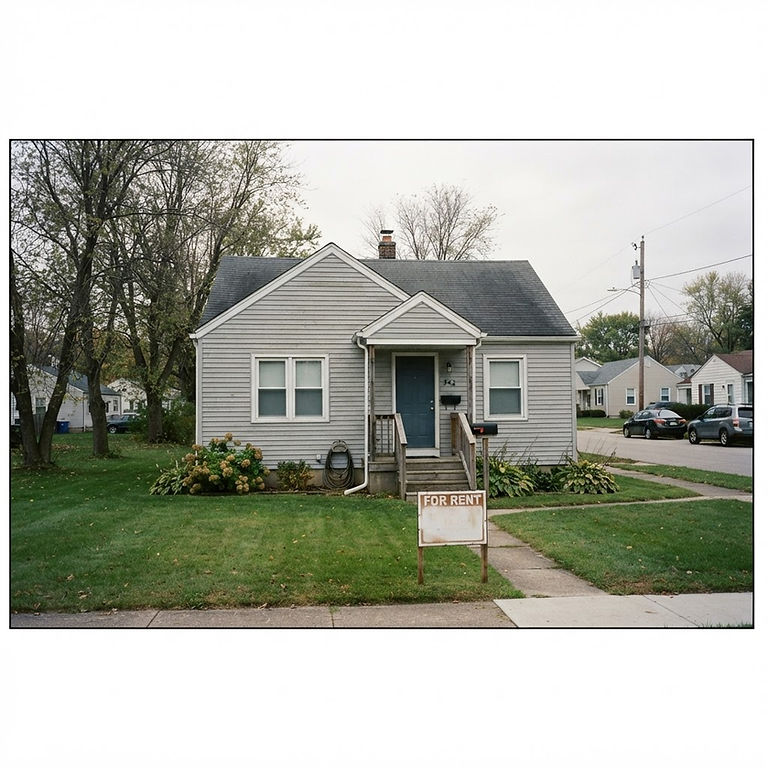
Illustrative image of a vacant rental property. It does not depict a property owned by the author.
This is one of my favorite questions to ask when evaluating a potential rental investment.
Imagine you purchase a property and find a tenant.
Everything goes according to plan for the first few months.
Then the tenant moves out.
The property sits empty while you prepare it for the next occupant.
You still have a mortgage.
You still owe property taxes.
You still need insurance.
And you may still have utility, maintenance, and other expenses.
The rent stops, but the bills don't.
A Simple Vacancy Stress Test
Imagine a rental property with the following hypothetical monthly carrying costs:
| Expense | Monthly amount |
|---|---|
| Mortgage principal and interest | $950 |
| Property taxes | $250 |
| Insurance | $125 |
| Utilities and other carrying costs | $175 |
| Total monthly carrying costs | $1,500 |
Now consider the impact of vacancy.
| Vacancy period | Carrying costs without rent |
|---|---|
| 1 month | $1,500 |
| 2 months | $3,000 |
| 3 months | $4,500 |
| 4 months | $6,000 |
This example excludes additional turnover costs, repairs, leasing expenses, and unexpected events.
The purpose isn't to scare you.
It's to make sure you're thinking beyond the months when everything goes well.
The Question to Ask Yourself
If this property produced no rental income for three months, could you still pay its bills without missing your own household obligations?
If the answer is no, you may need more savings, a less expensive property, or a different starting strategy.
For a room rental in your existing home, the calculation may be different because you're already paying the household mortgage.
But the underlying question remains the same:
What happens to your finances when the rental income disappears?
5. Are You Prepared for Repairs and Maintenance?
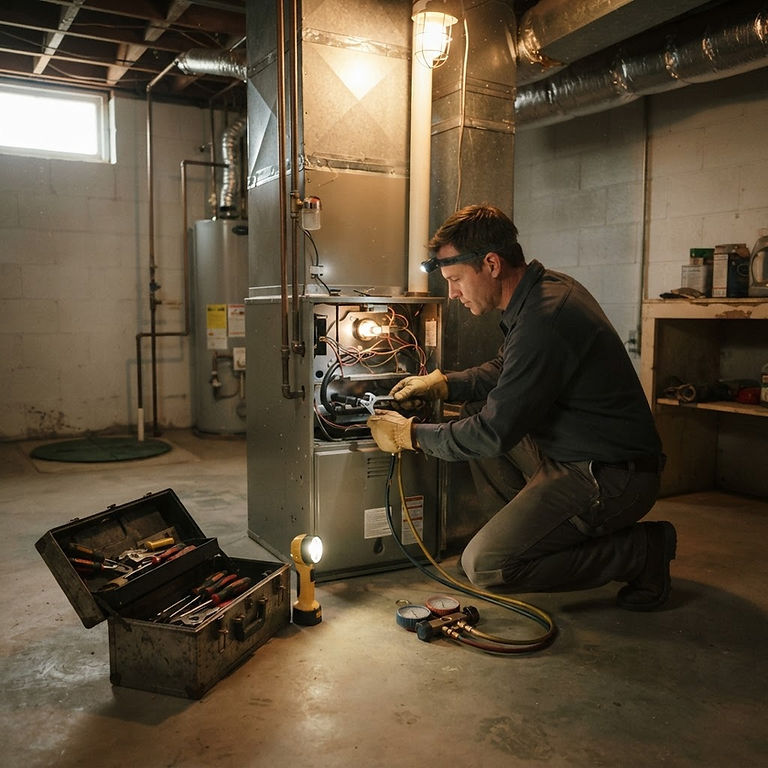
Illustrative image of a residential heating repair. It does not depict a property owned by the author.
Every property requires maintenance.
Some years, the expenses may be relatively manageable.
Other years, several costly problems can occur close together.
You might need to address:
- A leaking roof.
- A failed furnace.
- Plumbing problems.
- Water damage.
- Electrical repairs.
- Broken appliances.
- Pest issues.
- Exterior deterioration.
- Tenant turnover damage.
Not every repair is an emergency.
But some problems require immediate attention because they affect safety, habitability, or the property's condition.
The $7,000 Repair Question
Imagine your rental property needs a $7,000 heating-system replacement.
You weren't expecting it.
Your tenant still needs heat.
The property still has a mortgage.
What would you do?
Would you have enough money in your rental reserve?
Would you need to use a high-interest credit card?
Would you be forced to delay another important obligation?
Would the expense eliminate your expected rental profits for the year?
There's no universal dollar amount that every landlord should keep in reserves.
A newer property with recently replaced systems may have different needs than an older home with aging mechanical equipment.
But every property owner needs a plan.
Maintenance Is Not Optional
One of the most dangerous assumptions in real estate investing is that you can postpone necessary repairs indefinitely to preserve cash flow.
You can't responsibly operate a rental that way.
Property owners have maintenance responsibilities, and applicable housing laws may require certain repairs within specific timeframes.
Rental income is not money you get to keep before paying the costs of maintaining the property.
The property needs to remain safe, functional, and appropriately maintained.
6. Do You Have the Time and Temperament to Manage Tenants?

Illustrative image of a property owner reviewing maintenance records. It does not depict a property owned by the author.
Some people love the idea of owning rental property.
Fewer people think carefully about the ongoing responsibility of managing other people's housing.
When you become a landlord, you're not just collecting payments.
You're entering a business relationship involving a place where someone lives.
That comes with responsibilities.
What Property Management Actually Involves
Depending on your property and management arrangement, you may need to:
- Advertise vacancies.
- Respond to inquiries.
- Apply lawful, consistent tenant-screening criteria.
- Prepare and administer rental agreements.
- Collect rent.
- Document payments.
- Coordinate maintenance.
- Communicate with tenants.
- Handle lease renewals.
- Respond to emergencies.
- Maintain property records.
- Follow applicable housing and rental laws.
If you rent rooms in your own home, you may also need to manage shared-space expectations and household compatibility.
If you operate short-term rentals, guest communication and turnover can add another layer of work.
Consider Your Personality
Ask yourself:
Am I comfortable having difficult conversations?
Can I remain professional when someone is frustrated?
Will I respond promptly when a legitimate maintenance issue occurs?
Can I separate business decisions from personal emotions?
Am I willing to document agreements and follow established processes?
These qualities matter.
A rental property may be a financial investment, but managing it involves people.
What About Hiring a Property Manager?
You may choose to hire a professional property manager.
That can reduce the amount of day-to-day work you personally perform.
However, management services cost money, and you still need to oversee the property, monitor financial performance, and fulfill any responsibilities that remain with you as the owner.
Hiring a manager doesn't make the financial risk disappear.
My perspective: You don't have to enjoy every aspect of property management. But you do need to understand the responsibilities and have a realistic plan for meeting them.
7. Can You Handle the Emotional Side of Rental Property Ownership?
This is something that doesn't always appear in investment calculators.
Owning rental property can create uncertainty.
You may worry about a vacancy.
You may receive an unexpected repair bill.
A tenant might contact you at an inconvenient time.
Property taxes or insurance premiums may increase.
You might question whether you made the right purchase.
And sometimes, the property may not perform the way you originally expected.
Financial Stress Changes the Experience
Consider two hypothetical property owners.
Owner A has stable employment income, manageable debt, personal emergency savings, and dedicated rental reserves.
Owner B has very little cash available, substantial monthly debt obligations, and is relying on the rental income to make their own household payments.
Both owners might purchase similar properties.
Both could experience the same $3,000 repair.
But the financial and emotional impact could be very different.
Owner A may find the repair frustrating but manageable.
Owner B may face an immediate financial crisis.
The difference isn't necessarily the property.
It's the financial position of the person who owns it.
Think About Your Risk Tolerance
Some people are comfortable with variable income and unexpected expenses.
Others prefer predictable financial obligations.
Neither preference is inherently wrong.
But understanding your tolerance for uncertainty can help you avoid purchasing an investment that doesn't fit your life.
A rental property should support your long-term goals—not require you to live in constant financial anxiety.
8. Do You Understand the Local Rental Market?
Even if your finances are strong, that doesn't automatically make a particular rental property a good investment.
You still need to understand the market.
Rental demand varies by location.
So do property values, operating costs, regulations, and tenant expectations.
Questions Worth Researching
Before buying, investigate:
- What comparable properties actually rent for.
- How long similar rentals remain vacant.
- Whether the neighborhood attracts your intended renter market.
- The condition of nearby housing.
- Local property tax considerations.
- Insurance availability and cost.
- Rental registration or licensing requirements.
- Zoning and occupancy restrictions.
- Applicable association rules.
- Local maintenance and housing requirements.
Don't Assume a Listing's Numbers Are Accurate
A property advertisement might describe a home as an excellent investment.
It may even provide projected rental income.
But projected income is not the same as verified income.
You should independently investigate comparable rental rates and expected operating expenses.
For an occupied property, review available leases, payment records, expenses, and other relevant documents as part of appropriate due diligence.
If you're considering short-term rentals, research local restrictions and realistic occupancy rather than assuming that a high nightly rate means high annual income.
The lesson: A property isn't a good investment just because someone describes it as one.
You need to evaluate the evidence yourself.
9. Are You Comfortable With the Legal Responsibilities?
Landlords operate within a legal framework.
The exact requirements vary by state, municipality, property type, and rental arrangement.
Depending on the circumstances, you may need to address:
- Fair housing requirements.
- Lawful tenant screening.
- Security deposits.
- Rental agreements.
- Required disclosures.
- Habitability and maintenance.
- Entry and privacy requirements.
- Rental licensing or registration.
- Local occupancy rules.
- Eviction procedures.
- Insurance requirements.
- Tax reporting.
You don't need to become an attorney before purchasing a rental property.
But you do need to recognize that these responsibilities exist.
And you need to know when to seek qualified professional guidance.
Your Personal Residence May Have Different Considerations
Renting a room in your own home can involve different legal considerations than renting an entire separate property.
Rules may vary based on whether the owner lives in the property, how many occupants live there, and other circumstances.
Don't assume that a rule you've heard about one type of rental applies to every arrangement.
My advice: Before collecting rent, verify the rules that apply to your specific property and rental strategy.
10. Are You Looking for Passive Income—or Are You Prepared to Run a Business?
The phrase passive income is often used when discussing rental property.
And I understand why.
The idea of receiving monthly income without working additional hours is appealing.
But the reality is more complicated.
Even when a rental property generates positive cash flow, someone still needs to manage the operation.
Someone has to maintain the property.
Someone has to communicate with tenants.
Someone has to handle accounting, insurance, repairs, and compliance.
You can delegate some of that work.
But delegation has a cost.
Think Like an Owner, Not Just an Investor
Instead of asking only:
How much rent can I collect?
Ask:
What responsibilities and expenses am I accepting in exchange for that rent?
That's a much better starting point.
Rental property ownership is not simply purchasing an asset. It's accepting responsibility for a property, its finances, and the people who live there.
11. From the Field: What Owning Rentals Has Taught Me
I've experienced several forms of residential rental ownership.
I've rented bedrooms in my primary residence.
I've operated Airbnb accommodations.
And I've owned a duplex with two rental units.
Each arrangement has helped me understand a different side of the business.
Renting bedrooms requires thinking about how rental income fits into your personal living environment.
Operating short-term accommodations involves guest communication, preparation, and turnover.
Owning a duplex means being responsible for a property with separate households and ongoing maintenance obligations.
The financial structures may differ, but the underlying principle is the same.
You have to manage the property responsibly.
And you have to understand how its expenses fit into your broader financial life.
One of the things I want readers to take away from this series is that you don't need to rush into purchasing a rental property.
You can learn.
You can research.
You can build savings.
You can improve your financial position.
And you can decide whether a particular strategy fits your circumstances.
Real estate ownership should be an intentional financial decision, not a reaction to someone else's success story.
12. Your Rental Property Readiness Scorecard
Now let's turn everything we've discussed into a practical exercise.
This scorecard isn't a mortgage qualification tool or a professional financial assessment.
It's a self-reflection exercise designed to help you identify strengths and areas that may need more preparation.
For each statement, give yourself a score:
- 0 points: Not yet true.
- 1 point: Partially true or still developing.
- 2 points: Clearly true, with supporting information or a plan.
Interactive assessment
Rental Property Readiness Scorecard
Fifteen statements, two points each, thirty possible. Answer every statement, then calculate your result. Your answers stay in this page and are never sent or saved, so a reload clears them. To score on paper instead, use the tables below this assessment.
0 of 15 answered
A · Financial Readiness
B · Property and Market Readiness
C · Personal and Operational Readiness
Answer all 15 statements to calculate your score.
Financial Readiness
| Statement | Score (0–2) |
|---|---|
| I understand my monthly income, expenses, and debt obligations. | |
| I have personal emergency savings separate from my planned property purchase. | |
| I understand the upfront costs of purchasing or preparing a rental. | |
| I have a realistic plan for rental operating reserves. | |
| I could manage a temporary vacancy without missing essential payments. |
Financial readiness subtotal: ____ / 10
Property and Market Readiness
| Statement | Score (0–2) |
|---|---|
| I understand the rental strategy I want to pursue. | |
| I have researched realistic rental rates in my target market. | |
| I understand the property's likely operating expenses. | |
| I know which local rules and property restrictions I need to verify. | |
| I understand how to evaluate a property's cash flow. |
Property and market readiness subtotal: ____ / 10
Personal and Operational Readiness
| Statement | Score (0–2) |
|---|---|
| I understand the ongoing responsibilities of being a landlord. | |
| I have time to manage the property or a realistic plan to hire help. | |
| I am comfortable handling uncertainty and unexpected expenses. | |
| I am prepared to communicate professionally with tenants or guests. | |
| I have a plan for repairs, recordkeeping, and emergencies. |
Personal and operational readiness subtotal: ____ / 10
Your Total Score
Add your three subtotals.
Total: ____ / 30

Illustrative image representing financial readiness planning.
How to Interpret Your Score
| Score | Suggested interpretation |
|---|---|
| 0–10 | Focus on learning, budgeting, and preparation before making a commitment. |
| 11–20 | You may have a foundation, but several important areas need further work. |
| 21–26 | You appear to have many readiness elements in place; identify and address remaining gaps. |
| 27–30 | Your self-assessment suggests strong preparation, but property-specific due diligence and professional guidance are still necessary. |
These ranges are educational guidelines, not validated predictions of investment success or lender eligibility.
Important: A high total score does not compensate for a critical gap. For example, someone who scores well in every category but cannot cover essential payments during a vacancy may still be financially unprepared for a particular purchase.
The scorecard should start a conversation with yourself, not make the decision for you.
13. Five Signs You May Want to Wait Before Buying
There are situations where waiting may be the smartest financial decision.
1. You're Already Struggling With Existing Payments
If your current obligations are difficult to manage, another mortgage could increase the pressure.
2. You Have No Emergency Savings
Unexpected property expenses are a normal part of ownership.
Without reserves, even a relatively small problem can become a crisis.
3. You Haven't Researched the Rental Market
Buying based on optimistic rental assumptions can lead to disappointing financial results.
4. You're Counting on Immediate Positive Cash Flow
A property may need repairs, remain vacant, or generate less rent than expected.
If your finances depend on everything working immediately, you may be taking too much risk.
5. You Don't Want the Responsibilities
There's nothing wrong with deciding that property management doesn't fit your interests or lifestyle.
Owning rental property is one possible financial strategy—not an obligation.
Waiting isn't necessarily a setback. It can be part of a responsible investment plan.
14. What to Do If You're Not Ready Yet
If you completed the scorecard and discovered areas that need improvement, that's useful information.
You now have a clearer idea of what to work on.
Step 1: Strengthen Your Monthly Budget
Understand where your money goes and identify opportunities to improve your financial flexibility.
Step 2: Build Emergency Savings
Create a plan for personal emergencies and future property expenses.
Step 3: Address Expensive Debt
Review high-interest obligations and determine whether reducing them should take priority over a new property purchase.
Step 4: Learn Your Local Market
Study rental listings, property prices, operating costs, and neighborhood characteristics.
Step 5: Learn How to Analyze a Property
Practice evaluating hypothetical rental deals before committing real money.
Step 6: Consider a Smaller Starting Strategy
If you already own a suitable home, renting unused space may be worth investigating, provided the arrangement is legally permitted, financially sensible, and compatible with your household.
You may discover that the right first step isn't purchasing another house.
It might be improving the financial position you're already in.
15. Try It Yourself: Your Rental Property Readiness Plan
Before moving to the next lesson, complete these four exercises.
Exercise A — Define Your Goal
Finish this sentence:
I want to own rental property because...
Try to be specific.
Exercise B — Calculate Your Financial Cushion
Write down:
- Monthly household income.
- Monthly household expenses.
- Current debt payments.
- Personal emergency savings.
- Available purchase funds.
- Potential rental operating reserves.
Exercise C — Complete the Readiness Scorecard
Calculate your total out of 30.
Then identify the three statements with the lowest scores.
Exercise D — Choose Your Next Action
Write down one action you can complete within the next 30 days.
It might be:
- Paying down an expensive debt.
- Building an emergency savings fund.
- Researching local rental rates.
- Meeting with a qualified lender.
- Learning how to evaluate a duplex.
- Investigating local room-rental rules.
The purpose is to move from curiosity to informed preparation.
Key Takeaways
Buying rental property can be an opportunity to generate income and build long-term financial security.
But it also creates ongoing financial, operational, and legal responsibilities.
Before buying, understand your personal budget, debt obligations, and available savings.
Make sure you have a realistic plan for vacancies, maintenance, and unexpected expenses.
Research the local rental market rather than relying on advertised projections.
Consider whether property management fits your available time, temperament, and lifestyle.
And remember that being able to qualify for a mortgage doesn't necessarily mean a rental property is the right financial decision for you.
The goal isn't simply to become a property owner. The goal is to make a decision that strengthens your financial future.
What's Next: How to Make Money Renting Rooms in Your Home
In our next lesson, we'll explore one of the most accessible rental-income strategies for people who already own a home.
We'll walk through how renting a spare bedroom works, how to estimate rental income, what expenses to consider, how to prepare the space, and what responsibilities come with sharing your home.
Next in the series: FRP-004 — How to Make Money Renting Rooms in Your Home
This article is for general educational purposes only and does not constitute individualized financial, mortgage, legal, insurance, or tax advice. Rental laws, financing requirements, property restrictions, and tax treatment vary by location and personal circumstances. All numerical examples are hypothetical illustrations, not projections or guarantees of rental income, occupancy, cash flow, or investment performance. The readiness scorecard is an educational self-assessment and is not a validated financial-risk model or lending qualification tool.
© Brad Merritt. All rights reserved.