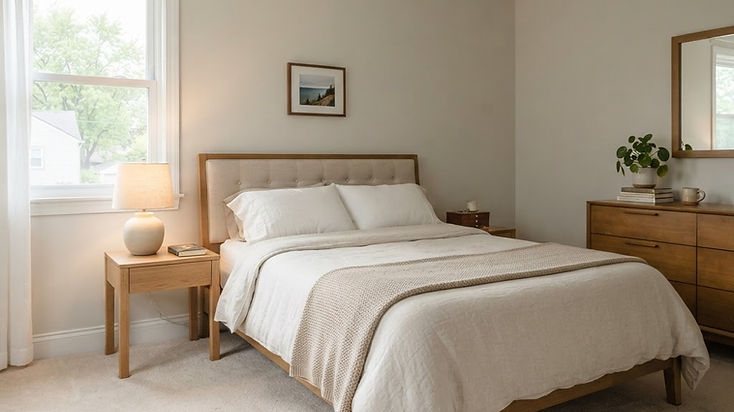
Introduction: Your First Rental Property Might Be the Home You Already Own
When people think about investing in rental property, they usually imagine buying another house.
They picture saving for a down payment, applying for a mortgage, finding a property, and eventually collecting rent from a tenant.
That's certainly one way to get started.
But what if you already own a home?
And what if that home has a bedroom—or two—that you're not using?
You might already have an opportunity to generate rental income without purchasing another property.
I've rented bedrooms in my own primary residence, and it's one of the rental strategies I believe more homeowners should understand before assuming they need to buy another house.
There are advantages.
You may already be paying the mortgage, property taxes, insurance, and many of the home's operating expenses. Renting an unused bedroom can help offset some of those existing costs.
But there are also responsibilities.
You're inviting another person into your personal living environment. You'll be sharing space, establishing expectations, managing payments, and maintaining a home that now serves both personal and rental purposes.
It's not as simple as putting a lock on a bedroom door and collecting money.
In this article, we'll explore how room rentals work, what you might realistically earn, how to prepare your home, how to find occupants, and what you should consider before deciding whether this strategy is right for you.
The goal isn't just to fill an empty bedroom. It's to create a rental arrangement that makes financial sense and works for everyone living in the home.
1. Why Renting a Spare Bedroom Can Be a Smart Starting Point
Buying a separate rental property usually involves substantial upfront costs.
You may need a down payment, closing costs, financing approval, inspections, repairs, and money for future vacancies.
Renting a bedroom in a home you already own can have a much lower financial barrier to entry.
You already have the property.
You may already have furniture, appliances, utilities, internet service, and common living spaces.
Instead of purchasing another property, you may only need to prepare the room and make reasonable improvements to accommodate an occupant.
Three Potential Financial Benefits
1. Help offset your existing housing payment.
If your mortgage and other housing expenses are already part of your budget, rental income may reduce the amount you personally need to contribute each month.
2. Build additional financial flexibility.
Depending on your costs and circumstances, room-rental income may help you build savings, reduce debt, or fund necessary home improvements.
3. Learn rental-management skills.
You'll gain experience advertising a rental, communicating with prospective occupants, documenting agreements, collecting payments, and responding to maintenance needs.
Those skills can be useful if you eventually purchase a duplex or another rental property.
But Lower Startup Costs Don't Mean Zero Risk
A room rental can still create financial, legal, and personal challenges.
There may be insurance implications, additional utility costs, property wear, local occupancy restrictions, and periods when the room sits empty.
You also need to be comfortable sharing your home.
My perspective: Renting a spare bedroom can be a practical first step into rental income, but only when the arrangement is legal, financially worthwhile, and compatible with your household.
2. How Much Money Can You Make Renting a Room?
Let's start with the question most homeowners want answered.
How much could you actually earn?
The answer depends on several factors:
- Your location.
- The size and condition of the bedroom.
- Whether the room is furnished.
- Whether the occupant has a private or shared bathroom.
- Parking availability.
- Utilities and internet.
- Access to the kitchen, laundry, and common spaces.
- Local rental demand.
- The length and terms of the rental arrangement.
A room near major employment centers, colleges, hospitals, or transportation routes may attract different demand than a similar room in a more remote location.
You should research comparable room rentals rather than assuming that the price of a nearby apartment tells you what your bedroom is worth.
Example: Renting One Bedroom
Imagine you can rent an unused bedroom for $800 per month.
Your hypothetical monthly financial picture might look like this:
| Item | Monthly amount |
|---|---|
| Room rental income | $800 |
| Additional utilities | -$65 |
| Additional household supplies | -$25 |
| Maintenance reserve | -$50 |
| Vacancy allowance | -$60 |
| Estimated monthly contribution | $600 |
In this example, the room contributes an estimated $600 per month toward your household finances before other applicable costs.
Over 12 months, that would equal $7,200 if the assumed average monthly amounts are realized.
That doesn't mean you're guaranteed to receive $7,200.
The room may be vacant longer than expected, your expenses may increase, or you may need to make repairs.
The example also excludes taxes, insurance adjustments, initial setup costs, and the portion of existing household expenses that may be attributable to the rental.
Example: Renting Two Bedrooms
Now imagine your home has two suitable bedrooms available.
You rent each room for $800 per month.
| Item | Monthly amount |
|---|---|
| Bedroom 1 income | $800 |
| Bedroom 2 income | $800 |
| Total gross rental income | $1,600 |
| Additional utilities | -$125 |
| Household supplies | -$50 |
| Maintenance reserve | -$100 |
| Vacancy allowance | -$120 |
| Estimated monthly contribution | $1,205 |
That's a hypothetical $1,205 per month in contribution toward household costs before other applicable expenses.
Over 12 months, the same average would equal $14,460.
However, two occupants also mean more shared-space activity, potentially greater utility use, more wear, and additional management responsibilities.
The second room doesn't necessarily double your net financial benefit.
Gross Rent Is Not Profit
One of the most important distinctions to understand is the difference between rental revenue and the amount you actually keep.
If you collect $1,600 in rent, you haven't automatically made $1,600 in profit.
You still need to account for the additional costs and obligations associated with the arrangement.
A good room-rental strategy starts with realistic numbers, not just an attractive monthly rent figure.
3. Should You Rent One Room or Multiple Rooms?
Renting one bedroom can be a very different experience from renting two or three.
The financial opportunity may increase with each additional room.
So can the complexity.
Renting One Bedroom
With one occupant, you may find it easier to coordinate:
- Kitchen access.
- Laundry schedules.
- Parking.
- Bathroom use.
- Guest expectations.
- Noise levels.
- Cleaning responsibilities.
You're sharing your home with one additional person.
That can still require adjustment, but the household may be easier to manage.
Renting Multiple Bedrooms
When you rent multiple rooms, you're no longer managing only your relationship with each occupant.
You're also managing expectations between occupants.
Two people may have different work schedules, cleanliness standards, cooking habits, or preferences about noise.
Shared bathrooms and parking can become more complicated.
A disagreement between occupants can also affect the atmosphere of your home.
Compare the Tradeoffs
| Consideration | One rented room | Multiple rented rooms |
|---|---|---|
| Gross income potential | Lower | Higher |
| Household activity | Usually less | Usually more |
| Shared-space coordination | Simpler | More complex |
| Cleaning and wear | Generally lower | Potentially higher |
| Vacancy exposure | One income source | Multiple income sources |
| Management responsibilities | Fewer relationships | More relationships |
This isn't an argument against renting multiple rooms.
It's a reminder that your decision should consider both the money and the living arrangement.
Before renting additional rooms, ask whether the extra income is worth the additional responsibility and loss of personal space.
4. Is Your Home Actually Suitable for Room Rentals?
Not every unused room is automatically suitable or legally permitted for rental occupancy.
Before advertising a bedroom, evaluate the property.
Bedroom Safety and Condition
Depending on applicable building and housing requirements, consider:
- Required emergency escape and rescue openings.
- Smoke and carbon monoxide alarms.
- Safe electrical systems.
- Adequate heating and ventilation.
- Bedroom dimensions.
- Doors and appropriate privacy.
- Safe access to bathrooms and common areas.
- Occupancy limitations.
Local requirements vary, and the presence of a bed or window doesn't necessarily establish that a space is legally usable as a bedroom.
For example, a finished basement room may look attractive but still fail to meet applicable requirements for sleeping accommodations.
Verify the rules that apply to your property.
Bathrooms and Shared Facilities
Will the occupant have a private bathroom?
Will they share one with you or other residents?
Can everyone reasonably access the kitchen and laundry facilities?
Is there enough refrigerator and storage space?
These details affect both rental value and everyday comfort.
Parking
If your household already uses every driveway space, adding another vehicle may create problems.
Consider whether on-street parking is permitted and whether local restrictions apply.
Household Compatibility
Think about how renting a room would affect the people already living in your home.
If you have family members or other occupants, their privacy, safety, and daily routines matter.
A financially attractive rental arrangement may still be inappropriate for your household.
The right room-rental opportunity is one your property can safely and legally accommodate—and one your household can realistically support.
5. How to Determine a Fair Monthly Room Rental Price
Pricing is one of the most important decisions you'll make.
Set the rent too high, and you may struggle to attract qualified applicants.
Set it too low, and you may not receive enough financial benefit to justify the arrangement.
Research Comparable Rooms
Look for actual room-rental listings in your area.
Useful places to research may include:
- Roomies.
- SpareRoom.
- Furnished Finder.
- Zillow.
- Local housing groups.
- Community rental listings.
Availability, fees, and listing policies vary by platform.
Don't compare your bedroom only with full apartments or entire houses.
Try to find rooms with similar characteristics.
Compare the Details
For each comparable listing, record:
- Monthly asking rent.
- Location.
- Furnished or unfurnished.
- Private or shared bathroom.
- Utilities included or excluded.
- Parking.
- Laundry access.
- Minimum rental term.
- Household restrictions or rules, where lawful.
- Listing date and apparent demand.
Remember that an advertised asking price doesn't prove the room actually rented for that amount.
A Simple Pricing Exercise
Imagine you find five comparable room listings:
| Comparable room | Advertised monthly rent |
|---|---|
| Room A | $700 |
| Room B | $750 |
| Room C | $800 |
| Room D | $825 |
| Room E | $875 |
| Median advertised rent | $800 |
The median is $800.
That gives you a starting reference point, not a guaranteed market price.
You might adjust your asking rent based on room size, furnishing, bathroom access, parking, condition, and actual applicant response.
Should Utilities Be Included?
You can structure rent to include utilities or charge them separately where permitted.
Including utilities can make the price easier for applicants to understand.
But it also exposes you to variable consumption costs.
If utilities are included, your budget should account for the additional usage.
Any utility arrangement should be clear in the written agreement and comply with applicable law.
My advice: Start with comparable listings, calculate your costs, and choose a price that balances demand with the financial benefit you're trying to achieve.
6. Furnished or Unfurnished: Which Makes More Sense?
One of the first choices you'll make is whether to provide furniture.
Furnished Rooms
A furnished room may include:
- Bed and mattress.
- Dresser.
- Desk or workspace.
- Chair.
- Appropriate lighting.
- Window coverings.
- Storage.
Furnished rooms may appeal to people seeking temporary accommodations, relocating for work, or preferring not to purchase furniture.
But furnishing a room costs money.
Furniture can also become damaged or need replacement.
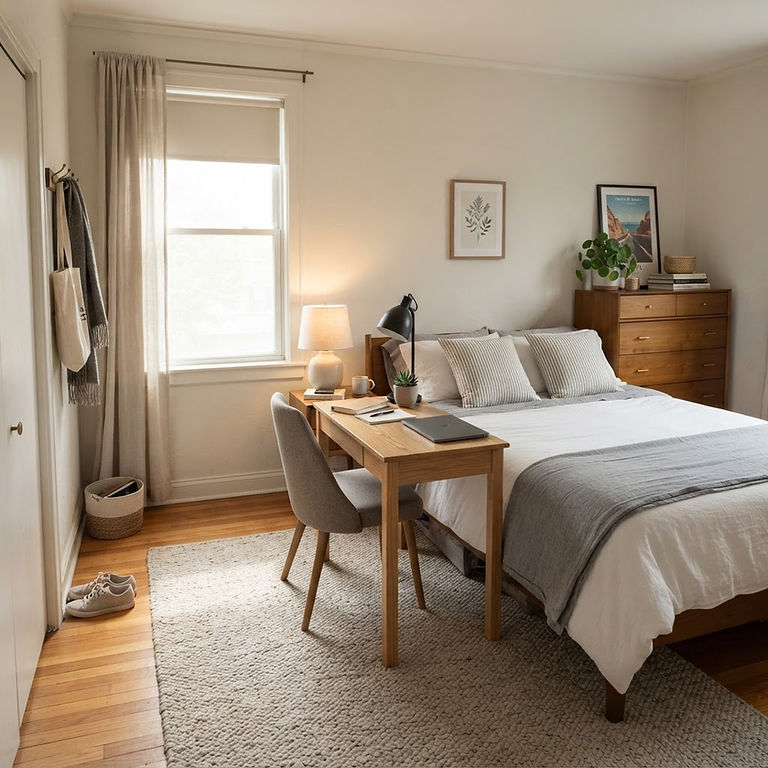
A functional furnished bedroom: bed, dresser, desk, and lighting. Generated illustration.
Unfurnished Rooms
An unfurnished room allows the occupant to bring their own furniture.
This may reduce your initial setup expense.
It can also be appealing to people planning to stay longer.
However, you should not assume that furnished rooms always command higher rent or that unfurnished occupants always stay longer.
Local demand matters.
Example: Furnishing Costs
| Item | Hypothetical cost |
|---|---|
| Bed frame and mattress | $450 |
| Dresser | $150 |
| Desk and chair | $175 |
| Lighting and window coverings | $125 |
| Bedding and miscellaneous items | $100 |
| Total initial furnishing cost | $1,000 |
If furnishing the room allows you to charge an additional $100 per month, it would take 10 months of that additional gross revenue to recover the initial $1,000.
That's before accounting for replacement costs, taxes, vacancies, or other expenses.
The premium is hypothetical and may not be achievable in your market.
The decision should be based on actual local demand and the economics of the room—not simply the assumption that furnished means more profitable.
7. Preparing Your Room and Shared Spaces
Before listing a room, walk through your home from the perspective of someone who has never lived there.
What would they need to feel comfortable?
What might cause frustration?
What would make the space feel safe, clean, and functional?
Prepare the Bedroom
Start with the basics.
Make sure the room is clean, in good repair, and suitable for its intended use.
Address damaged flooring, broken fixtures, peeling paint, poor lighting, or other obvious problems.
If the room is furnished, make sure the furniture is functional and appropriate.
Prepare Shared Areas
Think about the kitchen, bathrooms, laundry, and living areas.
Will the occupant have a designated place for groceries?
Is there space for toiletries?
Where will they store cleaning supplies?
How will shared household items be handled?
You don't need to create a luxury experience.
But you do need to establish a workable living environment.
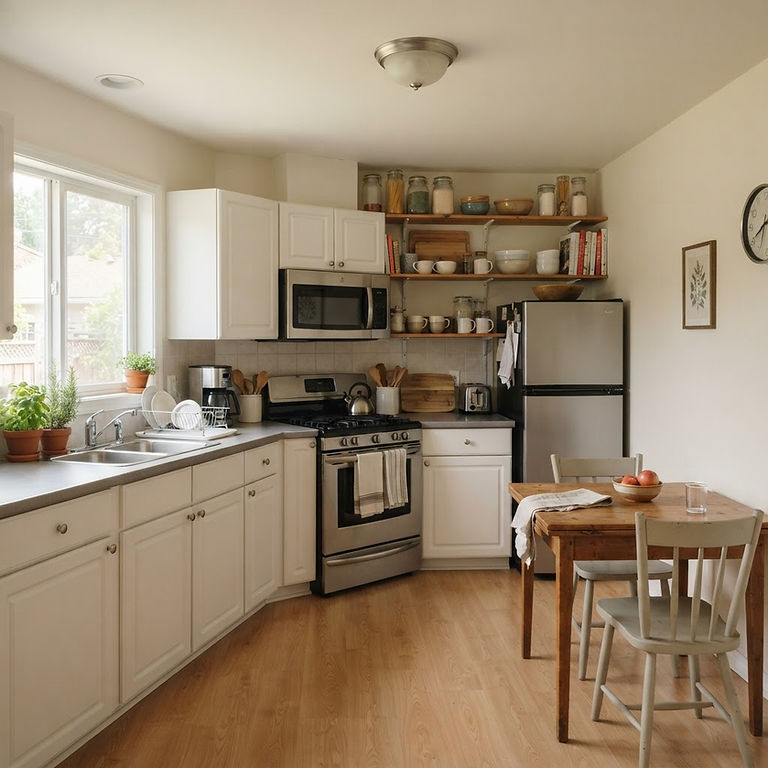
A shared kitchen with organized storage and dining space. Generated illustration.
Consider Privacy
Privacy matters for everyone in the home.
Discuss which areas are shared and which are private.
If locks or access controls are used, verify they comply with applicable safety and housing requirements.
Never install a lock or security measure that compromises required emergency egress.
Photograph the Space Accurately
Take clear photographs showing the actual room and permitted shared areas.
Avoid misleading wide-angle images or photographs that conceal significant limitations.
If you use digitally enhanced or staged images, do not misrepresent the property's condition.
A well-prepared room and accurate listing can help attract applicants who understand what they're renting.
8. Where to Advertise Your Spare Bedroom
Once the room is ready and you've confirmed the legal requirements, you can begin advertising.
Different platforms attract different audiences.
Some focus specifically on roommate arrangements.
Others include rooms alongside apartments and full-home rentals.
Build an Informative Listing
A good listing should clearly explain:
- General location.
- Monthly rent.
- Security deposit, if applicable.
- Available date.
- Furnished or unfurnished status.
- Private or shared bathroom.
- Utilities and internet arrangements.
- Parking availability.
- Kitchen and laundry access.
- Lease or occupancy term.
- Lawful, objective household expectations.
- Application and screening process.
Avoid vague descriptions that force applicants to ask basic questions.
Example Listing Structure
Private Bedroom Available in Shared Home
Private bedroom available in a maintained residential home with access to designated shared kitchen, bathroom, and laundry facilities.
Monthly rent: $800.
Utilities: Included, subject to the written rental agreement.
Parking: [Describe actual parking availability.]
Room: [Furnished or unfurnished.]
Availability: [Date.]
Rental term: [Term.]
Applicants will be evaluated using consistent, lawful screening criteria.
This is an illustrative template. Replace every placeholder and confirm the listing complies with applicable housing and advertising laws.
Avoid Discriminatory Advertising
Rental advertisements and screening practices must comply with applicable fair housing laws.
Don't assume that living in the property automatically exempts you from every advertising or discrimination requirement.
Some owner-occupied arrangements may be treated differently under particular laws, but the scope of any exemption is fact-specific, and federal, state, and local requirements can differ.
Use objective property information and obtain legal guidance when necessary.
Your listing should explain the rental opportunity—not unlawfully exclude people based on protected characteristics.
9. How to Screen Applicants Responsibly
Finding the right occupant is one of the most important parts of renting a room.
You're not just evaluating whether someone can pay rent.
You're entering an ongoing housing arrangement that may involve sharing your kitchen, bathroom, laundry, and common spaces.
That makes clear expectations especially important.
However, screening must be lawful, consistent, and respectful of applicants' privacy.
Establish Criteria Before Reviewing Applicants
Depending on applicable law, your criteria may address:
- Ability to meet the stated rent obligation.
- Verifiable income or other lawful payment resources.
- Relevant rental history.
- References.
- Agreement to legitimate property rules.
- Permitted occupancy limits.
- Completion of the application process.
Apply criteria consistently and make legally required accommodations.
Avoid informal decisions based on stereotypes, assumptions, or protected personal characteristics.
Verify Information Appropriately
Where lawful and relevant, you may verify employment, income, rental references, or other application information.
If you use a consumer reporting service, understand your obligations under applicable consumer reporting laws, including authorization, permissible purpose, and adverse-action requirements.
Collect only information you actually need.
Protect applicant information and avoid retaining sensitive records unnecessarily.
Have a Conversation About Shared Living
A practical discussion can help clarify expectations about:
- Shared-space cleaning.
- Quiet hours.
- Overnight guests.
- Parking.
- Laundry.
- Kitchen use.
- Smoking policies.
- Pets and legally required accommodations.
- Maintenance reporting.
These discussions should focus on legitimate household arrangements and applicable rules, not unlawful screening criteria.
Don't Rush Because the Room Is Empty
An empty bedroom can create pressure to accept the first applicant.
But an unsuitable or poorly documented arrangement can become much more costly than waiting for an applicant who meets your lawful criteria.
A vacancy is a financial inconvenience. A poorly managed housing arrangement can become a much larger problem.
10. Why You Need a Written Room Rental Agreement
Even if you know the person renting your room, put the arrangement in writing.
A written agreement helps both parties understand their rights and responsibilities.
It also reduces the likelihood of misunderstandings.
What the Agreement Should Address
Subject to applicable law, consider documenting:
- Parties to the agreement.
- Address and rented space.
- Rental term.
- Monthly rent.
- Payment due date and permitted payment methods.
- Security deposit terms.
- Utility arrangements.
- Shared-space access.
- Maintenance reporting.
- Lawful guest policies.
- House rules.
- Notice and termination provisions.
- Applicable disclosures.
- Any other legally required terms.
Use a legally appropriate agreement for your jurisdiction and arrangement.

Reviewing a written agreement and household financial records. Generated illustration.
Security Deposits
Security-deposit requirements vary.
Some jurisdictions regulate maximum amounts, handling, notices, deductions, return deadlines, and recordkeeping.
Do not assume you can simply keep a deposit because an occupant moves out or because you disagree about the condition of the room.
Follow the law and document the property's condition.
Roommate, Tenant, or Lodger?
Different jurisdictions may use different legal classifications.
The label you place on an agreement doesn't necessarily determine someone's legal rights.
Owner-occupied room rentals can involve rules different from those governing separate rental houses.
Before using a template, verify the legal framework that applies to your situation.
A written agreement isn't about expecting conflict. It's about making expectations clear before conflict occurs.
11. Establishing Household Rules That Actually Work
Household rules can make the difference between a comfortable shared home and a frustrating one.
The most useful rules are specific, reasonable, consistently applied, and legally permissible.
Cleaning
Who cleans the shared bathroom?
How are kitchen counters and dishes handled?
Are cleaning supplies shared?
If expectations aren't discussed, people may assume someone else will handle them.
Quiet Hours
People have different work and sleep schedules.
Agree on reasonable noise expectations, especially during overnight hours.
Guests
Discuss guest access and overnight stays using policies that comply with applicable law and the rental agreement.
Kitchen and Storage
Clarify refrigerator, pantry, cabinet, and freezer space.
This sounds minor until several people are trying to store groceries in the same kitchen.
Parking
Assign spaces if necessary and permitted.
Explain any restrictions clearly.
Maintenance and Damage
Tell occupants how to report problems.
Explain which issues require immediate attention.
Don't rely on informal text messages alone for important maintenance records.
Respect and Privacy
Everyone in the home deserves reasonable privacy and respectful treatment.
Owner occupancy does not eliminate legal rights that may apply to the occupant.
The best household rules are the ones everyone understands before moving in.
12. Managing Monthly Rent and Household Expenses
Once someone moves in, establish a reliable process for tracking income and expenses.
You don't need complicated software to start.
But you do need accurate records.
Track Rental Income
Record:
- Rent due.
- Rent received.
- Payment date.
- Payment method.
- Outstanding balances.
- Deposits and their separate treatment.
- Other authorized charges.
Track Additional Expenses
Depending on your arrangement, track:
- Utility increases.
- Household supplies.
- Repairs.
- Furnishings.
- Cleaning.
- Advertising.
- Insurance changes.
- Professional services.
- Other rental-related costs.
Keep documentation supporting your records.
Don't Confuse Deposits With Rental Income
A refundable security deposit generally should not be treated the same way as earned monthly rent.
Its accounting and tax treatment depend on the circumstances and applicable rules.
Understand Tax Considerations
Rental income generally has tax implications.
When you rent part of your primary residence, you may need to allocate certain expenses between personal and rental use.
The correct treatment can depend on the facts, including the rented space, shared areas, rental periods, and the nature of the arrangement.
Consult a qualified tax professional or authoritative tax guidance.
Good recordkeeping makes it easier to understand whether your room rental is actually improving your financial position.
13. What Happens When a Room Becomes Vacant?
Vacancy is a normal part of renting property.
People relocate.
Employment situations change.
Relationships and household needs change.
An occupant may leave at the end of the agreement or sooner, subject to applicable terms and law.
The important question is whether you've planned for that possibility.
Prepare for Turnover
When a room becomes vacant, you may need to:
- Follow lawful move-out procedures.
- Document the room's condition.
- Handle deposits according to law.
- Clean and repair the room.
- Replace damaged or worn items.
- Update photographs.
- Advertise again.
- Screen new applicants.
Budget for Empty Months
If you're relying on $800 per month from a room, one full month of vacancy means $800 in gross rent you won't receive.
If two rooms are vacant, the financial impact can be larger.
That's why I recommend using conservative income assumptions rather than budgeting as though every room will remain occupied indefinitely.
Avoid Depending on Every Dollar
If you can only pay your mortgage when every rented room is occupied, your financial arrangement may be fragile.
Room-rental income can improve your finances.
But it shouldn't automatically become the only thing preventing missed essential payments.
Plan for vacancies while the rooms are occupied—not after the income stops.
14. Long-Term Room Rentals vs. Short-Term Guests
Not every homeowner wants the same type of rental arrangement.
Some prefer a longer-term occupant.
Others may consider furnished mid-term stays or short-term guests.
Each model has different demands.
Long-Term Room Rentals
These may offer more predictable occupancy and fewer turnovers, although no occupancy duration is guaranteed.
You still need to manage the shared household relationship and comply with applicable laws.
Furnished Mid-Term Stays
These may appeal to people relocating, working temporary assignments, or needing housing for a defined period.
You may need to provide furniture, utilities, and additional amenities.
There is no single universal legal definition of a mid-term rental.
Short-Term Guests
Short-term rentals can involve frequent cleaning, guest communication, booking management, and changing occupancy.
Local short-term rental restrictions may differ from those for longer-term residential tenancies.
Comparing the Models
| Consideration | Long-term room rental | Furnished mid-term stay | Short-term guest stay |
|---|---|---|---|
| Occupant turnover | Often lower | Variable | Often higher |
| Furnishing expectations | Varies | Often furnished | Typically furnished |
| Cleaning and preparation | Usually less frequent | Between stays | Frequently between stays |
| Income predictability | Depends on occupancy and payment | Depends on bookings and term | Often more variable |
| Local rules | Residential rental rules | Depends on arrangement | May include special short-term rules |
My perspective: The best strategy isn't necessarily the one with the highest advertised nightly or monthly rate. It's the one whose actual costs, responsibilities, and household impact fit your situation.
15. From the Field: What Renting Bedrooms Has Taught Me
I've rented bedrooms in my primary residence, and that experience has helped shape how I think about residential rental income.
One of the biggest advantages is that you're working with a property you already own.
You may not need another mortgage or a separate investment-property purchase to begin generating income.
But sharing your home introduces considerations that don't always exist when you rent an entire separate property.
You have to think about the kitchen.
The bathrooms.
The laundry.
Parking.
Noise.
Cleaning.
Privacy.
And how the people living in the home interact with one another.
Those details matter.
A room rental can look attractive on a spreadsheet while creating a living arrangement that isn't sustainable for your household.
That's why I believe the best room-rental strategy balances financial goals with clear expectations and responsible management.
I've also learned that the administrative side matters.
Tracking payments, maintaining the property, communicating clearly, and documenting agreements are all part of running the rental responsibly.
You don't have to turn your home into a large rental business.
But once you begin collecting rent, you should treat the arrangement with the seriousness it deserves.
My biggest takeaway is this: renting a room can help your finances, but the quality of the living arrangement matters just as much as the money.
16. Try It Yourself: Calculate Your Room Rental Opportunity
Before listing a room, complete this simple worksheet.
Step 1: Identify Your Available Rooms
| Question | Your answer |
|---|---|
| How many potentially suitable bedrooms are available? | |
| How many do you actually want to rent? | |
| Are the rooms legally permitted for rental occupancy? | |
| Will they be furnished or unfurnished? | |
| Will occupants have private or shared bathrooms? |
Step 2: Estimate Monthly Income
| Income source | Monthly estimate |
|---|---|
| Room 1 rent | $ |
| Room 2 rent | $ |
| Additional room rent, if applicable | $ |
| Total estimated gross monthly rent | $ |
Step 3: Estimate Monthly Costs
| Expense | Monthly estimate |
|---|---|
| Additional utilities | $ |
| Household supplies | $ |
| Maintenance reserve | $ |
| Vacancy allowance | $ |
| Furnishing replacement reserve | $ |
| Insurance adjustment | $ |
| Other rental-related expenses | $ |
| Total estimated monthly costs | $ |
Step 4: Calculate Your Estimated Contribution
Estimated gross monthly rent − estimated monthly rental costs = estimated monthly contribution.
Remember that this simplified contribution is not necessarily taxable profit or full property-level net income. It may exclude existing shared housing costs, initial setup expenses, financing costs, and taxes.

Working through a simplified room rental income worksheet. Generated illustration.
Interactive calculator
Room Rental Income Calculator
Change any value to see the estimate update. Nothing you type is saved or sent anywhere, so a reload restores the example; the worksheet below stays available for paper.
Estimated monthly contribution 1245 dollars, estimated annual contribution 14940 dollars.
Estimated monthly contribution
$1,245
Estimated annual contribution $14,940
- Estimated gross monthly rent
- $1,600
- Monthly vacancy allowance
- −$80
- Other monthly costs
- −$275
An estimate, not guaranteed profit. It excludes initial setup costs, taxes, insurance adjustments, financing costs, and the existing household expenses you already pay.
Restores 2 bedrooms at $800, a 5% vacancy allowance, and the example costs.
Step 5: Ask the Personal Questions
Before moving forward, answer:
- Am I comfortable sharing my home with another person?
- Can I maintain appropriate privacy and household boundaries?
- Do I understand the legal and insurance requirements?
- Can I afford a vacancy?
- Is the expected financial benefit worth the responsibility?
If you're uncertain about several answers, spend more time preparing before advertising the room.
17. Your First 30 Days: A Practical Room-Rental Action Plan
You don't have to accomplish everything at once.
Here's a reasonable way to approach the first month.
Week 1 — Research and Evaluate
- Confirm applicable rental, occupancy, and insurance requirements.
- Identify which rooms may be suitable.
- Research comparable room-rental prices.
- Estimate income and expenses.
- Discuss the potential arrangement with affected household members.
Week 2 — Prepare the Property
- Address necessary repairs and safety concerns.
- Clean and prepare the bedroom.
- Organize shared storage and common spaces.
- Decide whether furnishing makes financial sense.
- Photograph the actual rental space.
Week 3 — Establish Your Process
- Prepare a legally appropriate rental agreement.
- Define reasonable household rules.
- Establish lawful screening criteria.
- Determine how payments and records will be handled.
- Finalize the listing.
Week 4 — Advertise and Evaluate
- Publish the listing on appropriate platforms.
- Respond to inquiries.
- Apply screening criteria consistently.
- Answer applicant questions accurately.
- Proceed only when you're satisfied that the arrangement is lawful, financially sensible, and workable for your household.
This is a preparation roadmap, not a promise that a room should be occupied within 30 days.
There's no prize for rushing. A well-prepared rental arrangement is worth the extra time.
Key Takeaways
You may be able to generate rental income without purchasing another property.
Renting a spare bedroom can help offset housing expenses and provide practical rental-management experience.
But gross rental income is not the same as profit.
Evaluate utilities, maintenance, vacancy, insurance, furnishings, taxes, and other applicable expenses.
Make sure your home is legally and physically suitable for the intended rental arrangement.
Use accurate listings, lawful screening practices, written agreements, and clear household expectations.
Maintain financial records and prepare for vacancies.
And remember that sharing your home is different from renting an entirely separate property.
The best room-rental arrangement is one that improves your finances while remaining safe, legal, respectful, and sustainable for everyone involved.
What's Next: House Hacking — Buying a Home That Helps Pay for Itself
Renting a bedroom in your existing home is one way to offset housing expenses.
But what if you're planning to buy a home and want rental income to be part of the purchase strategy from the beginning?
In the next lesson, we'll explore house hacking.
We'll look at buying a duplex and living in one unit, purchasing a home with rentable space, understanding owner-occupied financing considerations, and evaluating whether the numbers make sense.
Next in the series: FRP-005 — House Hacking: Buying a Home That Helps Pay for Itself
This article is for general educational purposes only and does not constitute individualized financial, legal, tax, insurance, mortgage, or housing advice. Rental laws, fair housing requirements, occupancy restrictions, licensing, insurance coverage, and tax treatment vary by location and circumstances. Owner-occupied rental arrangements may have distinct legal requirements. All financial examples are hypothetical and are not projections or guarantees of income, occupancy, profitability, or investment performance. Consult qualified professionals and applicable authorities before entering a rental arrangement.
© Brad Merritt. All rights reserved.