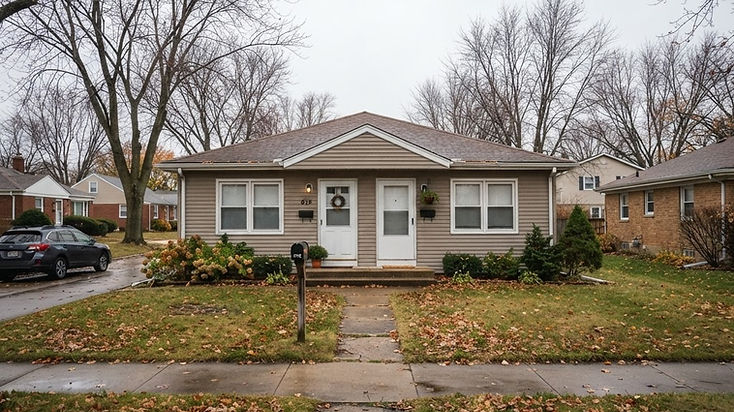
Introduction: What If Your Home Could Help Pay for Itself?
For most people, buying a home is one of the largest financial commitments they'll ever make.
Every month, there's a mortgage payment.
Property taxes.
Insurance.
Utilities.
Maintenance.
And all the other expenses that come with owning a property.
Traditionally, we think about those expenses as the cost of having a place to live.
But what if you could purchase a home that also generates rental income?
What if part of your monthly housing payment could be offset by someone else paying rent?
That's the basic idea behind a real estate investing strategy called house hacking.
House hacking means using part of a property you live in to generate income that helps offset the cost of owning and operating that property.
You might buy a duplex, live in one unit, and rent the other.
You might purchase a single-family home with extra bedrooms and rent those rooms to qualified occupants.
Or you might buy a home with a legally rentable accessory dwelling unit.
The goal isn't necessarily to eliminate your housing payment.
It's to reduce the amount you personally need to contribute while potentially building equity in a property you own.
I've experienced different sides of residential rental ownership, including renting bedrooms in my primary residence and owning a duplex.
Those experiences have reinforced something important for me: a property can serve more than one financial purpose.
It can provide a place to live while also creating an opportunity to generate rental income.
But house hacking isn't automatically profitable, and it isn't appropriate for every buyer.
You still need to understand the purchase price, financing, rental demand, maintenance responsibilities, and legal requirements.
In this lesson, we'll look at how house hacking works, the different ways to approach it, how to evaluate the numbers, and how to decide whether buying a home with rental potential makes sense for you.
The goal is to buy a home you can afford and manage—not to rely on optimistic rental projections to make an unaffordable purchase appear affordable.
1. What Is House Hacking?
House hacking is a strategy in which an owner occupies a property and earns income from part of that same property.
The income is commonly generated by renting bedrooms, a separate residential unit, or another legally permitted living space.
The term has become popular in real estate investing communities, but the underlying idea isn't new.
Homeowners have rented spare rooms and portions of their properties for generations.
The difference is that house hacking treats rental potential as part of the homebuying decision.
Instead of asking only:
Can I afford this house?
You also ask:
Could part of this property generate rental income, and how would that income affect my housing costs?
A Simple Example
Imagine you purchase a duplex.
You live in the downstairs unit.
You rent the upstairs unit for $1,200 per month.
Your combined monthly mortgage principal and interest, property taxes, and insurance total $2,100.
| Item | Monthly amount |
|---|---|
| Mortgage principal and interest | $1,600 |
| Property taxes | $350 |
| Property insurance | $150 |
| Total PITI payment | $2,100 |
| Gross rent from second unit | -$1,200 |
| Payment less gross rent | $900 |
At first glance, it appears that your $2,100 housing payment has been reduced to $900.
But that's only the beginning of the analysis.
The $900 figure doesn't account for vacancies, repairs, additional utilities, capital improvements, or other operating expenses.
Those costs still matter.
House hacking can reduce the cost of homeownership, but gross rental income should never be mistaken for guaranteed savings.
2. Why House Hacking Appeals to First-Time Real Estate Investors
One of the biggest challenges in getting started with rental property is the amount of money required to purchase a separate investment property.
You may need a larger down payment than you would for an eligible owner-occupied home.
You also need to qualify for financing and maintain sufficient reserves.
House hacking offers another potential path.
Instead of purchasing a separate investment property while continuing to pay for your own housing elsewhere, you buy a property you intend to occupy.
Depending on the loan program, property type, occupancy requirements, and your qualifications, owner-occupied financing may offer different down-payment or underwriting options than financing for a non-owner-occupied investment property.
Potential Benefits
Reduced personal housing costs
Rental income may offset part of your monthly ownership expenses.
Experience managing rental property
You'll learn how to advertise a unit, evaluate applicants, maintain the property, and handle rental income and expenses.
Equity building
As you make mortgage payments, the principal portion may reduce your loan balance.
Property value may also increase or decrease over time.
Potential future flexibility
A property purchased as an owner-occupied home may later become a different type of rental investment, subject to financing terms, occupancy obligations, local regulations, and your circumstances.
A lower barrier to entering rental ownership
For some buyers, an eligible owner-occupied purchase may be more accessible than buying a separate investment property.
The Important Tradeoff
House hacking also means accepting the responsibilities of being both a homeowner and a landlord.
And depending on the strategy, your tenants or roommates may live very close to you.
That can affect privacy, household routines, and your personal life.
The best house hack is one that works financially and is a living arrangement you're comfortable maintaining.
3. Five Common Ways to House Hack
There isn't just one way to use rental income to offset the cost of owning a home.
Different strategies require different amounts of capital, management, and personal involvement.
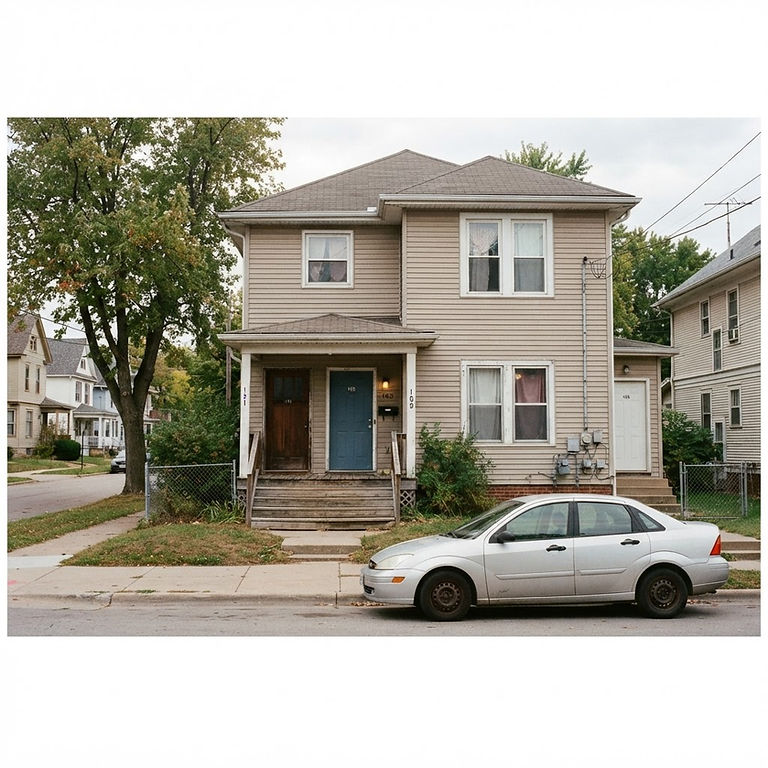
Strategy 1: Buy a Duplex and Live in One Unit
This is one of the most recognizable house-hacking approaches.
You purchase a property containing two residential units.
You live in one unit and rent the other.
Each unit may have its own kitchen, bathroom, entrance, and living space, depending on the property's configuration.
The primary advantage is that you can maintain more separation between your personal living space and the rented unit.
However, you'll still be responsible for managing the property and maintaining both units.
Strategy 2: Buy a Triplex or Fourplex
Some buyers consider small multifamily properties with three or four units.
They occupy one unit and rent the others.
This can create multiple rental-income sources.
But it also introduces more maintenance responsibilities, tenants, and financial complexity.
Financing eligibility and underwriting requirements can differ substantially from those for a single-family home.
A property with more units isn't automatically a better investment.
Strategy 3: Buy a Single-Family Home With Extra Bedrooms
You purchase a home with more bedrooms than you need and rent suitable spare rooms.
This may be appealing if you don't want to purchase a multifamily property.
However, you'll be sharing household spaces.
As we discussed in FRP-004, this requires clear expectations, lawful screening, written agreements, and thoughtful household management.
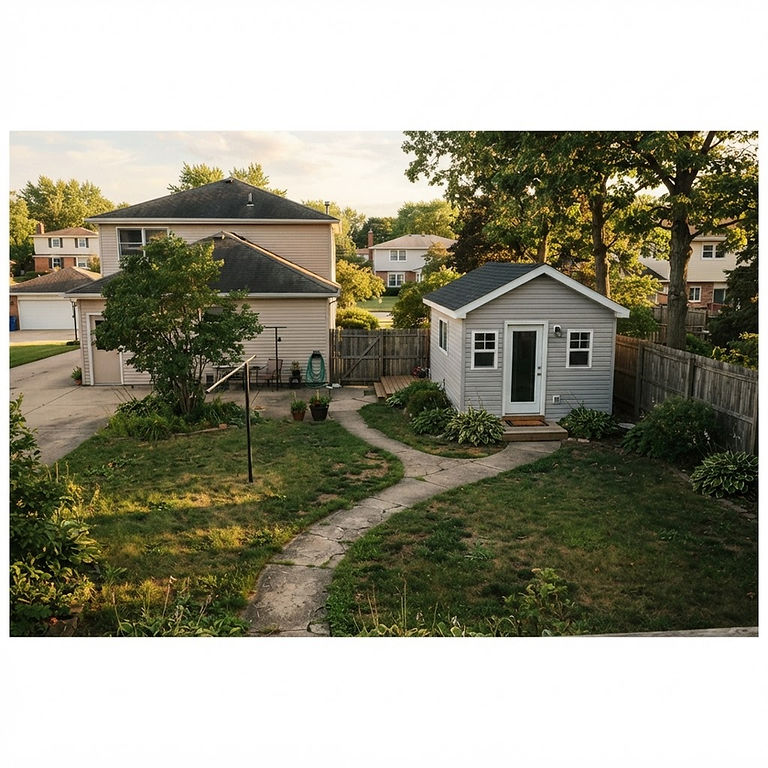
Strategy 4: Buy a Home With an Accessory Dwelling Unit
An accessory dwelling unit, or ADU, is a secondary residential living space associated with a primary property.
It might be a backyard cottage, garage apartment, or other legally established unit.
An existing legal ADU may provide rental potential while allowing more privacy than renting bedrooms.
But don't assume that every converted garage, basement, or backyard structure is approved for rental occupancy.
Verify zoning, permits, building requirements, and rental permissions.
Strategy 5: Buy a Home With a Legally Rentable Separate Space
Some homes have layouts that may support a separate rental arrangement, subject to local law.
For example, a property might contain a permitted basement apartment.
The key word is legally.
A separate entrance and a kitchenette do not necessarily mean the space is an authorized rental unit.
Before buying, verify the property's approved use.
Comparing the Five Approaches
| Strategy | Potential rental income sources | Privacy considerations | Management complexity |
|---|---|---|---|
| Duplex | One other unit | More separation | Moderate |
| Triplex or fourplex | Two or three other units | More separation | Higher |
| Spare bedrooms | Individual rooms | Shared living spaces | Moderate |
| Home with legal ADU | Secondary dwelling | Often more separation | Moderate |
| Home with permitted separate space | Separate residential area | Depends on layout | Moderate |
These are general comparisons, not guarantees.
The actual financial and management demands depend on the property.
4. How House Hacking Can Reduce Your Housing Costs
The financial appeal of house hacking is straightforward.
Rental income can help pay for expenses you would otherwise cover entirely yourself.
But it's important to distinguish three different numbers.
Number 1: Your Total Housing Payment
This generally includes mortgage principal and interest, property taxes, and insurance.
Some buyers also have mortgage insurance, association dues, or other required costs.
Number 2: Gross Rental Income
This is the rent you expect to collect before deducting rental-related expenses.
Number 3: Your Estimated Personal Housing Contribution
This is the amount you still need to cover after accounting for rental income and the costs associated with earning it.
Let's return to our hypothetical duplex.
A More Complete Duplex Example
| Item | Monthly amount |
|---|---|
| Mortgage principal and interest | $1,600 |
| Property taxes | $350 |
| Property insurance | $150 |
| Total PITI | $2,100 |
| Rent from second unit | -$1,200 |
| Vacancy allowance | +$60 |
| Maintenance reserve | +$100 |
| Capital improvement reserve | +$100 |
| Additional owner-paid utilities | +$75 |
| Estimated personal housing contribution | $1,235 |
In this simplified example, the owner has an estimated monthly housing contribution of $1,235.
That is $865 less than the $2,100 PITI payment alone.
But it doesn't mean the owner has earned $865 in profit.
The property still has costs, and some expenses may not be included in the illustration.
What Happens If the Unit Is Vacant?
If the rental unit is empty for a full month, the owner may have to cover the full $2,100 payment plus actual operating costs.
A vacancy allowance helps with long-run budgeting, but it doesn't guarantee that money will be available when needed.
That's why reserves are essential.
House hacking works best when rental income improves an already manageable housing budget rather than becoming the only way to afford the property.
5. Can You Really Live for Free by House Hacking?
You'll sometimes hear real estate investors talk about living for free.
The idea is that rental income covers the mortgage and other housing expenses.
That can happen under certain circumstances.
But it's not something every buyer should expect.
Consider a hypothetical triplex.
You live in one unit and rent the other two.
Each rented unit generates $1,300 per month.
Your total gross rental income is $2,600.
Your monthly PITI is $2,300.
At first glance, the property appears to produce $300 more in gross rent than the monthly housing payment.
But you haven't accounted for operating expenses.
| Item | Monthly amount |
|---|---|
| Rent from Unit 2 | $1,300 |
| Rent from Unit 3 | $1,300 |
| Gross rental income | $2,600 |
| Vacancy allowance | -$130 |
| Maintenance reserve | -$175 |
| Capital improvement reserve | -$150 |
| Owner-paid utilities | -$125 |
| Rent after listed reserves and expenses | $2,020 |
| Total PITI | -$2,300 |
| Estimated monthly shortfall | -$280 |
Despite collecting $2,600 in gross rent, the owner still needs to contribute approximately $280 per month under these assumptions.
And that doesn't include every possible expense.
The arrangement might still be financially attractive compared with other housing options.
But it's not free housing.
Why the Distinction Matters
When you evaluate a property, don't stop at comparing gross rent with the mortgage.
Account for vacancies, repairs, major replacements, utilities, insurance, taxes, and other costs.
Also remember that mortgage principal repayment is not the same as an operating expense for tax or investment analysis, even though it affects your monthly cash requirements.
Living for less is a more realistic initial goal than assuming you'll live for free.
6. Understanding Owner-Occupied Financing
Financing is one of the biggest reasons buyers explore house hacking.
Some mortgage programs allow eligible borrowers to purchase properties with multiple residential units while occupying one of them as their primary residence.
But financing rules are detailed and can change.
Conventional Mortgages
Conventional loan eligibility, down-payment requirements, mortgage insurance, and underwriting rules depend on the loan product and borrower.
Some eligible two- to four-unit properties can be financed as primary residences.
You should verify current requirements with a qualified lender.
FHA Loans
FHA-insured loans may be available for eligible owner-occupied properties containing one to four residential units.
Certain three- and four-unit properties may be subject to additional self-sufficiency requirements.
Borrower qualifications, property standards, mortgage insurance, and occupancy rules apply.
VA Loans
Eligible borrowers may be able to use VA-backed financing for certain owner-occupied residential properties.
Eligibility, entitlement, lender requirements, occupancy, and property standards must be verified.
Local and State Programs
Some buyers may qualify for down-payment assistance or other homeownership programs.
Eligibility and property restrictions vary.
Not every assistance program permits every type of rental arrangement.
Rental Income and Mortgage Qualification
Some loan programs may allow lenders to consider qualifying rental income from eligible units.
However, the amount counted, documentation required, vacancy adjustments, and underwriting treatment depend on the program.
Do not assume that a lender will count 100% of projected rent.
Occupancy Requirements Matter
Owner-occupied financing is intended for borrowers who genuinely intend to satisfy the program's primary-residence occupancy requirements.
Never misrepresent your intended occupancy to obtain financing terms.
If your plans change after purchase, review your loan obligations and obtain appropriate guidance.
Talk with a lender about the exact property type and intended rental arrangement before making an offer.
7. How Much Money Do You Need to Start House Hacking?
The amount depends on the property price, financing program, closing costs, required repairs, and cash reserves.
A low-down-payment mortgage doesn't mean you can buy a property with almost no money.
Example: A Hypothetical $250,000 Purchase
Assume an illustrative purchase price of $250,000.
| Item | Hypothetical amount |
|---|---|
| Purchase price | $250,000 |
| Illustrative 5% down payment | $12,500 |
| Illustrative closing costs at 3% | $7,500 |
| Initial repair and setup budget | $5,000 |
| Initial cash reserve | $7,500 |
| Estimated cash needed | $32,500 |
The 5% down payment and 3% closing costs are hypothetical planning assumptions, not universal loan requirements.
Your actual loan may require a different down payment, closing costs, reserves, mortgage insurance, or other expenses.

Don't Forget the Cash Reserve
A property can require repairs immediately after closing.
A tenant may move out.
A water heater can fail.
A roof can need replacement.
The purchase should not consume every dollar you have available.
A Practical Starting Question
Instead of asking only whether you can afford the down payment, ask:
Can I afford the purchase, the initial repairs, and a reasonable financial reserve without relying on perfect rental occupancy?
That question can prevent expensive mistakes.
8. How to Find a Property That Works for House Hacking
Not every duplex or home with extra bedrooms makes a good house hack.
The property must work as both a place to live and a potential rental investment.
Start With Your Personal Housing Needs
Think about:
- Location.
- Commute.
- School or family needs.
- Parking.
- Privacy.
- Layout.
- Accessibility.
- Long-term suitability.
You still need to enjoy living there.
Then Evaluate the Rental Opportunity
Research:
- Comparable rental rates.
- Local vacancy conditions.
- Demand for the property type.
- Condition of the rental unit.
- Separate or shared utilities.
- Maintenance responsibilities.
- Parking and access.
- Local rental regulations.
Verify the Unit Count
A listing may advertise a property as a duplex or multifamily investment.
That doesn't automatically establish that every unit is legally recognized.
Verify permitted use, unit count, occupancy approvals, and any required rental licenses.
Be Careful With Unpermitted Conversions
A finished basement, converted garage, or divided single-family home may appear to provide rental income.
But if the rental arrangement isn't legal, projected income may not be achievable.
That can change the entire financial analysis.
A property should be evaluated based on its legal and practical rental potential—not merely how it is advertised.
9. How to Estimate Rental Income Before Buying
One of the most common beginner mistakes is relying on the seller's projected rental income.
A listing may say:
"Great rental opportunity!"
Or:
"Potential to earn $1,500 per month!"
Those claims are starting points for investigation, not verified income.
Research Comparable Rentals
Look for properties with similar:
- Location.
- Number of bedrooms.
- Bathrooms.
- Square footage.
- Condition.
- Parking.
- Utilities.
- Amenities.
- Lease terms.
Distinguish Asking Rent From Collected Rent
A listing asking $1,500 doesn't prove that a tenant will pay $1,500.
And a currently occupied unit doesn't guarantee that the same rent will continue indefinitely.
Review available lease information, payment history where lawfully obtainable, and market conditions.
Use Conservative Assumptions
If comparable rents appear to range from $1,100 to $1,300, you might evaluate the deal using a lower or middle estimate rather than the highest advertised number.
Example
| Rental assumption | Monthly rent |
|---|---|
| Optimistic estimate | $1,300 |
| Moderate estimate | $1,200 |
| Conservative estimate | $1,100 |
If the property only works at $1,300, it may be more vulnerable than one that remains manageable at $1,100.
A good purchase decision should survive reasonable assumptions—not require the best possible outcome.
10. The Hidden Expenses House Hackers Often Overlook
Rental income can make a property more affordable.
But it can also distract buyers from expenses they haven't fully considered.
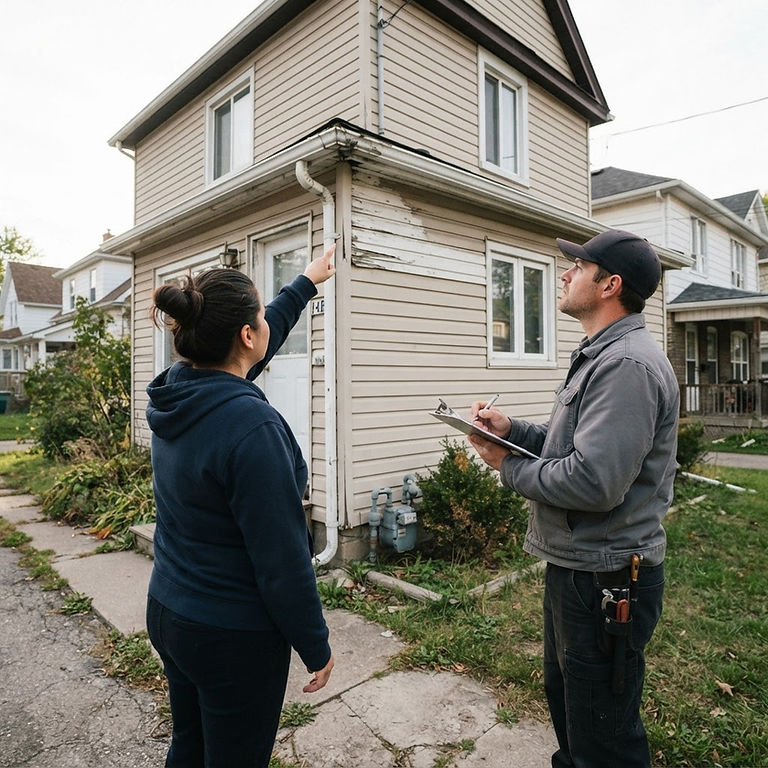
Maintenance
Even a well-maintained property needs repairs.
Appliances break.
Plumbing leaks.
Heating systems require service.
Capital Improvements
Some expenses are infrequent but expensive.
Examples include:
- Roof replacement.
- Furnace replacement.
- Major plumbing work.
- Exterior repairs.
- Driveway replacement.
- Structural repairs.
These costs may not occur every month, but they still need to be planned for.
Vacancy
Rental income can stop when a unit is vacant.
Your mortgage payment generally does not.
Insurance
Your insurer needs accurate information about the property and its rental use.
Coverage and premiums may differ depending on the property and arrangement.
Property Taxes
Taxes may change following a purchase, reassessment, changes in use, or other events, depending on local law.
Utilities
Determine whether tenants pay their own utilities or whether some costs remain with the owner.
Property Management
You may initially manage the property yourself.
But your time still has value.
If you eventually hire management, that expense can affect the economics.
Legal and Administrative Costs
You may need leases, permits, registrations, inspections, professional advice, or other services.
A house hack should be analyzed like a rental property, even when you're living in part of it.
11. What Happens When Your Tenant Moves Out?
A vacant rental unit is one of the most important scenarios to test before purchasing.
Imagine your duplex has a $2,100 monthly PITI payment.
You normally collect $1,200 in rent.
When the unit becomes vacant, that $1,200 stops.
But the $2,100 payment continues.
You may also have turnover costs.
Vacancy Stress Test
| Scenario | Gross monthly rent | PITI before other expenses |
|---|---|---|
| Unit occupied | $1,200 | $2,100 |
| Unit vacant | $0 | $2,100 |
When occupied, gross rent may offset part of the payment.
When vacant, it offsets none of it.
And the property may still require cleaning, repairs, utilities, and advertising.
Build Reserves Before You Need Them
Consider how many months of required payments and operating expenses you could cover if rental income stopped.
There isn't one universal reserve amount that works for every owner.
The appropriate amount depends on your obligations, property condition, income stability, and risk tolerance.
If a single vacant month would put you at immediate risk of missing essential payments, reconsider the purchase or strengthen your reserves first.
12. Living Next Door to Your Tenant
House hacking can create a different landlord-tenant relationship than owning a separate rental property.
If you live in one side of a duplex, your tenant may be only a wall or floor away.
That has advantages.
You can monitor general property conditions.
You may notice maintenance issues sooner.
You may be able to respond more conveniently to certain problems.
But proximity can also create challenges.
Respect Privacy
Living nearby doesn't give you unrestricted access to a rented unit.
Follow applicable notice, entry, privacy, and quiet-enjoyment requirements.
Establish Communication Boundaries
Make it clear how tenants should report maintenance problems.
Distinguish emergencies from routine requests.
Avoid creating an expectation that you're available for non-emergency matters at every hour.
Keep Relationships Professional
You can be friendly without treating the rental arrangement casually.
Written agreements, consistent policies, and documented communication are important.
Remember That You're Also a Neighbor
Noise, parking, trash, pets, and shared spaces can affect both sides of the property.
Be respectful of the same expectations you establish for occupants.
Living close to your tenants can be convenient, but professionalism and boundaries are essential.
13. Can You Turn Your House Hack Into a Full Rental Later?
One of the attractive possibilities of house hacking is future flexibility.
You may purchase a duplex, live in one unit, and rent the other.
Years later, your circumstances may change.
You might purchase another primary residence.
You might relocate for work.
You might decide that you no longer want to live in the property.
Depending on your financing obligations, legal requirements, insurance, and circumstances, you may be able to rent the unit you previously occupied.
At that point, the property could potentially generate rent from both units.
Example: A Duplex With Two Rented Units
Imagine each unit rents for $1,200.
| Item | Monthly amount |
|---|---|
| Unit 1 rent | $1,200 |
| Unit 2 rent | $1,200 |
| Total gross rent | $2,400 |
That doesn't mean the property generates $2,400 in profit.
You'll still have mortgage payments, taxes, insurance, vacancies, repairs, reserves, and other expenses.
But it illustrates how the use of a property can change over time.
Don't Assume Conversion Is Automatic
Before changing occupancy, verify:
- Mortgage occupancy obligations.
- Insurance requirements.
- Local rental licensing.
- Zoning and permitted use.
- Tax considerations.
- Any association restrictions.
- Existing lease obligations.
House hacking can be a stepping stone toward rental-property ownership, but future conversion should be planned and legally verified.
14. When House Hacking Might Be a Bad Idea
House hacking isn't right for everyone.
There are situations where it may create more financial stress than opportunity.
You Can't Afford the Property Without Rent
If your budget collapses when the rental unit is vacant, the purchase may be too risky.
The Property Needs More Repairs Than You Can Fund
An attractive purchase price can hide major maintenance obligations.
The Rental Space Isn't Legal
Projected rental income from an unauthorized unit can be unreliable or unavailable.
You Don't Want to Manage Tenants
Owning a rental involves responsibilities.
Even if you hire a property manager, you're still the owner.
You Need More Privacy
Sharing a property with renters may not suit your lifestyle.
The Numbers Only Work Under Optimistic Assumptions
If the property requires high rent, zero vacancies, and minimal repairs to make financial sense, you may have too little margin for unexpected problems.
A house hack should make your financial life more resilient—not introduce obligations you cannot comfortably manage.
15. From the Field: What My Rental Experience Has Taught Me
I've approached residential rental income in more than one way.
I've rented bedrooms in my primary residence.
I've also owned a duplex with separate rental units.
Those experiences have shown me that the structure of the property changes the experience of being a landlord.
When you rent bedrooms in your home, you're managing shared living spaces.
The kitchen matters.
The bathroom matters.
The laundry matters.
Household expectations matter.
When you own a duplex, the living spaces are more separate, but you're still responsible for the property and its occupants.
Maintenance, rent collection, communication, and financial planning remain important.
For me, one of the most useful lessons has been that rental income is only one part of the equation.
You have to understand the responsibilities attached to that income.
You also have to consider how the property fits your life.
I wouldn't recommend purchasing a property simply because someone claims it can pay for itself.
I'd want to understand the numbers.
I'd want to understand the condition.
I'd want to understand the local rental market.
And I'd want to know what happens if the expected rental income doesn't materialize.
The real value of house hacking is creating an opportunity to reduce housing costs while learning how to own and manage rental property responsibly.
16. Try It Yourself: Analyze a Potential House Hack
Before buying a property, work through a simple analysis.
Step 1: Identify the Property
| Question | Your answer |
|---|---|
| Property type | |
| Purchase price | |
| Number of legal residential units | |
| Unit or space you would occupy | |
| Rental spaces available | |
| Expected monthly rent |
Step 2: Estimate Your Monthly Housing Costs
| Expense | Monthly estimate |
|---|---|
| Mortgage principal and interest | $ |
| Property taxes | $ |
| Property insurance | $ |
| Mortgage insurance, if applicable | $ |
| Association dues, if applicable | $ |
| Owner-paid utilities | $ |
| Maintenance reserve | $ |
| Capital improvement reserve | $ |
| Other costs | $ |
| Total estimated monthly costs | $ |
Step 3: Estimate Rental Income
| Income | Monthly estimate |
|---|---|
| Rental unit or room 1 | $ |
| Rental unit or room 2 | $ |
| Additional rental income | $ |
| Gross monthly rent | $ |
| Vacancy allowance | -$ |
| Estimated rent after vacancy allowance | $ |
Step 4: Calculate Your Housing Contribution
Total estimated monthly housing costs − estimated rent after vacancy allowance = estimated personal housing contribution.
A negative result would indicate that estimated rent exceeds the listed costs under those assumptions.
That does not automatically mean the property is profitable or that you will live for free.
Step 5: Run a Vacancy Scenario
Now assume the rental spaces are empty.
Can you still afford the property?
For how long?
What expenses would continue?
What repairs or turnover costs might arise?
Step 6: Compare With Your Current Housing Situation
Estimate your current monthly housing cost.
Compare it with the proposed house hack's estimated contribution.
Then consider the purchase costs, risks, responsibilities, and lifestyle differences.
Interactive calculator
House Hacking Calculator
Change any value to see the estimate update immediately. Nothing you type is saved, logged or sent anywhere and no account is needed, so a reload restores the example; the worksheet above stays available to work through on paper.
Estimated monthly housing contribution 1235 dollars, annualized 14820 dollars, 48.0 percent of listed costs offset.
Estimated monthly housing contribution
$1,235
This is the amount you would still need to cover each month after the listed costs and the estimated rent after vacancy.
- Total listed monthly housing costs
- $2,375
- Gross monthly rental income
- $1,200
- Vacancy allowance
- −$60
- Estimated rent after vacancy
- $1,140
- Annualized housing contribution
- $14,820
Share of listed costs offset by estimated rent
48.0%
The bar stops at 100%; the percentage above always shows the true figure. Vacancy, maintenance, and capital reserves are already included in the listed costs.
An educational estimate, not a mortgage qualification, a guarantee of rental income, or a measure of investment performance. It excludes purchase costs, closing costs, financing details, mortgage insurance and association dues unless you enter them, and tax treatment.
Restores the article's detailed duplex example: $2,375 in listed monthly costs and $1,200 of gross rent with a 5% vacancy allowance.
A good house hack should make sense as both a home and a financial commitment.
17. Your First 30 Days of House-Hacking Research
You don't need to buy a property immediately.
Start by learning how to evaluate the opportunity.
Week 1 — Understand Your Finances
Review your income, savings, debts, credit profile, and monthly budget.
Determine what you can reasonably afford without depending on perfect rental occupancy.
Speak with a qualified mortgage professional about your options.
Week 2 — Research Your Market
Look for duplexes, small multifamily properties, and homes with legal rental potential.
Compare purchase prices and realistic rental rates.
Learn about local rental requirements.
Week 3 — Analyze Potential Properties
Choose several properties and estimate:
- Monthly housing payment.
- Rental income.
- Vacancy allowance.
- Maintenance.
- Capital improvements.
- Utilities.
- Initial cash needed.
- Emergency reserves.
Stress-test the numbers.
Week 4 — Build Your Buying Team
Consider speaking with:
- A qualified lender.
- A real estate agent experienced with the property type.
- A home inspector.
- An insurance professional.
- A tax professional.
- A qualified attorney when legal questions arise.
You don't need to hire everyone immediately.
But you should know which professionals can help you evaluate the risks.
The first 30 days should be about learning and preparation—not rushing into a purchase.
Key Takeaways
House hacking is a strategy for generating rental income from a property you occupy.
It can involve a duplex, small multifamily property, spare bedrooms, an accessory dwelling unit, or another legally rentable space.
Rental income may reduce your personal housing costs.
But gross rent is not the same as profit or guaranteed savings.
Owner-occupied financing may provide opportunities that differ from separate investment-property financing, subject to program requirements.
Before buying, verify legal rental use, financing obligations, realistic rent, property condition, insurance, and cash reserves.
Always test what happens when the rental income stops.
And choose a property that works for your personal life as well as your financial goals.
The goal isn't to buy a property that looks impressive on paper. It's to buy a home you can afford, maintain, and responsibly use to build long-term financial security.
What's Next: Buying Your First Duplex — A Beginner's Guide
Now that you understand house hacking, let's take a closer look at one of its most recognizable property types: the duplex.
In the next lesson, we'll explore how to evaluate a duplex, understand its layout and rental potential, estimate expenses, inspect the property, and avoid common beginner mistakes.
Next in the series: FRP-006 — Buying Your First Duplex: A Beginner's Guide
This article is for general educational purposes only and does not constitute individualized financial, legal, tax, insurance, or mortgage advice. Financing programs, underwriting, occupancy requirements, zoning, rental licensing, tenant protections, and tax treatment vary by jurisdiction and circumstance. All financial examples are hypothetical and are not guarantees of rental income, affordability, appreciation, equity growth, or investment performance. Verify current requirements with qualified professionals and applicable authorities before purchasing or renting property.
© Brad Merritt. All rights reserved.