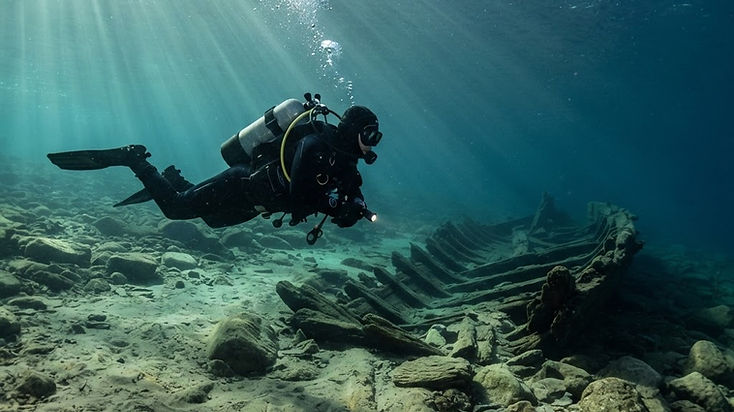
Michigan Has an Entire World Waiting Beneath the Water
When most people think about scuba diving, they picture tropical destinations.
Warm Caribbean water. Colorful coral reefs. Schools of tropical fish swimming around divers.
Michigan probably isn't the first place that comes to mind.
But it should be.
Surrounded by four of the five Great Lakes and filled with thousands of inland lakes, Michigan offers an extraordinary underwater environment that many residents never experience.
There are shipwrecks that have rested beneath the waves for more than a century. Wooden schooners preserved by cold freshwater. Rocky underwater formations, submerged forests, fish habitats, and remnants of Michigan's industrial and maritime history.
And you don't need to travel to another country to discover them.
You can learn to scuba dive right here in Michigan.
Whether you're interested in exploring historic shipwrecks, experiencing the peacefulness of being underwater, or simply trying something completely different, scuba diving opens up a side of Michigan that most people never see.
The best part?
You don't need to start by diving into Lake Superior or exploring a deep shipwreck.
You can begin in a swimming pool.
This guide will walk you through everything you need to know to get started.
1. What Is Scuba Diving?
SCUBA stands for Self-Contained Underwater Breathing Apparatus.
In simple terms, scuba diving allows you to breathe underwater using specialized equipment that carries compressed breathing gas.
Unlike snorkeling, where you remain near the surface and breathe through a snorkel, scuba equipment allows you to descend beneath the water and explore for an extended period.
A typical recreational scuba system includes a cylinder of compressed air, a regulator that delivers breathable air, a buoyancy control device, a mask, fins, and other essential equipment.
Learning to use this equipment safely requires training.
But the equipment is only part of the experience.
Scuba diving introduces you to an environment where movement feels different, sounds are muted, and familiar landscapes take on an entirely new appearance.
Even a relatively ordinary Michigan lake can become fascinating when viewed from below.
2. Do You Need to Be Certified to Scuba Dive in Michigan?
For independent recreational scuba diving, earning an entry-level certification is the appropriate starting point.
Certification demonstrates that you've completed training in essential diving knowledge and practical skills.
Most reputable dive operators require recognized certification before taking customers on ordinary recreational dives.
However, beginners can also participate in supervised introductory scuba experiences without already holding a certification.
These programs are designed to let people try scuba diving under the direct supervision of qualified professionals.
Two common pathways are:
Discover Scuba Diving: An introductory experience where you learn basic skills and try breathing underwater under professional supervision. It does not provide full scuba certification.
Open Water Diver certification: A complete entry-level course that prepares you to plan and conduct recreational dives within your training and experience limits, with a suitable buddy.
For someone who is simply curious, an introductory experience can be an excellent first step.
For someone who wants to explore Michigan's lakes and shipwrecks regularly, Open Water certification is the logical foundation.
3. How to Get Scuba Certified in Michigan
The certification process is more approachable than many people expect.
You don't need to own expensive equipment before beginning.
You also don't need to be an expert swimmer, although basic swimming ability and comfort in the water are essential.
Most entry-level programs follow three stages.
Step 1: Learn the fundamentals
The first part of your training focuses on the knowledge you need to dive safely.
You'll learn about underwater pressure, how your body responds to depth, equipment operation, breathing techniques, dive planning, and emergency procedures.
You'll also study important concepts such as buoyancy, equalizing pressure in your ears, monitoring your air supply, and understanding your personal limits.
Many certification programs offer online coursework, allowing you to complete much of the academic portion at home.
Step 2: Practice in a swimming pool
Next comes confined-water training.
This usually takes place in a swimming pool or another controlled environment with suitable conditions.
You'll learn how to assemble and check your equipment, breathe comfortably underwater, clear water from your mask, recover and clear your regulator, and control your buoyancy.
Your instructor will also teach you how to communicate using hand signals and respond to common underwater problems.
One of the most important lessons is learning to remain calm and follow your training.
The goal isn't to rush through the exercises.
It's to develop confidence and competence before entering more challenging environments.
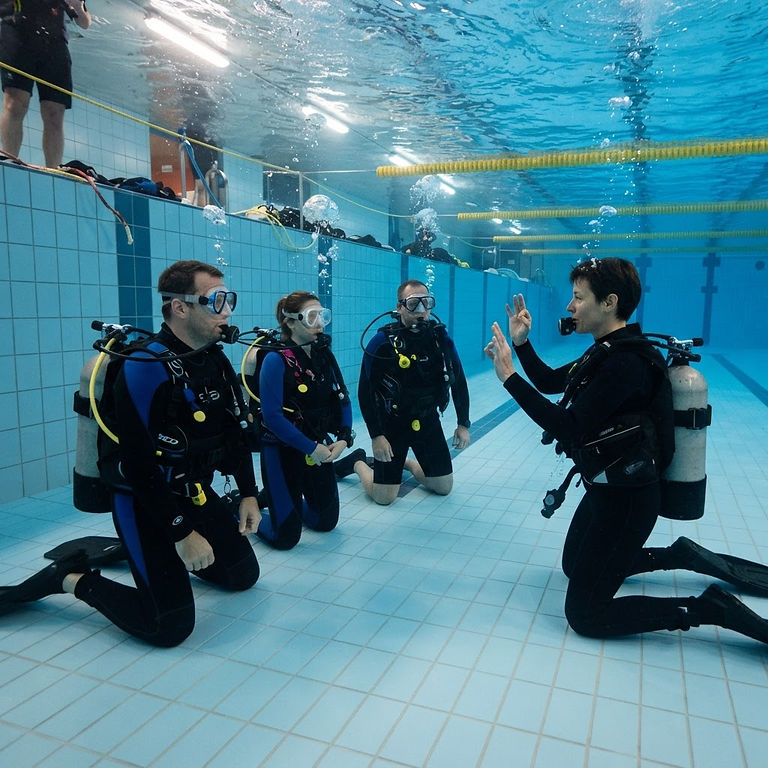
Confined-water training is where most new divers first breathe underwater, practice mask and regulator skills, and build buoyancy control. Illustration; not a photograph of a specific Michigan dive center or course.
Step 3: Complete your open-water training dives
After mastering the required confined-water skills, you'll move into open water.
For PADI's Open Water Diver course, students complete four open-water training dives, generally over at least two days.
These dives allow you to demonstrate the skills you've learned in a real underwater environment.
Depending on the dive center and season, training may take place in a suitable Michigan lake, quarry, or another approved location.
You can also complete portions of your training at home and finish the open-water dives elsewhere through an approved referral arrangement.
After successfully completing the requirements, you receive your certification.
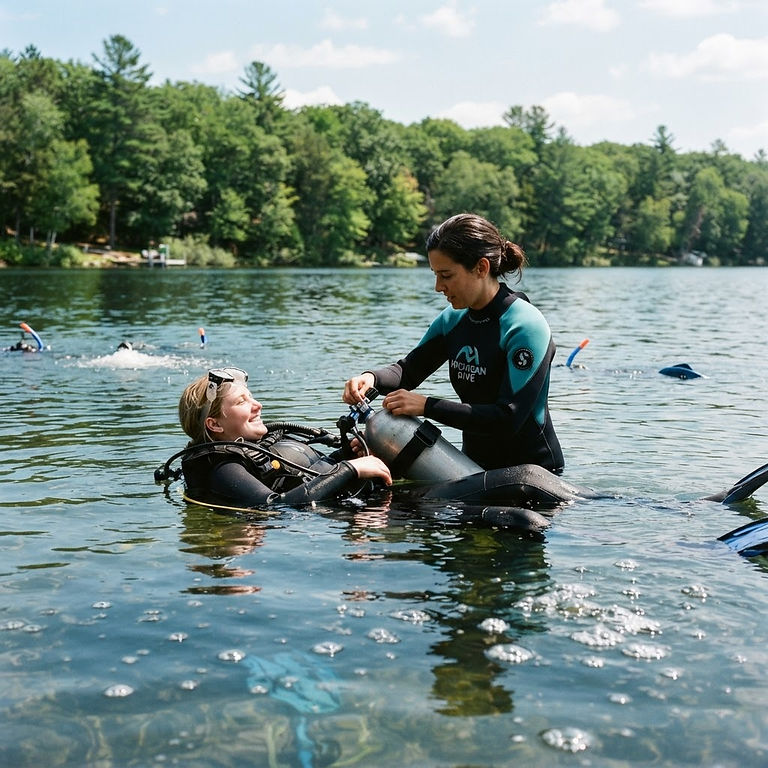
Open-water training dives move the same skills into a lake, quarry, or other approved site. Illustration.
4. How Deep Can a Beginner Scuba Dive?
One of the most common questions new divers ask is how deep they can go.
For a newly certified adult PADI Open Water Diver, the training depth limit is generally 60 feet, or 18 meters, with additional limits based on actual training and applicable rules.
That doesn't mean every new diver should immediately descend to 60 feet.
Depth is only one part of determining whether a dive is appropriate.
Water temperature, visibility, currents, surface conditions, boat traffic, overhead hazards, and emergency access all matter.
A shallow dive in difficult conditions can be more demanding than a deeper dive in calm, controlled water.
For beginners in Michigan, it's wise to focus on relatively shallow, uncomplicated dives with experienced buddies or qualified professionals.
Build your skills gradually.
The deeper shipwrecks can wait.
5. What Scuba Equipment Do You Need?
Scuba diving requires specialized equipment, but you don't need to purchase everything immediately.
Many dive centers provide rental equipment during training.
Here's what you'll typically use.
| Equipment | Purpose |
|---|---|
| Mask | Creates an air space so you can see clearly underwater |
| Fins | Help you move efficiently |
| Regulator | Delivers breathing gas from your cylinder |
| Scuba cylinder | Stores compressed breathing gas |
| BCD | Helps control buoyancy at the surface and underwater |
| Wetsuit or drysuit | Provides thermal protection |
| Weights | Help achieve appropriate buoyancy |
| Dive computer | Tracks depth, time, and decompression-related limits |
| Surface signaling equipment | Helps make you visible and communicate at the surface |
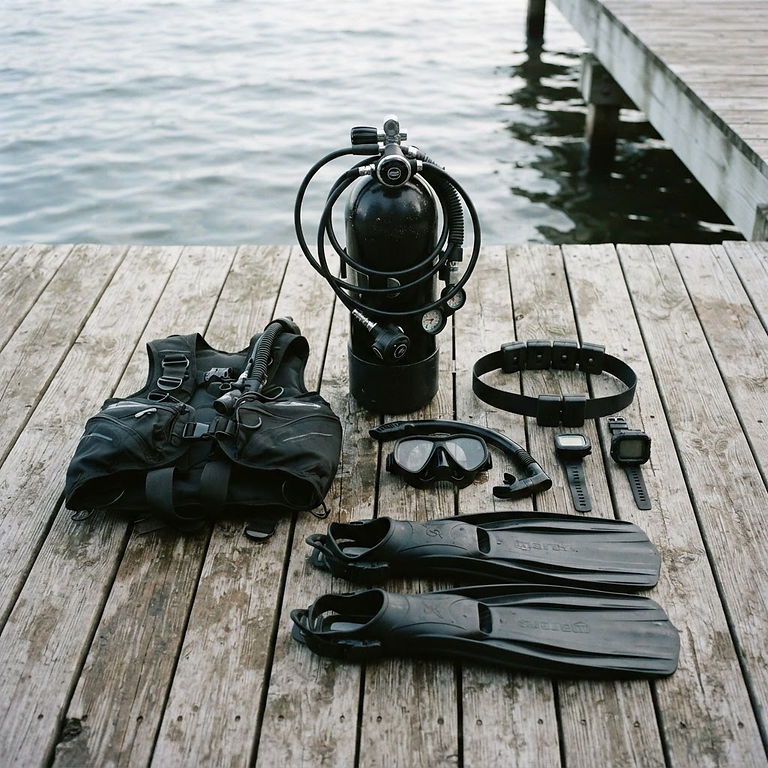
The core recreational kit: cylinder, regulator, buoyancy compensator, exposure protection, weights, a dive computer, and surface signaling. Illustration.
A dive center can help you select appropriate equipment for your body, training, and local conditions.
Should you buy or rent?
For your first course, renting most equipment is usually sensible.
You may eventually want your own properly fitted mask, fins, and exposure protection.
But avoid spending thousands of dollars before discovering what type of diving you enjoy.
A person who primarily dives warm-water reefs may need a different equipment configuration than someone who regularly explores cold Great Lakes shipwrecks.
6. Michigan Scuba Diving Is Different From Tropical Diving
One of the biggest adjustments for divers accustomed to warm destinations is Michigan's water temperature.
The Great Lakes can be extremely cold.
Even during summer, deeper water may remain much colder than the surface.
A warm afternoon on shore does not guarantee comfortable conditions underwater.
Cold water can affect breathing, dexterity, equipment performance, and decision-making.
Proper exposure protection is essential.
Wetsuits versus drysuits
A wetsuit allows a thin layer of water inside the suit, which your body warms. Its effectiveness depends on thickness, fit, and conditions.
A drysuit is designed to keep water out and is worn with appropriate insulating layers.
Drysuits are popular among cold-water divers, but they require specific training and practice because they introduce additional buoyancy considerations.
Neither option should be chosen solely based on the air temperature.
Ask an experienced local instructor what is appropriate for the actual water conditions and planned dive.
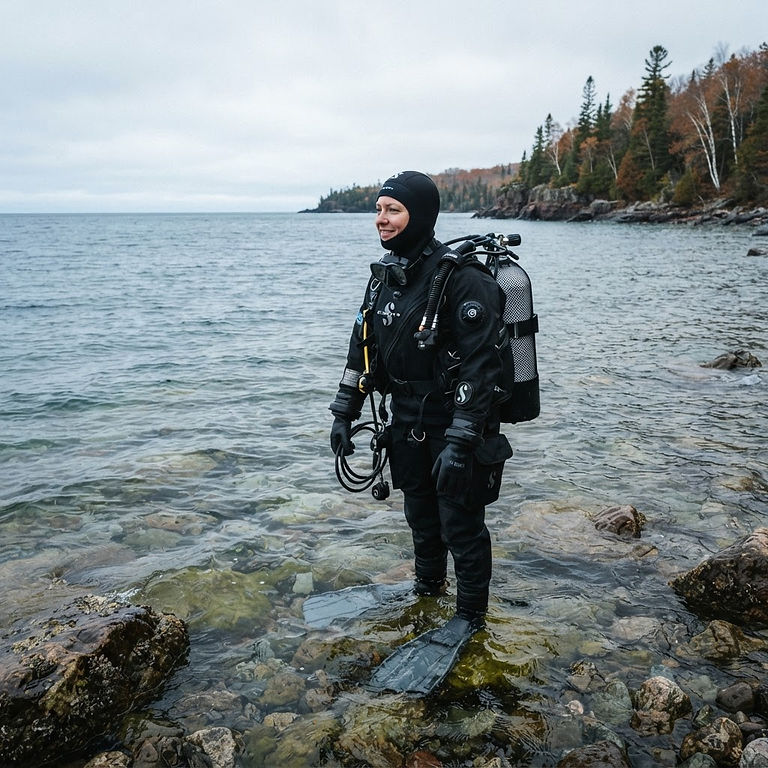
Cold water is the defining difference in Michigan. A drysuit keeps water out and is worn over insulating layers, but it adds buoyancy considerations that require specific training and practice. Illustration.
Visibility changes
Michigan's underwater visibility varies considerably.
Some locations offer impressive clarity.
Others may have sediment, algae, waves, or limited visibility.
Poor visibility can make navigation and buddy communication more difficult.
That's another reason to begin in a controlled environment before progressing to open Great Lakes diving.
7. Where Can Beginners Learn to Scuba Dive in Michigan?
Michigan has dive training opportunities across the state.
Rather than starting with the most famous shipwreck, look for a reputable dive center that offers an organized beginner certification program.
Many new divers begin in swimming pools and then complete their training in suitable inland lakes or quarries.
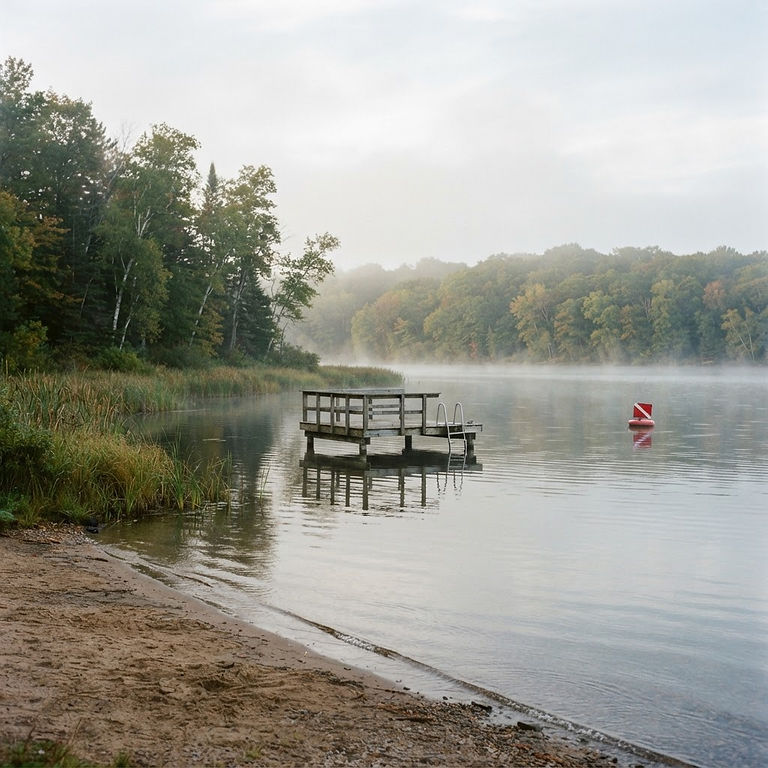
Sheltered inland water is where many Michigan students complete confined-water and early open-water training. Illustration; operators use a range of pools, inland lakes, and quarries.
For example, Michigan Scuba Sports advertises introductory scuba experiences at Stony Lake in Oxford. Availability, locations, pricing, and course arrangements should always be confirmed directly with the operator.
When choosing a school, ask about instructor credentials, class size, equipment rental, cold-water training, total course costs, and where the required open-water dives will take place.
Also ask what happens if you need extra time to master a skill.
A good instructor should prioritize competency and comfort rather than pushing students through a fixed schedule.
8. What Does Scuba Certification Cost in Michigan?
Scuba certification is an investment, but it doesn't necessarily require purchasing an entire set of equipment.
Your total cost depends on the training agency, dive center, course structure, equipment rental, and open-water training location.
As a general planning illustration—not a verified statewide price quote—consider these possible expenses:
| Expense | Illustrative planning range |
|---|---|
| Introductory scuba experience | $50–$150 |
| Entry-level certification course | $350–$700 |
| Personal mask, snorkel, and fins | $100–$300 |
| Additional equipment rental or open-water fees | Varies |
| Optional cold-water specialty training | Varies |
A complete beginner certification package may cost several hundred dollars, and some programs cost more.
Ask for an itemized quote before enrolling.
Find out whether the advertised price includes online learning materials, pool sessions, equipment rental, open-water dives, certification processing, and any required personal gear.
The least expensive advertised course is not always the least expensive complete course.
And for a beginner, quality instruction is more important than saving a small amount on training.
9. Michigan's Best Underwater Adventures After Certification
Once you're certified and have built experience, Michigan offers an extraordinary variety of diving opportunities.
The state maintains 13 underwater preserves covering approximately 7,200 square miles of Great Lakes bottomlands.
These protected areas contain historic shipwrecks and natural features that attract divers from across the country.
Here are several destinations worth learning about as your skills develop.
Thunder Bay National Marine Sanctuary — Lake Huron
Located near Alpena, Thunder Bay National Marine Sanctuary is one of Michigan's premier maritime heritage destinations.
Its shipwrecks range from shallow historic remains to deep-water sites requiring advanced training.
The sanctuary also maintains seasonal mooring buoys at many popular wrecks.
Some shallow sites can be explored by snorkelers, while other wrecks are suitable only for experienced divers.
For someone fascinated by Great Lakes history, Thunder Bay is an outstanding long-term diving destination.
Related reading: Exploring Thunder Bay National Marine Sanctuary: Michigan's Shipwreck Alley.
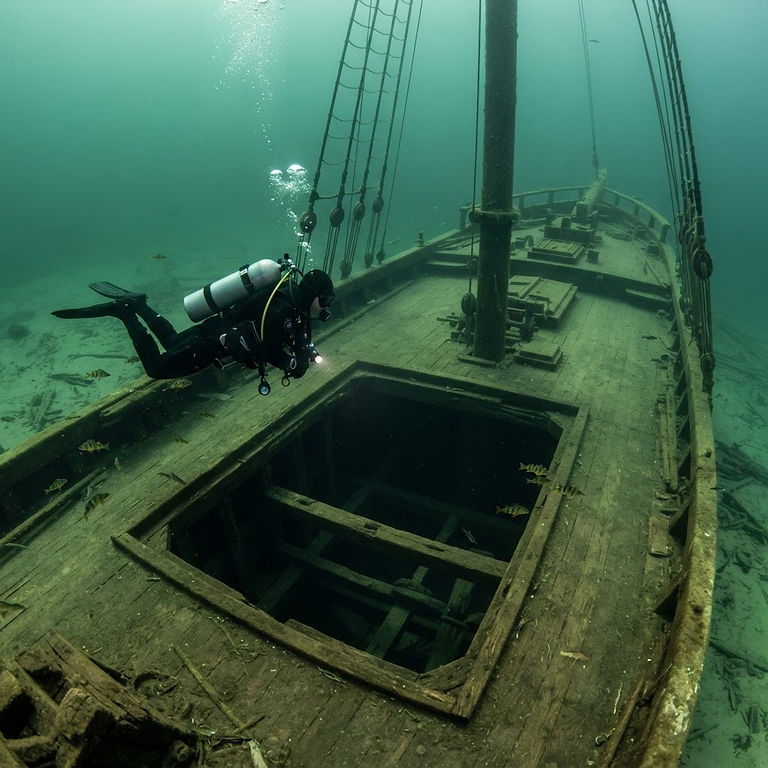
Cold fresh water preserves wooden hulls that would not survive in warmer seas, which is why Great Lakes wrecks remain so intact. Illustration; it does not depict a specific wreck or location.
Straits of Mackinac
The waters around the Straits of Mackinac contain fascinating shipwrecks and important maritime history.
However, the straits also present serious challenges, including currents, boat traffic, cold water, and changing conditions.
This is a destination to approach with appropriate training and local expertise—not an automatic first dive after certification.
Manitou Passage — Lake Michigan
Near Sleeping Bear Dunes and the Manitou Islands, the Manitou Passage contains numerous historic shipwrecks.
The region combines remarkable scenery with maritime history.
Some wrecks lie in comparatively shallow water, while others require more advanced skills and specialized planning.
Divers should research individual sites rather than treating the entire preserve as beginner-friendly.
Inland lakes and controlled training sites
For a new diver, a suitable inland lake or training quarry may offer a better first recreational experience than an exposed Great Lakes wreck.
The advantages can include easier access, controlled training arrangements, and fewer logistical complications.
That doesn't mean every inland lake is safe for beginners.
Visibility, depth, temperature, access restrictions, submerged hazards, and emergency response still need to be evaluated.
Choose sites recommended by your instructor and appropriate for your actual experience.
10. Can Beginners Dive Michigan Shipwrecks?
Yes, some shipwreck sites may eventually be appropriate for newly certified divers under suitable conditions.
But there's an important distinction between diving near a shipwreck and entering one.
Swimming around the exterior of a wreck in open water is very different from penetrating an enclosed compartment.
Inside a wreck, a diver may encounter entanglement hazards, unstable structures, disturbed sediment, limited visibility, and a restricted route to the surface.
Wreck penetration requires specialized training, equipment, and planning.
It should never be attempted by an untrained beginner.
Even exterior wreck dives require appropriate site selection, buoyancy control, navigation, and awareness of environmental conditions.
The right first shipwreck dive is not necessarily the most dramatic wreck.
It's the one that matches your training, comfort, and experience.
11. Ten Safety Rules Every New Michigan Diver Should Know
Scuba diving can be an incredibly rewarding activity, but it requires preparation and respect for the environment.
Here are ten principles worth carrying into every dive.
-
Get properly trained. Complete a recognized certification course before independent recreational diving.
-
Dive within your limits. Certification is a starting point, not proof that you're ready for every environment.
-
Use a suitable buddy. Plan the dive together, communicate clearly, and follow the buddy procedures from your training.
-
Check the conditions. Review weather, water temperature, visibility, currents, and boat traffic before entering.
-
Never hold your breath while breathing scuba. Follow the continuous-breathing and ascent procedures taught by your instructor.
-
Monitor your gas supply. Plan reserves and return with adequate breathing gas.
-
Control your buoyancy. Good buoyancy protects you, the environment, and fragile wreck structures.
-
Use appropriate thermal protection. Cold water can become dangerous much faster than expected.
-
Have an emergency plan. Know your exit points, communication methods, and how to obtain assistance.
-
Protect underwater history. Never remove artifacts or damage shipwrecks.
12. Respecting Michigan's Underwater Preserves
One of the most fascinating things about Michigan diving is that many underwater destinations are also historic sites.
The remains of old schooners, steamships, and freighters are part of Michigan's cultural heritage.
Some wrecks contain fragile wooden structures that have survived underwater for generations.
Others preserve machinery, cargo, and evidence of how ships were constructed.
These are not souvenir collections.
They are protected archaeological resources.
Removing artifacts or damaging wreckage can destroy information that historians and archaeologists use to understand the past.
Good divers observe, photograph, and appreciate these sites without disturbing them.
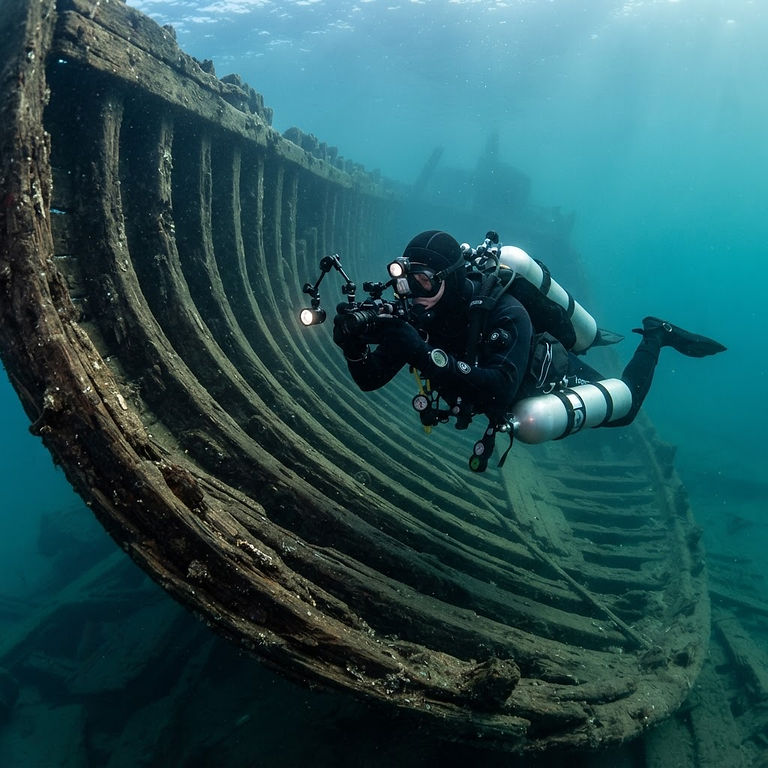
Good buoyancy and a respectful distance keep a diver off the wreck and the silt undisturbed. Illustration.
The best way to enjoy Michigan's underwater history is to help preserve it for the next generation.
13. Your First Year as a Michigan Scuba Diver
If you're serious about getting started, here's a practical progression.
Month 1: Try scuba diving
Find a reputable local dive center and schedule an introductory experience.
Learn what it feels like to breathe underwater.
Ask questions and decide whether you enjoy the activity.
Months 2–3: Complete certification
Enroll in an Open Water course.
Finish the academic training, pool skills, and required open-water dives.
Don't rush.
Your confidence and competence matter more than the date printed on your certification.
Months 4–6: Build experience
Schedule straightforward recreational dives with experienced buddies, instructors, or guided groups.
Practice buoyancy, communication, navigation, equipment checks, and controlled ascents.
Focus on consistency rather than depth.
Months 7–9: Explore new environments
Once you've developed reliable basic skills, consider additional training appropriate to your goals.
Cold-water techniques, drysuit diving, navigation, and other continuing education can be especially useful in Michigan.
Months 10–12: Plan a shipwreck adventure
With suitable experience and any necessary additional training, begin researching a guided Great Lakes wreck dive.
Choose a site based on its actual conditions and your capabilities.
A shallow, uncomplicated exterior wreck dive may be a more appropriate milestone than a famous deep-water shipwreck.
There is no requirement to complete this progression within twelve months.
If you need longer, take longer.
The objective is to become a capable, confident diver who can enjoy the activity for years.
14. Frequently Asked Questions About Scuba Diving in Michigan
Can you learn to scuba dive in Michigan?
Yes. Michigan dive centers offer introductory scuba experiences and certification courses, often using swimming pools and suitable inland-water training sites.
Do you need a scuba certification?
Full recreational certification is the standard pathway for independent diving and is generally required by dive operators. Beginners can try supervised introductory experiences without already being certified.
How long does certification take?
It depends on the course schedule and your progress. Some programs can be completed over several days, while others spread classroom, pool, and open-water sessions across multiple weeks.
Is Michigan too cold for scuba diving?
No, but cold water is a major consideration. Appropriate thermal protection, training, equipment, and site selection are essential.
Can beginners dive shipwrecks?
Some exterior wreck sites may be appropriate once a diver has the necessary training and experience. Wreck penetration is a specialized activity and is not suitable for untrained beginners.
Can you scuba dive in Lake Superior?
Yes, but Lake Superior's cold water, depth, exposure, and other environmental hazards demand careful planning and suitable training. It should not be assumed to be a beginner environment.
Do I need to buy all my own equipment?
Usually not. Many dive centers provide rental equipment for training, although some require students to purchase certain personal items.
Is scuba diving expensive?
There are training and equipment costs, but renting equipment and beginning with local training can reduce the initial investment.
Is scuba certification valid for life?
Many entry-level recreational certifications, including PADI Open Water Diver, do not expire. However, divers who have been inactive should refresh their knowledge and skills before returning to the water.
15. Final Thoughts: A Different Way to Explore Michigan
Michigan is an extraordinary place to explore.
We have forests, trails, rivers, beaches, islands, lighthouses, and some of the most beautiful freshwater shorelines in the world.
But there's another Michigan that most people never experience.
It's beneath the surface.
It's the quiet world of submerged rock formations, freshwater fish, historic shipwrecks, and underwater landscapes that have been hidden from view for generations.
Scuba diving gives you the opportunity to experience that world firsthand.
You don't need to begin with an expensive expedition or a deep-water wreck.
Start with a local instructor.
Learn the fundamentals.
Practice in a swimming pool.
Complete your certification.
Build your experience one dive at a time.
And when you're ready, Michigan's underwater world will be waiting.
Because exploring Michigan doesn't have to stop at the shoreline.
This article is for general educational purposes only. Scuba training standards, depth limits, supervision requirements, and site conditions vary by agency, instructor, and location. Always dive within your training and the direction of a qualified instructor.
© Brad Merritt. All rights reserved.