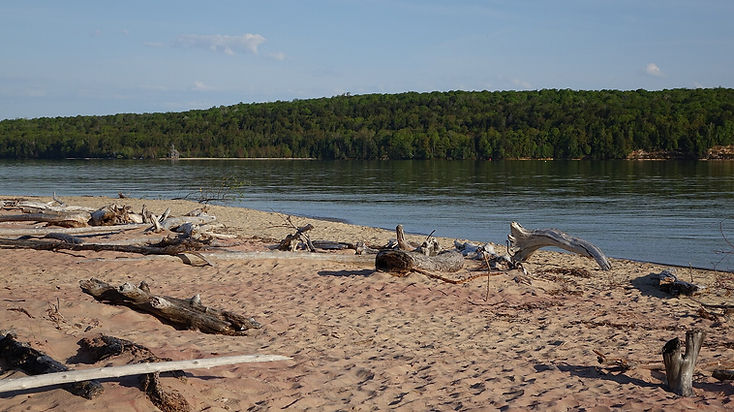
Discovering a Different Side of Michigan
When most people think about snorkeling, they picture tropical destinations.
Warm water. Colorful reefs. Schools of fish swimming through brilliant blue water.
But Michigan has something that makes snorkeling an entirely different kind of adventure.
The Great Lakes.
With thousands of miles of freshwater shoreline, Michigan offers underwater scenery unlike almost anywhere else in the country.
Instead of coral reefs, you might discover smooth stones, underwater rock formations, aquatic plants, freshwater fish, and the remains of historic ships.
In some locations, the water can be surprisingly clear.
And while the Great Lakes are not tropical swimming pools, that's part of what makes exploring them so memorable.
You don't necessarily need scuba certification to appreciate the underwater world.
Sometimes a mask, snorkel, appropriate cold-water equipment, and a carefully chosen location are enough to discover something extraordinary.
Here are seven Michigan destinations worth considering for a snorkeling-focused adventure, along with what makes each one special and what you need to know before entering the water.
Important: These are scenic snorkeling prospects, not seven certified or lifeguarded snorkeling sites. Conditions, access, and suitability vary significantly. Several are appropriate only for experienced, well-prepared visitors or guided excursions.
1. Sand Point Beach — Lake Superior
Location: Munising, Michigan
Great Lake: Superior
Best for: Scenic shoreline exploration and potentially calmer-water snorkeling
Sand Point Beach is one of the most approachable places to experience Lake Superior near Pictured Rocks National Lakeshore.
Located near Munising, the beach offers beautiful views across the water and convenient access to a remarkable section of Michigan's Upper Peninsula.
What makes Sand Point especially interesting is its relatively sheltered location.
Compared with the more exposed shoreline of Pictured Rocks, Sand Point can offer somewhat warmer summer water and more manageable conditions on calm days.
The National Park Service identifies Sand Point as generally having the warmest summer swimming water within the national lakeshore.
For snorkelers, the appeal is simple.
Clear freshwater, a sandy shoreline, and the possibility of observing submerged stones, natural bottom features, and small aquatic life.
This isn't a destination where you should expect colorful reefs or dramatic underwater cliffs.
It's a place to enjoy the beauty of Lake Superior from a different perspective.
And if you've never experienced how clear the water can become along parts of Michigan's northern shoreline, it may surprise you.
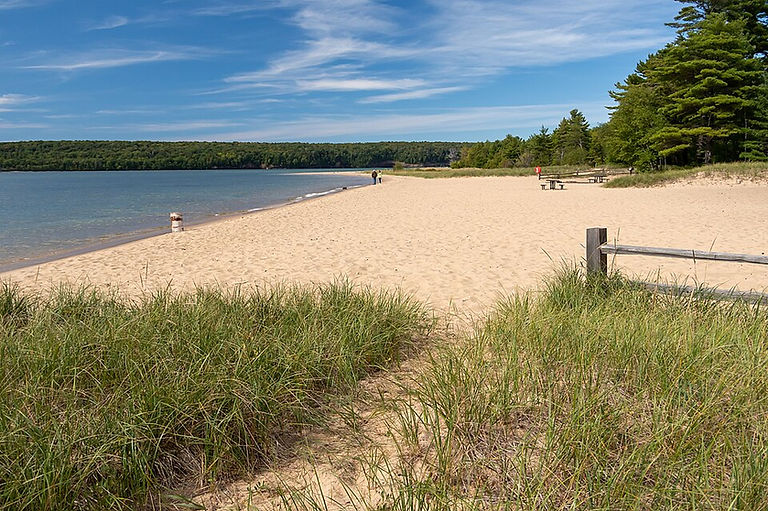
Sand Point Beach, the most sheltered swimming beach inside Pictured Rocks National Lakeshore. Photo: National Park Service (public domain).
What to know before going
Even at Sand Point, Lake Superior can be dangerously cold.
There are no lifeguards, and rip currents and sudden changes in conditions are possible.
Stay within your swimming abilities, use appropriate flotation and thermal protection, and avoid entering the water during hazardous conditions.
For first-time visitors, the beach itself is worth the trip even if snorkeling isn't appropriate that day.
2. Miners Beach — Pictured Rocks National Lakeshore
Location: Near Munising, Michigan
Great Lake: Superior
Best for: Spectacular scenery and experienced shoreline exploration in exceptional conditions
Few places in Michigan have a landscape quite like Pictured Rocks.
Towering sandstone cliffs rise above Lake Superior.
The water shifts between shades of blue and turquoise.
Forested shorelines and rocky formations create scenery that feels almost impossible to believe is in the Midwest.
Miners Beach offers an opportunity to experience part of that landscape from the shoreline.
For visitors interested in underwater scenery, the appeal comes from the contrast between clear water, sand, submerged stones, and the surrounding sandstone environment.
But there's an important difference between Miners Beach and Sand Point.
Miners Beach is more exposed to Lake Superior.
Waves, currents, and cold water can make entering the lake dangerous even when the beach looks beautiful.
This is not a location I would recommend treating as an easy beginner snorkeling site.
Instead, think of it as an extraordinary destination where snorkeling might be considered only by experienced swimmers when current conditions are demonstrably suitable.
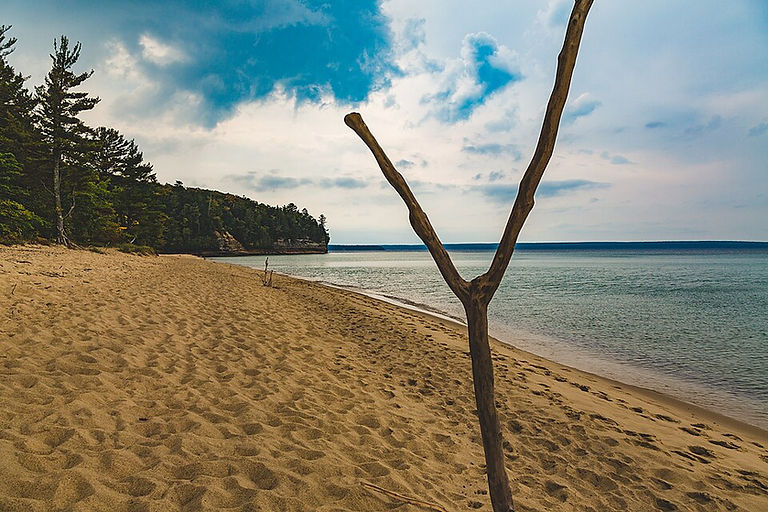
Miners Beach along Lake Superior at Pictured Rocks National Lakeshore. The shoreline is exposed to open-lake waves and currents. Photo: Tony Webster (CC BY 2.0).
What to know before going
Never enter the water during dangerous wave or current conditions.
Avoid swimming near cliffs, unstable rock formations, or areas without a safe exit.
The National Park Service warns that Pictured Rocks beaches have no lifeguards and that rescue response can take considerable time.
Sometimes the best decision is to leave the snorkeling gear in the car and enjoy the scenery from shore.
3. Murray Bay and the Bermuda Shipwreck — Grand Island
Location: Grand Island, near Munising
Great Lake: Superior
Best for: Historic shipwreck interest and experienced, guided underwater exploration
This is where Michigan snorkeling becomes especially fascinating.
Near Grand Island, the remains of a nineteenth-century wooden schooner rest beneath the waters of Murray Bay.
The vessel is known as the Bermuda.
The Bermuda sank in 1870 and remains one of the most recognizable shipwrecks in the Alger Underwater Preserve.
Its surviving wooden hull sits upright on the lake bottom.
The upper structure is approximately 12 feet beneath the surface, with the surrounding bottom reaching about 30 feet.
In favorable conditions, parts of the wreck may be visible from above the water.
That's an extraordinary thought.
A historic wooden sailing vessel, resting beneath the surface of Lake Superior, with portions of its structure still recognizable more than 150 years after it sank.
But this is not a casual shore-snorkeling destination.
Grand Island access, boat traffic, cold water, exposure, and the wreck's position all require careful planning.
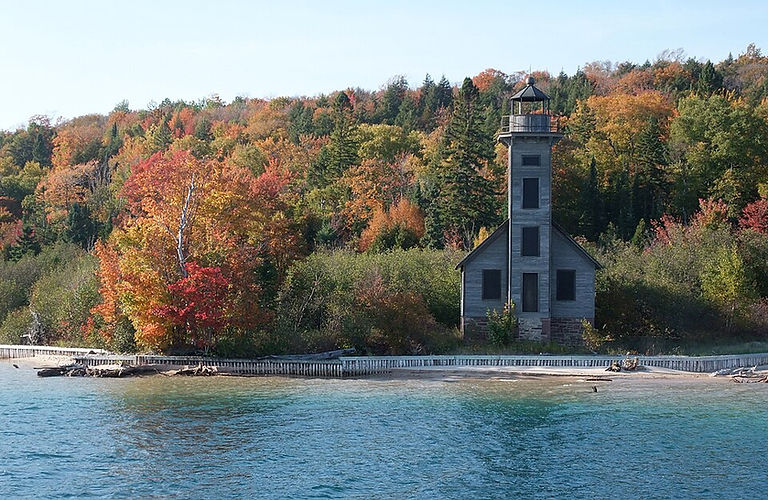
The East Channel Lighthouse on Grand Island, whose sheltered Murray Bay holds the Bermuda wreck at roughly 12 to 30 feet. Photo: NOAA Great Lakes Environmental Research Laboratory (CC BY-SA 2.0).
What to know before going
Do not assume there is a safe public snorkeling entry or that the wreck can be reached by swimming from shore.
The Bermuda is best known as a scuba-diving site.
Anyone considering surface observation should consult a qualified local operator about access, weather, visibility, and whether a professionally supported excursion is appropriate.
Never touch, enter, or disturb the wreck.
For visitors who would rather remain aboard a vessel, a local glass-bottom shipwreck tour may provide a more suitable way to experience the region's maritime history.
4. South Manitou Island — Lake Michigan
Location: Sleeping Bear Dunes National Lakeshore
Great Lake: Michigan
Best for: Shipwreck history and advanced trip planning
South Manitou Island is one of Michigan's most fascinating maritime destinations.
Located offshore within Sleeping Bear Dunes National Lakeshore, the island has a remarkable history involving commercial shipping, navigation, storms, and shipwrecks.
The surrounding waters are part of the Manitou Passage Underwater Preserve.
One of the best-known wrecks is the Three Brothers, a steam barge that grounded near the island in 1911.
According to Michigan's underwater preserve records, the wreck lies relatively close to shore, with its bow in approximately seven feet of water and its stern much deeper.
The state lists the Three Brothers as an excellent shore dive, with its bow in about seven feet of water.
That makes South Manitou particularly interesting for people who want to discover underwater history without necessarily scuba diving.
But the island's offshore location changes the planning considerably.
Reaching South Manitou requires transportation across Lake Michigan, and current ferry availability, access restrictions, weather, and island regulations must all be checked.
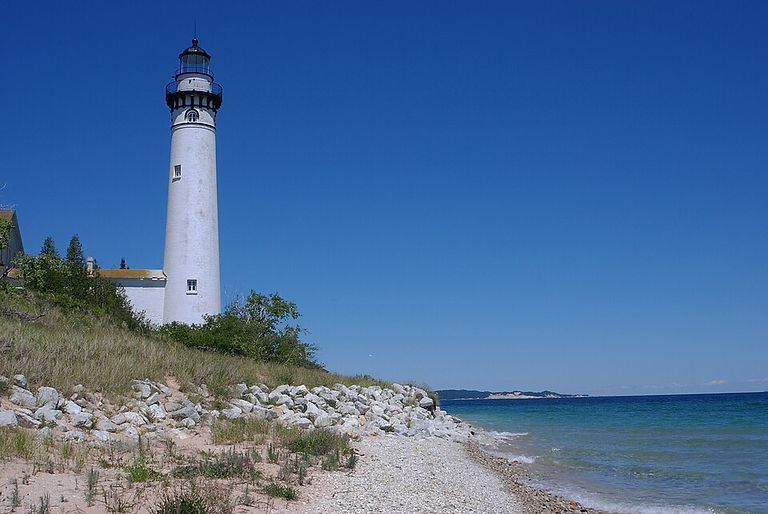
The South Manitou Island lighthouse. The island is reached only by seasonal transportation across Lake Michigan, and the Three Brothers wreck lies about 150 feet offshore. Photo: National Park Service (public domain).
What to know before going
Do not assume the wreck is accessible from a designated swimming beach or that the entire site is shallow.
Conditions around the island can change quickly.
Plan island transportation independently of any snorkeling activity, and consult current National Park Service guidance before entering the water.
Historic wreckage must remain undisturbed.
Even if you never put on a snorkel mask, South Manitou's beaches, lighthouse, and maritime history make it a compelling destination.
5. Sleeping Bear Dunes Shoreline — Lake Michigan
Location: Northwest Lower Peninsula
Great Lake: Michigan
Best for: Clear-water scenery and carefully selected beach snorkeling
Sleeping Bear Dunes National Lakeshore is one of Michigan's most recognizable outdoor destinations.
Its towering dunes, forested hills, and expansive Lake Michigan beaches create some of the most memorable scenery in the state.
And beneath the water, the landscape can be just as interesting.
On calm, clear days, portions of the shoreline offer views of sand patterns, smooth stones, and freshwater aquatic life.
For visitors interested in trying snorkeling, the key is choosing an appropriate, legally accessible beach with manageable conditions and a safe entry and exit.
Don't assume that every beach in Sleeping Bear Dunes is equally suitable.
Some areas are exposed to strong waves and currents.
Others have steep drop-offs or conditions that can become dangerous quickly.
And water temperatures can remain cold even during summer.
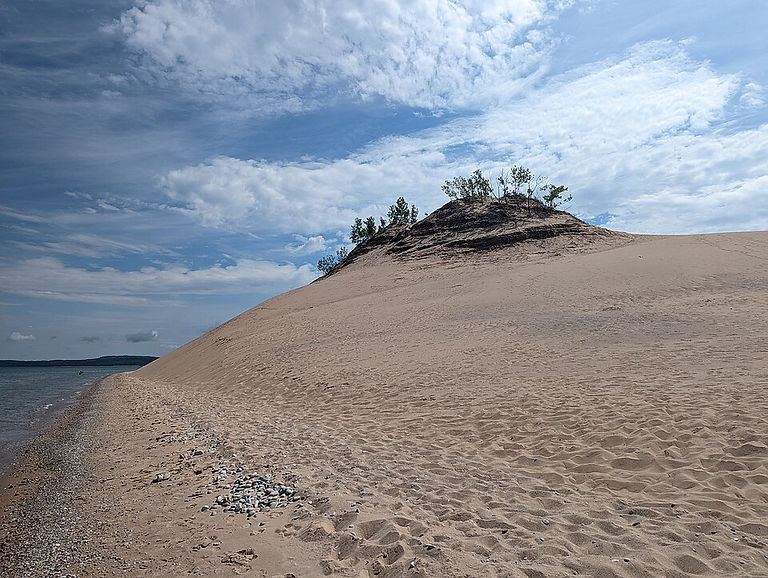
Dune and beach at Sleeping Bear Point. Beach conditions vary widely along this shoreline, and there are no lifeguards. Photo: MSwierenga (CC BY-SA 4.0).
What to know before going
Check current National Park Service beach and swimming guidance.
Avoid entering near river mouths, piers, strong currents, or steep underwater drop-offs.
Choose a conservative shore-based outing rather than attempting to swim toward offshore features.
If conditions aren't suitable, the national lakeshore offers more than enough hiking, photography, and sightseeing opportunities to make the trip worthwhile.
6. Thunder Bay — Lake Huron
Location: Alpena, Michigan
Great Lake: Huron
Best for: Maritime history, shallow-water wreck interest, and guided exploration
If you love shipwrecks, Thunder Bay deserves a place near the top of your Michigan travel list.
Located along Lake Huron near Alpena, the area is home to Thunder Bay National Marine Sanctuary.
The sanctuary protects a remarkable collection of historic shipwrecks and maritime heritage resources.
Some vessels rest in deep water, accessible only to appropriately trained scuba divers.
Others lie in relatively shallow areas.
The region is particularly appealing because of the variety of ways visitors can learn about its underwater history.
You can explore museum exhibits, study historic shipwreck stories, join guided excursions, or plan appropriate water-based activities.
For snorkelers, the attraction is the possibility of observing shallow underwater features and, where access and conditions permit, historic wreckage.
However, the sanctuary is a large protected area, not one designated snorkeling beach.
Specific sites must be selected carefully.
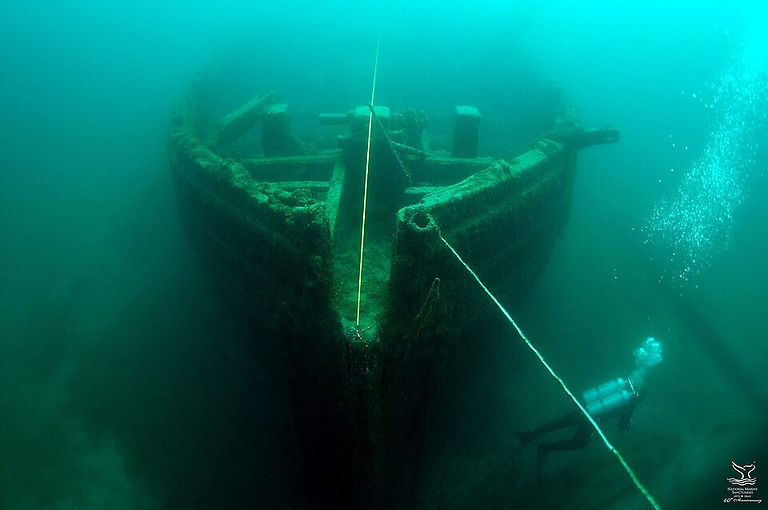
Wreckage of the schooner E.B. Allen inside Thunder Bay National Marine Sanctuary. Not every sanctuary wreck lies in snorkeling depth. Photo: NOAA's National Ocean Service (CC BY 2.0).
What to know before going
Consult NOAA's Thunder Bay National Marine Sanctuary resources and qualified local operators before selecting a snorkeling location.
Do not treat published wreck coordinates as swimming directions.
Some sites require boats, and depth, currents, exposure, and visibility vary significantly.
Avoid touching or removing historic artifacts.
Even without entering Lake Huron, the sanctuary's maritime history makes Alpena an outstanding destination for a Michigan outdoor trip.
7. Tawas Point State Park — Lake Huron
Location: East Tawas, Michigan
Great Lake: Huron
Best for: Beach-based exploration and a family-oriented Great Lakes outing
Not every snorkeling adventure needs to involve a shipwreck.
Sometimes the experience is simply about discovering what's beneath the water at a beautiful Michigan beach.
Tawas Point State Park is known for its Lake Huron shoreline, historic lighthouse, and sandy recreation areas.
The park provides a convenient destination for people who want to combine a day at the beach with other outdoor activities.
On suitable days, visitors interested in snorkeling may enjoy observing sandy bottom features, small fish, and other natural details in shallow water.
This is not a destination where you should expect spectacular underwater rock formations or guaranteed exceptional visibility.
Its appeal is accessibility to a developed park setting and the chance to enjoy Lake Huron.
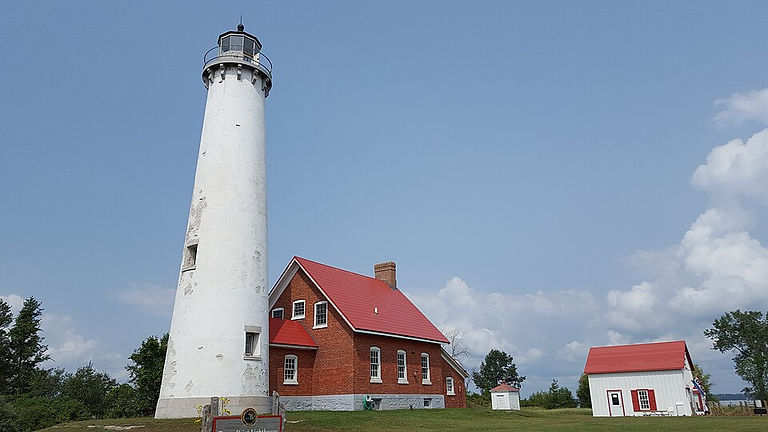
Tawas Point Light Station. The park's buoyed swim area sits along the Lake Huron shoreline rather than the Tawas Bay side. Photo: Johnkan0301 (CC BY-SA 4.0).
What to know before going
Use only areas where swimming is permitted and current conditions are suitable.
Check park notices and beach hazard information before entering the water.
Be aware of changing sandbars, drop-offs, boat activity, and currents.
For families, children should be supervised closely, and appropriate flotation equipment is especially important.
The lighthouse and shoreline also make this a worthwhile destination when conditions prevent swimming.
Quick Comparison: Seven Michigan Snorkeling Destinations
| Destination | Great Lake | Main Attraction | Planning Level |
|---|---|---|---|
| Sand Point Beach | Superior | Scenic shoreline, potentially calmer water | Conservative shore-based outing |
| Miners Beach | Superior | Clear water and Pictured Rocks scenery | Experienced swimmers; exposed conditions |
| Murray Bay / Bermuda | Superior | Historic shallow shipwreck | Advanced planning and local support |
| South Manitou Island | Michigan | Three Brothers shipwreck and island history | Offshore transportation and site-specific planning |
| Sleeping Bear Dunes shoreline | Michigan | Sand, stones, and freshwater scenery | Beach-specific conditions |
| Thunder Bay | Huron | Maritime heritage and shallow wreck possibilities | Site-specific guided planning |
| Tawas Point State Park | Huron | Sandy shoreline and freshwater exploration | Conservative park-based outing |
These classifications describe planning complexity, not official safety ratings. No destination is guaranteed safe for snorkeling.
What Can You Actually See While Snorkeling in Michigan?
Michigan's underwater world looks different from a tropical reef.
And that's part of its appeal.
Depending on the location and conditions, you might encounter:
Freshwater fish. Small fish and other aquatic life can sometimes be observed near rocky bottoms, aquatic vegetation, and sheltered shorelines.
Rock formations. Lake Superior and parts of the other Great Lakes feature fascinating underwater stones, boulders, and geological features.
Sandy bottom patterns. Waves and currents create ripples and changing shapes beneath the surface.
Aquatic plants. Vegetation provides habitat for fish and other organisms in suitable areas.
Historic shipwrecks. At a limited number of shallow sites, carefully planned surface observation may reveal portions of vessels that sank decades or centuries ago.
Visibility varies dramatically.
Wind, waves, algae, sediment, runoff, and sunlight can all affect what you're able to see.
A location that looks crystal clear one day may be cloudy the next.
The best approach is to enjoy whatever the conditions allow rather than expecting a particular underwater experience.
What Equipment Do You Need for Great Lakes Snorkeling?
A snorkeling trip on the Great Lakes requires more preparation than a casual swim in warm tropical water.
A properly fitting mask
Choose a mask that seals comfortably and allows you to see clearly underwater.
Test the fit before your trip.
A snorkel
A simple, reliable snorkel is sufficient for surface breathing.
Practice using it in a controlled environment before entering open water.
Fins, when appropriate
Fins can make swimming more efficient, but they should be selected for the conditions and your experience.
Avoid using equipment that encourages you to travel farther offshore than you can safely return.
Appropriate thermal protection
Great Lakes water can remain cold even when the air temperature is warm.
A properly fitted wetsuit may be necessary, and some conditions require more substantial protection.
Do not assume that warm weather means warm water.
Flotation equipment
Use an appropriate, properly fitted flotation device suited to the activity.
Flotation is not a substitute for swimming ability, supervision, or safe conditions.
A snorkeling partner
Never snorkel alone.
Stay close enough to communicate and assist one another.
Avoid breath-hold diving beyond your training and never hyperventilate before submerging.
When Is the Best Time to Snorkel in Michigan?
Summer generally offers the most practical opportunities for recreational snorkeling.
July and August may provide warmer nearshore conditions than spring or early summer, although water temperatures vary considerably by lake, location, depth, wind, and recent weather.
Lake Superior is typically much colder than visitors expect.
Lake Michigan and Lake Huron can also experience sudden temperature changes caused by wind-driven upwelling.
The best conditions often involve calm weather, good visibility, and a suitable water temperature.
But a calendar date is never enough to determine whether snorkeling is safe.
Always check current local conditions.
Great Lakes Snorkeling Safety: What You Need to Know
The Great Lakes deserve the same respect you would give the ocean.
They can develop dangerous waves, strong currents, and sudden weather changes.
Cold water can cause cold shock, reduce swimming ability, and increase the risk of hypothermia.
Before entering the water:
- Check the marine forecast and current beach hazard statements.
- Confirm that swimming and snorkeling are permitted at the location.
- Assess water temperature and use appropriate thermal protection.
- Avoid swimming alone.
- Stay near a safe entry and exit.
- Avoid piers, breakwalls, shipping channels, and active boat traffic.
- Never swim toward an offshore wreck simply because it appears close on a map.
- Avoid touching submerged historic structures, entering wrecks, or removing artifacts.
- Leave the water immediately if conditions deteriorate.
- Do not enter the water if you cannot confidently manage the conditions.
Michigan's state parks generally do not have lifeguards.
At Pictured Rocks, the National Park Service also warns about rip currents, cold water, submerged hazards, and delayed rescue response.
The most important part of any snorkeling trip is returning safely.
Snorkeling, Scuba Diving, or a Glass-Bottom Boat Tour?
One of the things I like about Michigan's underwater destinations is that there are several ways to experience them.
You don't have to choose the same adventure as everyone else.
Snorkeling is best suited to suitable shallow-water environments and people comfortable swimming at the surface.
Scuba diving allows trained divers to explore deeper shipwrecks and underwater structures using specialized equipment.
Glass-bottom boat tours provide an opportunity to observe selected shipwrecks without entering the water.
For families or visitors who aren't comfortable swimming in open water, a boat tour may be the most appealing option.
And for people interested in history, museums and maritime exhibits can be just as rewarding.
The right experience depends on your interests, qualifications, and the conditions.
Protecting Michigan's Underwater Environment
Michigan's lakes are extraordinary natural resources.
They're also home to fragile ecosystems and historically important shipwrecks.
When snorkeling, avoid disturbing aquatic plants, damaging underwater structures, or removing objects from the lake bottom.
Never collect artifacts from protected shipwrecks.
Avoid stepping on fragile habitat when entering or exiting the water.
Dispose of trash properly and follow local regulations.
The best way to appreciate these places is to leave them as you found them.
That way, future visitors can enjoy the same sense of discovery.
Final Thoughts: You Don't Have to Travel Far to Find an Underwater Adventure
One of my favorite things about exploring Michigan is realizing how many remarkable places are hiding in plain sight.
We have incredible beaches, forests, dunes, cliffs, rivers, and lakes.
But beneath the surface, there's another landscape waiting to be discovered.
Sometimes it's a collection of colorful stones in clear Lake Superior water.
Sometimes it's fish moving through aquatic plants.
And sometimes it's the remains of a ship that disappeared more than a century ago.
You don't need to be a certified scuba diver to appreciate that world.
You do need the right location, appropriate preparation, and respect for the water.
Whether you're visiting Munising, exploring Sleeping Bear Dunes, learning about Thunder Bay's shipwrecks, or enjoying a quiet day along Lake Huron, Michigan offers plenty of reasons to look beneath the surface.
And sometimes, a completely different adventure is waiting just a few feet below.
Explore Michigan celebrates the destinations, history, and outdoor experiences that make our state extraordinary.
Safety disclaimer: This article is informational, not a swimming instruction manual, dive plan, or guarantee of safe access. Check current conditions and official site guidance before entering any Great Lake.