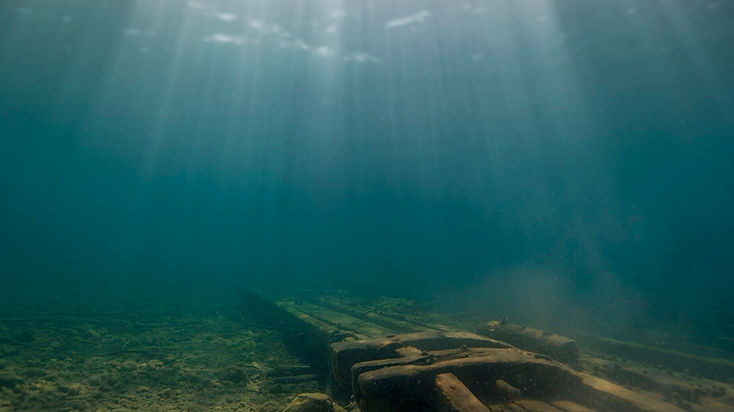
Imagine Paddling Over a Ship That Sank More Than 100 Years Ago
There's something special about exploring Michigan from the water.
You push your kayak away from shore, settle into a comfortable rhythm, and begin paddling across a lake that seems to stretch forever.
The water is clear. The shoreline is quiet. Maybe you can see the rocky bottom beneath you.
Then something unusual appears.
At first, it looks like a shadow.
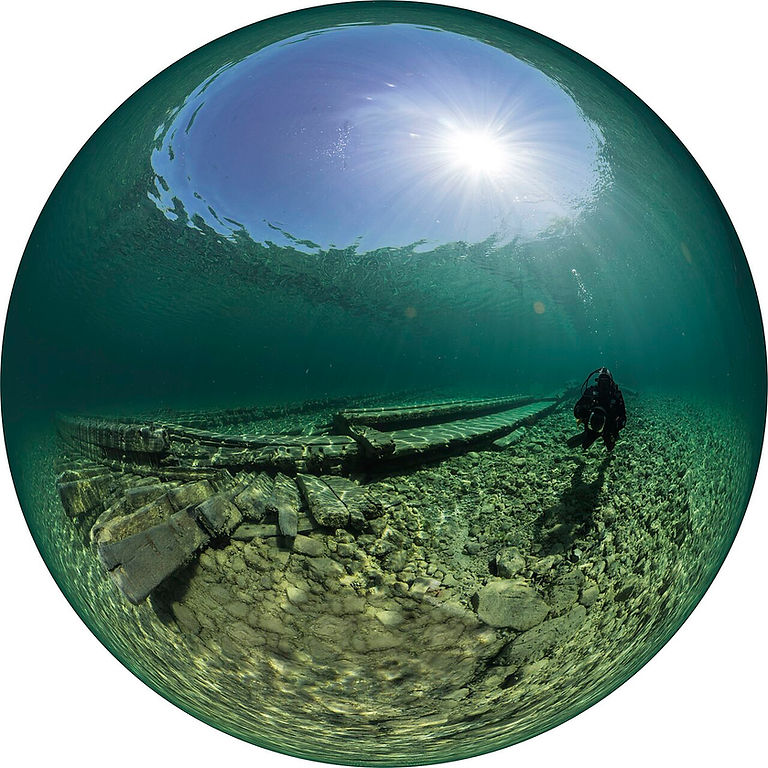
As you move closer, the shape becomes more recognizable. Long wooden timbers stretch across the lake bottom. A curved hull emerges beneath the surface.
You're looking down at a shipwreck.
And you haven't even gotten out of your kayak.
Michigan's Great Lakes contain an extraordinary collection of historic shipwrecks. While many rest in deep water accessible only to trained scuba divers, others are shallow enough to be observed from kayaks, paddleboards, or while snorkeling when conditions are favorable.
These places offer an entirely different way to experience Michigan's maritime history.
Here are six fascinating places to begin.
1. Portland — A Wooden Schooner Just Beneath the Surface
Location: Near Bell Bay, Lake Huron · Depth: Approximately 6 feet · Lost: October 13, 1877
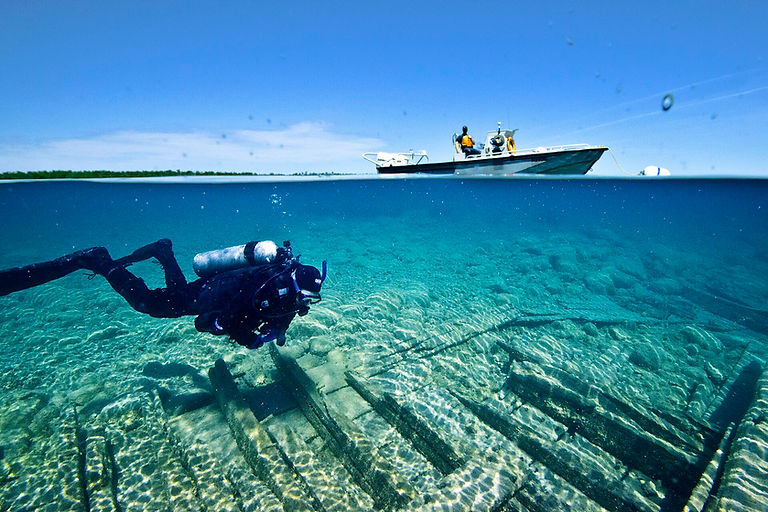
The wooden schooner Portland, lost in a Lake Huron gale in October 1877. Photo: NOAA Thunder Bay National Marine Sanctuary (public domain).
The Portland is one of Michigan's most remarkable shallow-water shipwrecks.
Built in 1863, this wooden schooner carried cargo across the Great Lakes for fourteen years before a violent storm drove it onto the rocky Lake Huron shoreline.
The crew survived, but the ship was destroyed.
Today, a large section of Portland's lower hull lies approximately 100 yards offshore in just six feet of water.
That makes it an especially compelling destination for paddlers and snorkelers.
On a calm, clear day, visitors may be able to see the long wooden remains beneath the surface.
Another section of the wreck rests in a shallow lagoon nearby.
What makes Portland particularly memorable is how close the history feels.
You aren't looking at a photograph in a museum or reading about a wreck in a book.
You're floating above the remains of a real nineteenth-century sailing vessel.
NOAA identifies Portland as one of the sanctuary's most accessible shallow shipwrecks.
Why visit: An unusually shallow wreck with a substantial surviving hull.
Planning note: Confirm the designated access route, current land-access permissions, and marine conditions. Do not stand on or touch the wreck.
2. Albany — A Shipwreck for Paddleboarders and Kayakers
Location: Albany Bay, northern Lake Huron · Depth: Approximately 5 feet
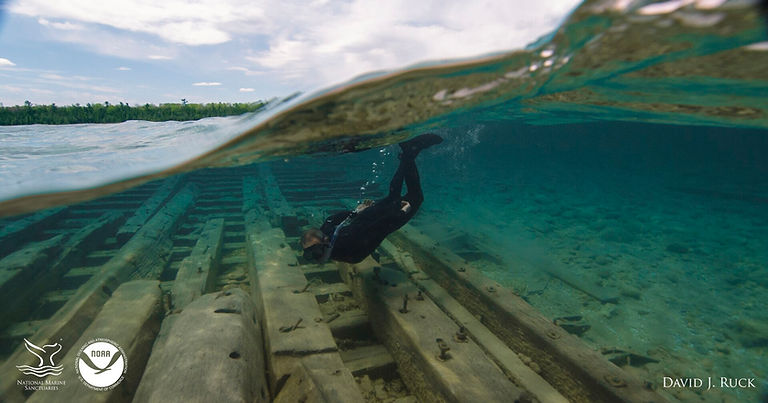
The remains of the steamer Albany in Albany Bay, named for the wreck. Photo: NOAA Thunder Bay National Marine Sanctuary (public domain).
The Albany is another of the shallow shipwrecks associated with the Thunder Bay region.
It offers an opportunity to experience the remains of Great Lakes shipping from the surface rather than descending with scuba equipment.
In favorable visibility, surviving wreckage may be visible through the water.
The appeal is partly the wreck itself and partly the experience of exploring Michigan's shoreline from a small, human-powered vessel.
For someone who enjoys kayaking but has never visited a shipwreck, this is the kind of destination that can turn an ordinary paddle into something memorable.
NOAA's Thunder Bay documentation identifies Albany as an early sidewheel steamer lost in the nineteenth century and describes the site as shallow enough to interest kayakers and snorkelers.
Why visit: A shallow historic shipwreck with potential for surface observation.
Planning note: Confirm the exact site, authorized launch, water access, and safe route before departure. Do not assume that a shallow wreck means an easy paddle.
3. Joseph S. Fay — A Shipwreck Beside a Historic Lighthouse
Location: Forty Mile Point Lighthouse, near Rogers City · Depth: Approximately 17 feet · Lost: October 19, 1905
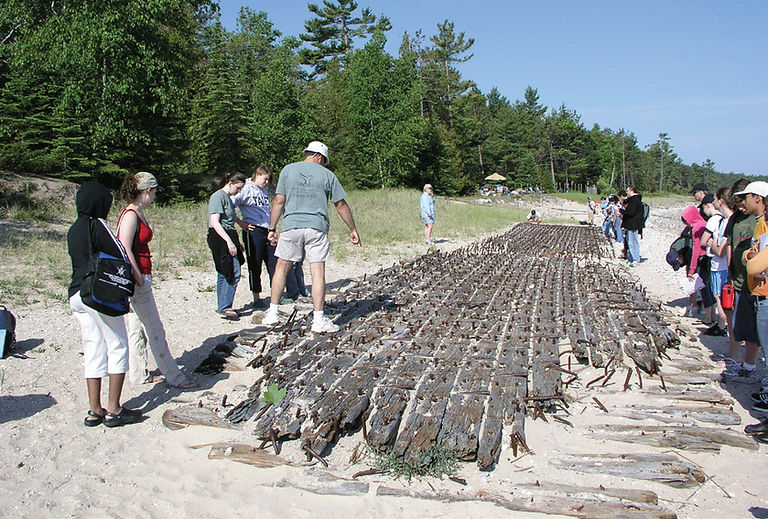
The wooden freighter Joseph S. Fay, wrecked off Forty Mile Point on October 19, 1905. Photo: NOAA Thunder Bay National Marine Sanctuary (public domain).
The Joseph S. Fay offers something unusual: a shipwreck experience that begins on land.
In 1905, a powerful storm drove the wooden freighter toward the rocky shoreline near Forty Mile Point.
The vessel broke apart, leaving wreckage both underwater and along the beach.
Today, visitors can explore the lighthouse grounds and see a substantial section of the ship's hull on shore.
Other remains lie offshore, where kayakers and snorkelers may be able to observe parts of the wreck in suitable conditions.
The National Marine Sanctuary identifies the underwater site at approximately 17 feet deep.
I particularly like destinations like this because they offer more than one reason to visit.
You can explore a historic lighthouse, walk along the Lake Huron shoreline, photograph surviving shipwreck timbers, and learn how dangerous Great Lakes storms could be.
Why visit: A combination of maritime history, lighthouse scenery, and shoreline wreckage.
Planning note: The underwater remains are deeper than those of Portland. Visibility from the surface is not guaranteed. Verify public access and local rules.
4. American Union — A Shallow Wreck Near Thompson's Harbor
Location: Thompson's Harbor area, Lake Huron · Depth: Approximately 10 feet · Lost: May 6, 1894
The three-masted barkentine American Union, aground at Thompson's Harbor in May 1894. Photo: NOAA Thunder Bay National Marine Sanctuary (public domain).
The American Union was a three-masted wooden barkentine that carried cargo across the Great Lakes for decades.
On May 6, 1894, a storm drove the vessel aground at Thompson's Harbor.
Today, its remains rest a quarter mile from shore in about 10 feet of clear Lake Huron water.
NOAA describes the surviving hull as an opportunity for divers, snorkelers, and paddlers to explore a workhorse of the Great Lakes.
The surrounding landscape is part of the attraction.
Thompson's Harbor State Park offers a quieter stretch of Lake Huron shoreline, where undeveloped scenery and maritime history come together.
Unlike a roadside attraction, reaching the wreck requires real paddling preparation.
Wind direction, wave conditions, water temperature, and the distance from the launch all matter.
Why visit: A shallow historic wreck in a scenic, relatively undeveloped coastal setting.
Planning note: The route can involve a substantial paddle. Confirm the current launch, route length, access permissions, and forecast before attempting it.
5. W.G. Mason — A Tugboat Beneath the Water Near Rogers City
Location: Rogers City, Lake Huron · Depth: Approximately 13 feet · Wrecked or abandoned: Around 1924
Not every shipwreck is the remains of a giant schooner or freighter.
The W.G. Mason was a working tugboat associated with Rogers City's limestone industry.
Built in 1898, it spent years assisting other vessels before being dismantled and abandoned in 1924.
Its remains now rest in shallow water near the limestone loading docks.
NOAA reports that the tug's four-bladed propeller and machinery components can be seen from the surface, and identifies the area as accessible to paddlers, snorkelers, and divers.
What makes this site fascinating is its connection to the industrial history of northern Michigan.
Tugboats like W.G. Mason rarely receive the attention given to large freighters, but they performed essential work in the Great Lakes shipping economy.
Why visit: Shallow machinery remains and a different perspective on Michigan's industrial heritage.
Planning note: The wreck is near industrial waterfront infrastructure. Respect active shipping operations, restricted areas, and any current access limitations.
6. Monohansett — A Burned Steam Barge Near Thunder Bay Island
Location: Thunder Bay Island, Lake Huron · Depth: Approximately 18 feet · Lost: November 23, 1907
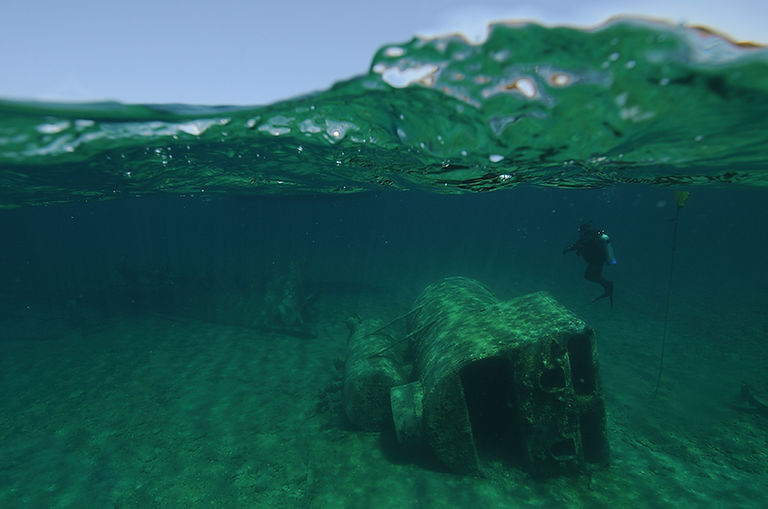
The boiler of the wooden steam barge Monohansett, burned and lost on November 23, 1907. Photo: NOAA Thunder Bay National Marine Sanctuary (public domain).
The Monohansett has one of the most dramatic stories of any shallow wreck in Michigan.
The wooden steam barge was sheltering from dangerous weather when an overturned lantern sparked a fire.
With a wooden hull and a cargo of coal aboard, the flames spread rapidly.
The crew abandoned the burning vessel and was rescued by the Thunder Bay Island Life-Saving Station.
Today, the remains lie in shallow water near the island.
Visitors can observe portions of the hull, machinery, boilers, and other surviving features.
NOAA identifies the site as popular with paddlers, snorkelers, swimmers, and divers.
It's an incredible reminder that even when a vessel escaped the worst of a Great Lakes storm, danger could still come from within.
Why visit: A dramatic shipwreck story and substantial remains in relatively shallow water.
Planning note: Thunder Bay Island is an offshore destination. Its shallow wreck depth does not make the open-water journey suitable for inexperienced paddlers. Consider an experienced local operator or a properly planned guided outing.
The Best Time to Kayak Over Michigan Shipwrecks
At a Glance: Six Michigan Shipwrecks to Explore
| Shipwreck | Area | Approximate depth | Main attraction |
|---|---|---|---|
| Portland | Bell Bay | 6 ft | Large, shallow wooden hull |
| Albany | Albany Bay | 5 ft | Surface-viewing potential |
| Joseph S. Fay | Forty Mile Point | 17 ft | Lighthouse and wreckage |
| American Union | Thompson's Harbor | 10 ft | Shallow wreck, close to shore |
| W.G. Mason | Rogers City | 13 ft | Tugboat machinery |
| Monohansett | Thunder Bay Island | 18 ft | Burned steam barge |
Depth refers to the wreck site, not necessarily the water above every surviving structure. Surface visibility is never guaranteed. A shallow site can still require a challenging or hazardous paddle.
How to Prepare for a Shipwreck Kayaking Adventure
For many recreational paddlers, summer offers the most practical opportunity to explore Great Lakes shipwrecks.
Longer daylight hours and generally more comfortable air temperatures make planning easier.
But water temperature can remain dangerously cold, even when the weather feels warm.
Visibility is another important factor.
Calm conditions may make it easier to observe shallow wreckage. Wind, waves, runoff, and suspended sediment can make the same site difficult to see.
A wreck that's clearly visible one day may be almost invisible the next.
The goal should never be to reach a wreck at any cost.
Choose a safe day first. Treat the underwater view as a bonus.
Respect Michigan's Underwater History
Before heading out, check the marine forecast, expected waves, wind direction, and water temperature.
Use a kayak suited to the conditions and your training. Wear a properly fitted, U.S. Coast Guard-approved life jacket, carry reliable communication and signaling equipment, and tell someone your planned route and return time.
For cold-water conditions, use appropriate immersion protection and know how to recover from a capsize.
Stay clear of shipping lanes and active industrial waterfronts.
Never paddle into restricted areas or tie your kayak to historic wreckage.
And remember that the Great Lakes can change quickly.
If the conditions don't look right, save the adventure for another day.
You Don't Have to Scuba Dive to Appreciate Shipwrecks
Michigan's underwater preserves protect shipwrecks as historic and archaeological resources.
These vessels are part of the state's heritage.
Removing artifacts or damaging wreckage can destroy evidence that has survived for generations.
Photograph what you see, but leave everything in place.
The goal is to enjoy Michigan's underwater history without changing it for the people who come after you.
Final Thoughts: A Different Way to Explore Michigan
One of the best things about shallow-water shipwreck exploration is that it opens Michigan's maritime history to more people.
You don't necessarily need scuba certification to appreciate these places.
Some wrecks may be visible while kayaking or paddleboarding.
Others have shoreline exhibits, museums, interpretive signs, or nearby historic attractions.
The Great Lakes Maritime Heritage Center in Alpena is an excellent starting point for visitors who want to learn about the region's shipwrecks without going underwater.
Historic lighthouse sites such as Forty Mile Point also offer a way to experience maritime history on land.
Whether you're a kayaker, photographer, history enthusiast, or someone simply looking for a different kind of Michigan adventure, there's something fascinating about discovering the stories behind these vessels.
undefined
I love the idea that some of Michigan's most remarkable destinations aren't found along a trail or beside a scenic overlook.
They're beneath the water.
You can paddle across a quiet bay, look down through the surface, and discover the remains of a vessel that once carried cargo across the Great Lakes.
It's a reminder that adventure doesn't always require traveling far away or spending thousands of dollars on specialized equipment.
Sometimes it begins with a kayak, a calm morning, and the curiosity to explore somewhere new.
And Michigan has plenty of places worth discovering.
Explore Michigan celebrates the destinations, outdoor adventures, and remarkable stories that make the Great Lakes State worth exploring.
This article is an educational travel guide, not a navigational route or safety certification. Confirm current access, conditions, and local guidance before visiting any shipwreck.