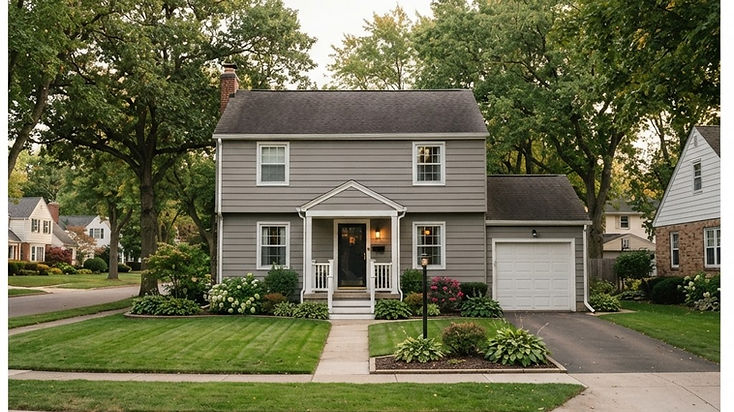
Introduction: Your Next Property Doesn't Have to Be Your Next Home
There's a moment when the idea of owning rental property begins to feel real.
Maybe you've been renting a bedroom in your home and wondering what it would look like to own a separate rental.
Maybe you've been saving money for years and are finally in a position to consider purchasing another property.
Or maybe you've looked at the houses for sale in your area and thought, "What if I bought one of those and rented it out?"
It's an exciting possibility.
But buying a property to rent to someone else is very different from buying a home for yourself.
When you purchase your primary residence, you're making a decision about where you want to live.
When you purchase a rental property, you're making a decision about an asset that needs to produce income, cover expenses, withstand unexpected problems, and serve a long-term financial purpose.
Those are two different decisions.
I've learned through owning rental property that the income you collect is only one part of the equation.
There's also the mortgage, insurance, property taxes, repairs, vacancies, and the responsibility of maintaining a home for someone else.
And when you already own a primary residence, those responsibilities don't replace your existing financial obligations.
They add to them.
That's why I believe buying a second property should begin with one question:
Can I responsibly afford to own both properties, even when the rental doesn't perform exactly as planned?
In this guide, we'll explore how buying a separate rental property works, what financing may look like, how much cash you may need, how to evaluate a potential investment, and how to avoid stretching yourself too thin.
The goal isn't to convince you to buy another property.
It's to help you determine whether buying one makes sense.
1. What Does It Mean to Buy a Second Home as a Rental Property?
The phrase "second home" can mean different things depending on how you're using it.
In everyday conversation, someone might call any additional property they own a second home.
But mortgage lenders distinguish between a primary residence, a second home, and an investment property.
Those classifications matter.
Primary Residence
Your primary residence is the home you genuinely occupy as your principal place of living.
Second Home
In mortgage terminology, a second home generally refers to an additional property intended primarily for the borrower's personal use, subject to the lender's occupancy and eligibility requirements.
It is not automatically the appropriate classification for a property purchased primarily to rent to tenants.
Investment Property
An investment property is purchased or held primarily to generate income, appreciation, or another investment benefit rather than to serve as your principal residence.
If you're buying a house with the intention of renting it to someone else full-time, you're generally discussing an investment property.
For the remainder of this article, when I refer to buying a second property, I mean purchasing a separate residential property as a rental investment.
Why the Distinction Matters
Different property classifications can affect:
- Mortgage eligibility.
- Down-payment requirements.
- Interest rates.
- Reserve requirements.
- Insurance.
- Occupancy representations.
- Underwriting.
You should always tell your lender how you actually intend to use the property.
Don't confuse owning a second property with qualifying for second-home financing. A dedicated rental generally needs to be evaluated under the appropriate investment-property rules.
2. Why Would Someone Buy a Separate Rental Property?
There are several reasons people consider purchasing a rental home.
Additional Monthly Income
A rental property may generate cash flow after operating expenses, financing costs, and reserves.
But positive cash flow isn't guaranteed.
Long-Term Equity
As mortgage principal is repaid, the owner's equity may increase.
Property values may also rise or fall.
Greater Control Over the Property
Unlike investing in a publicly traded security, direct rental ownership gives you responsibility for decisions about maintenance, leasing, improvements, and operations.
That control also comes with work and financial exposure.
Potential Portfolio Growth
Over time, an owner may acquire additional properties if their finances, market conditions, and investment performance support expansion.
Diversification
Real estate can provide a different type of asset exposure from other investments.
However, owning a single rental home can also concentrate substantial money in one property and one local market.
A Long-Term Financial Asset
Some people purchase rental properties with the goal of holding them for decades.
That can be a reasonable long-term objective.
But the property still needs to be managed responsibly along the way.
The strongest reason to buy a rental property is that it fits your financial goals and can withstand realistic operating conditions—not simply that someone told you real estate is a good investment.
3. How Buying an Investment Property Differs From Buying Your Primary Home
When you purchase a home to live in, you naturally consider personal preferences.
You might care about the kitchen, backyard, neighborhood, layout, and how the house feels.
Those things can matter to tenants, too.
But an investment property requires an additional layer of analysis.
Your Primary Residence
You generally evaluate:
- Whether you want to live there.
- Whether the location suits your life.
- Whether the payment fits your household budget.
- Whether the home meets your needs.
Your Investment Property
You evaluate:
- Whether tenants are likely to rent it.
- What comparable homes actually rent for.
- What it costs to purchase.
- What it costs to operate.
- Whether it produces adequate income.
- How vacancies affect the finances.
- What repairs may be required.
- Whether you can afford to hold it long term.
A Simple Comparison
| Question | Primary residence | Investment property |
|---|---|---|
| Will I live there? | Usually yes | Generally no |
| Is rental demand important? | Not usually the primary factor | Yes |
| Does the property need to generate income? | No | Usually |
| Do vacancy assumptions matter? | Not usually | Yes |
| Are maintenance costs important? | Yes | Yes |
| Is cash flow a key metric? | Household affordability | Investment performance |
| Do financing rules differ? | Often | Often |
The biggest shift is learning to separate what you personally like from what makes financial sense.
You aren't buying your dream home. You're evaluating a property that needs to function as a rental business.
4. Are You Financially Ready to Own Two Properties?
Before browsing listings, examine your existing financial commitments.
This is one of the most important steps in the entire process.
Your Current Housing Costs
Start with the monthly cost of your primary residence.
Include your mortgage, taxes, insurance, utilities, maintenance, and any other recurring obligations.
Your Existing Debt
Consider credit cards, vehicle loans, personal loans, and other required payments.
Lenders evaluate debt obligations, but you should also evaluate how those obligations affect your own financial flexibility.
Your Emergency Savings
Do you have money available for an unexpected repair at your primary residence?
Would purchasing another property leave you without that cushion?
Your Investment Property Reserves
A separate rental can experience vacancies, unpaid rent, repairs, and insurance deductibles.
Those costs may occur while your primary residence still requires its full monthly payment.
Your Income Stability
Ask how you would manage both properties if your employment or other income changed.
A rental property should not depend on everything going perfectly every month.
A Readiness Checklist
Before moving forward, consider whether you can answer yes to these questions:
- [ ] I understand my existing monthly financial obligations.
- [ ] I have a realistic estimate of my available cash.
- [ ] I can afford the acquisition without exhausting all emergency savings.
- [ ] I have a plan for vacancies and repairs.
- [ ] I understand the additional responsibilities of being a landlord.
- [ ] I can explain why this purchase fits my long-term financial goals.
- [ ] I have evaluated the consequences of the property producing negative cash flow.
You don't need to have unlimited money to invest in real estate.
But you do need to understand your financial exposure.
Buying another property should expand your opportunities without creating an unsustainable obligation.
5. How Much Money Do You Need to Buy a Rental Property?
Let's look at a hypothetical single-family rental purchase.
Assume you're considering a home priced at $200,000.
For this example, we'll use a 20% down payment.
That percentage is illustrative, not a universal lender requirement.
Example Acquisition Budget
| Expense | Illustrative amount |
|---|---|
| Purchase price | $200,000 |
| Down payment at 20% | $40,000 |
| Closing costs at 3% | $6,000 |
| Initial repairs and preparation | $5,000 |
| Initial rental property cash reserve | $8,000 |
| Total initial cash requirement | $59,000 |
Notice something important.
The down payment is $40,000.
But the total amount of cash allocated to the purchase and initial reserve is $59,000.
That's a difference of $19,000.
And this example doesn't necessarily include every possible transaction cost.
Why Reserves Shouldn't Be an Afterthought
You might close on the property and discover that the furnace needs attention.
You might need to replace an appliance.
The first tenant might not move in immediately.
You may need to pay for insurance, utilities, or other expenses before rent begins.
Cash Required Versus Cash Spent
The initial reserve isn't necessarily money spent at closing.
It's money you keep available to support the property.
That's an important distinction.
The question isn't simply whether you have enough money to buy the property. It's whether you'll still have enough money after buying it.
6. Understanding Investment Property Mortgages
Investment-property financing can differ from the mortgage you used to purchase your primary home.

Illustrative photograph of a prospective investor reviewing financing documents and a purchase budget. Generated illustration.
Down Payments
Some investment-property loans require larger down payments than certain owner-occupied loan programs.
The actual requirement depends on the loan product, borrower qualifications, property type, and lender.
Interest Rates
Investment-property mortgage rates may differ from owner-occupied rates.
Even a relatively small difference can affect monthly cash flow.
Debt-to-Income Requirements
Lenders typically evaluate your income, existing debt, and proposed housing obligations.
The specific calculation varies by program.
Rental Income Qualification
Some lenders may consider eligible rental income when evaluating the application.
However, they may apply adjustments or require documentation.
Don't assume the lender will credit 100% of advertised rent.
Cash Reserves
Certain loan programs require borrowers to maintain funds after closing.
Those reserves are separate from the down payment and closing costs.
Property Condition
A property with significant condition problems may not qualify for the financing you expect.
Questions to Ask Before Applying
Ask a qualified lender:
- What investment-property loan programs are available?
- What down payment is required?
- What interest rate and loan costs are being quoted?
- What monthly payment should I expect?
- How is rental income considered?
- What reserve requirements apply?
- Are there restrictions based on property type or condition?
- What happens if the property is currently vacant or occupied?
Get financing information specific to your circumstances before making assumptions about what you can afford.
7. How to Choose the Right Rental Property
A good rental property isn't necessarily the nicest house or the cheapest listing.
It's a property that can attract tenants, operate reliably, and support your financial goals.
Consider the Target Tenant
Think about who might reasonably rent the property.
A family seeking a long-term home may value different features than someone seeking a furnished temporary rental.
Evaluate the Location
Look at employment access, transportation, neighborhood conditions, and local rental demand.
Consider the Layout
Bedroom count, bathrooms, parking, laundry, and usable space can affect rental appeal.
Review Property Condition
An inexpensive home requiring extensive repairs may cost more than a better-maintained property with a higher asking price.
Understand the Local Rules
Research rental licensing, inspections, zoning, and other applicable requirements.
Consider Your Management Capacity
A property that's far from your home may require additional time or professional management.
Avoid Buying Based on Emotion
A beautiful property can still be a poor investment.
A modest property may perform well if the purchase price, rent, expenses, and condition align.
The property should make sense on paper before you become emotionally committed to owning it.
8. How to Estimate the Rent You Can Actually Collect
Rental income projections should be based on evidence.
A seller or listing agent may suggest that a house could rent for a particular amount.
That estimate is a starting point for research, not a guarantee.
Compare Similar Rentals
Look for properties with similar:
- Location.
- Bedroom count.
- Bathroom count.
- Square footage.
- Condition.
- Parking.
- Laundry.
- Utilities.
- Included amenities.
Distinguish Asking Rent From Collected Rent
An advertised rent is what a landlord hopes to receive.
It doesn't establish what a tenant ultimately agreed to pay.
Consider Vacancy
Even a desirable rental may sit empty between tenants.
Account for Concessions
Some landlords offer incentives or reduced initial rent to attract tenants.
Example
Imagine you're considering a house advertised as capable of renting for $1,800 per month.
After researching comparable rentals, you find that a more conservative estimate is $1,650.
The difference is $150 per month.
Over twelve months, that's $1,800.
If your projected monthly cash flow was only $100, that difference could completely change the investment.
Base your purchase analysis on realistic rent—not the most optimistic number you can find.
9. Understanding the Expenses of a Separate Rental Home
A separate rental property comes with ongoing costs.
Some are predictable.
Others arrive unexpectedly.
Property Taxes
Research how the purchase may affect assessed value and future taxes.
Insurance
Obtain insurance appropriate for the property's actual rental use.
Maintenance
Budget for ordinary repairs and ongoing upkeep.
Capital Improvements
Major items such as roofs, furnaces, windows, and water heaters eventually require replacement.
Vacancy and Collection Loss
Allow for periods without rental income.
Property Management
Include a reasonable management expense when evaluating the property, even if you intend to self-manage.
Utilities
Determine which utilities tenants pay and which remain the owner's responsibility.
Leasing and Turnover
Tenant transitions can involve advertising, cleaning, repairs, and periods without rent.
Other Costs
Potential expenses include lawn care, snow removal, licensing, accounting, legal services, and association fees.
The amount of rent you collect is not the amount of money you earn.
10. A Realistic Rental Property Cash Flow Example
Let's examine a hypothetical investment property.
Assume:
- Purchase price: $200,000.
- Down payment: $40,000.
- Monthly scheduled rent: $1,800.
- Illustrative mortgage principal and interest: $1,050.
Monthly Rental Analysis
| Item | Monthly amount |
|---|---|
| Gross scheduled rent | $1,800 |
| Vacancy and collection allowance | -$90 |
| Effective rental income | $1,710 |
| Property taxes | -$250 |
| Insurance | -$125 |
| Maintenance | -$125 |
| Property management | -$145 |
| Owner-paid utilities | -$50 |
| Other operating expenses | -$40 |
| Simplified net operating income | $975 |
| Mortgage principal and interest | -$1,050 |
| Capital improvement reserve | -$125 |
| Estimated monthly cash flow | -$200 |
Under these assumptions, the property produces negative estimated monthly cash flow of $200.
That doesn't automatically mean every aspect of the investment is undesirable.
The owner may build equity as mortgage principal is repaid.
The property may also change in value.
But those possibilities do not eliminate the immediate monthly cash requirement.
Why Negative Cash Flow Matters
If you need to contribute $200 each month, that's $2,400 per year before unexpected expenses beyond those modeled.
If the property becomes vacant or requires a major repair, the actual cash requirement could be considerably higher.
Positive NOI Isn't the Same as Positive Cash Flow
This example has positive simplified NOI of $975.
But the mortgage payment and capital reserve exceed that amount.
The result is negative estimated cash flow.
Don't confuse a property that generates rent with a property that generates spendable monthly income.
11. Can You Afford Two Mortgage Payments?
This question deserves its own discussion.
When you buy a separate rental property, your primary residence still has its expenses.
And the rental property may not always generate enough income to cover its own costs.
Example: Two-Property Monthly Obligations
| Expense | Monthly amount |
|---|---|
| Primary residence mortgage, taxes, and insurance | $1,800 |
| Rental property mortgage principal and interest | $1,050 |
| Rental property taxes and insurance | $375 |
| Combined listed housing obligations | $3,225 |
This total excludes other ownership expenses, utilities, and repairs.
Now imagine the rental property is vacant.
You may still need to cover both properties from your employment income, savings, or other resources.
Ask Yourself
Could I cover the combined payments for three months?
What about six months?
What if I also needed to pay for a major repair?
What if my income changed?
These questions aren't meant to discourage you.
They're meant to help you understand the commitment before taking it on.
A Property Reserve Is Not a Personal Emergency Fund
Ideally, you should understand the separate purposes of household emergency savings and rental operating reserves.
Using the same limited savings balance to cover every possible emergency can leave you exposed.
Your financial plan should account for the possibility that your rental property needs money from you, rather than providing money to you.
12. What Happens When Your Rental Property Is Vacant?
Vacancy is a normal part of rental-property ownership.
But the financial impact can be significant.
A One-Month Vacancy
If your property normally collects $1,800 per month, a month without rent means $1,800 in gross rent that you don't collect.
You still have the mortgage, taxes, insurance, and other ongoing expenses.
A Three-Month Vacancy
Three months without scheduled rent represents $5,400 in gross rent not collected.
That doesn't mean your total loss is exactly $5,400.
Some expenses may change during vacancy.
But the cash shortfall can be substantial.
Why Vacancy Allowances Aren't Enough by Themselves
A financial model may set aside 5% of scheduled rent for vacancy.
That helps estimate long-run average performance.
It doesn't mean a real vacancy will cost only 5% of one month's rent.
A vacancy can last several months.
Plan for the Full Carrying Cost
Determine how much cash the property requires each month when no rent is received.
Then compare that amount with your available reserves.
A rental property should be evaluated not only by how it performs when occupied, but also by how long you can carry it when vacant.
13. How to Estimate Repair and Maintenance Costs
Maintenance is one of the most commonly underestimated expenses for new rental-property owners.
A property can look attractive during a showing and still contain aging systems.
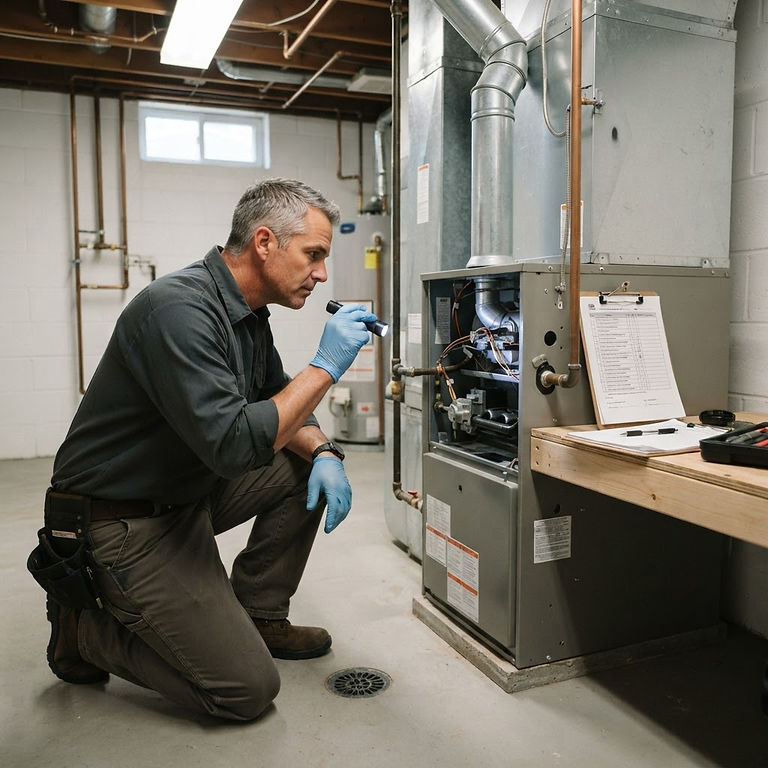
Illustrative photograph of a home inspector examining mechanical equipment during due diligence. Generated illustration.
Routine Maintenance
Examples include:
- Minor plumbing repairs.
- Appliance service.
- Door and lock repairs.
- Landscaping.
- Seasonal maintenance.
- Small electrical repairs.
Major Capital Improvements
Examples include:
- Roof replacement.
- Furnace replacement.
- Water heater replacement.
- Window replacement.
- Significant plumbing or electrical work.
Why Inspection Reports Matter
A professional inspection can help identify concerns before closing.
But inspections are not guarantees that nothing will fail later.
Build a Repair Plan
Before purchasing, identify:
- Repairs needed immediately.
- Repairs likely within the next year.
- Major systems approaching the end of their useful life.
- Maintenance you expect to handle regularly.
- Work requiring licensed professionals.
Don't Assume a Percentage Works for Every Property
Some investors use percentage-based maintenance assumptions.
Those can be useful screening tools.
But a specific property may require much more or less spending.
A 40-year-old home with aging systems should not automatically receive the same repair budget as a recently renovated property.
The property's actual condition should influence your repair assumptions.
14. Should You Manage the Property Yourself?
Managing your own rental property can reduce the direct expense of hiring a property manager.
But it requires time and effort.
Self-Management Responsibilities
You may need to:
- Advertise the rental.
- Respond to inquiries.
- Screen applicants lawfully.
- Prepare and administer leases.
- Collect rent.
- Coordinate maintenance.
- Track expenses.
- Address tenant concerns.
- Follow landlord-tenant requirements.
Professional Property Management
A property manager may handle some or many of these responsibilities under a management agreement.
Fees and services vary.
Why I Would Include Management in the Analysis Anyway
Even if you intend to manage the property yourself, consider including a realistic management expense when evaluating potential investments.
That gives you a clearer picture of what the property might produce if your circumstances change.
Maybe your career becomes more demanding.
Maybe you move.
Maybe you purchase another property.
A rental that only works financially when you provide unlimited unpaid labor may offer less flexibility than it initially appears.
Choose your management approach based on your available time, skills, finances, and willingness to take on the responsibility.
15. How to Evaluate a Rental Property Before Making an Offer
Before submitting an offer, I would want to understand five things.
1. The Property
What am I buying?
What condition is it in?
What repairs are required?
Is its intended rental use permitted?
2. The Market
What do comparable properties rent for?
How strong is local rental demand?
How long do similar homes remain vacant?
3. The Financing
What down payment is required?
What will the mortgage cost?
What reserves are required?
4. The Financial Performance
What is realistic rental income?
What are operating expenses?
What is estimated NOI?
What is estimated cash flow after debt service and reserves?
5. The Downside Risk
What happens if the property is vacant?
What if the rent is lower than expected?
What if insurance or taxes increase?
What if the property needs a major repair?
Make the Decision Based on Evidence
If you don't have enough information to answer those questions, continue your research.
A property can be appealing without being a good purchase at its current price.
The goal is not to make every deal work. It's to recognize which deals deserve your money.
16. From the Field: Why I Believe Financial Flexibility Matters
One of the things owning rental property has reinforced for me is that financial flexibility matters.
Collecting rent can feel rewarding.
But the responsibility of ownership exists whether or not the rent arrives on time.
The mortgage doesn't disappear because a unit is vacant.
Repairs don't always happen when it's convenient.
And property ownership can demand attention at the same time as everything else happening in your life.
That's why I think people should be careful about purchasing a rental property that requires every financial assumption to work perfectly.
If the deal only works when the property is occupied every month, no repairs are needed, and your personal income remains unchanged, there's very little room for unexpected events.
I would rather understand a property's limitations before buying it than discover them after closing.
That means looking carefully at the mortgage, expenses, cash reserves, and realistic rent.
It also means being willing to walk away from a property that doesn't fit.
Owning rental property can be part of building long-term financial security.
But I don't believe financial security comes from simply accumulating more properties.
It comes from making responsible decisions about the properties you choose to own.
The goal isn't to own as many houses as possible. It's to own properties you can afford to maintain through changing circumstances.
17. Try It Yourself: Analyze a Potential Second Rental Property
Before buying, create a simple investment worksheet.
Property Information
| Question | Your answer |
|---|---|
| Property address | |
| Asking price | |
| Property type | |
| Bedrooms and bathrooms | |
| Estimated market rent | |
| Current occupancy | |
| Known repair needs | |
| Intended rental strategy |
Initial Cash Requirement
| Item | Estimate |
|---|---|
| Purchase price | $ |
| Down payment | $ |
| Closing costs | $ |
| Initial repairs | $ |
| Rental cash reserves | $ |
| Total cash required or allocated | $ |
Monthly Rental Performance
| Item | Estimate |
|---|---|
| Scheduled rent | $ |
| Vacancy allowance | -$ |
| Effective rental income | $ |
| Operating expenses | -$ |
| Simplified NOI | $ |
| Mortgage principal and interest | -$ |
| Capital reserve | -$ |
| Estimated monthly cash flow | $ |
Financial Resilience
| Question | Your answer |
|---|---|
| Monthly cost if vacant | $ |
| Rental reserve balance | $ |
| Months the reserve could cover | |
| Primary residence monthly cost | $ |
| Total listed housing costs during vacancy | $ |
| Can I support both properties without rent? |
Run Three Scenarios
Scenario A: Expected Performance
Use realistic rent and expense assumptions.
Scenario B: Three-Month Vacancy
Assume no rental income for three months.
Calculate how much cash you would need to cover the property.
Scenario C: Vacancy Plus Major Repair
Add an unexpected repair expense to the vacancy scenario.
Determine whether your available reserves would be sufficient.
Before You Proceed
Ask yourself whether the property still makes sense under conservative assumptions.
If the answer depends entirely on optimistic rent, perfect occupancy, or having no repairs, consider whether the purchase is financially appropriate.
The best investment analysis is one that helps you make a decision before the money is committed.
18. Your Second Property Buying Checklist
Financial Readiness
:::checklist
- [ ] Review current household obligations.
- [ ] Determine available acquisition funds.
- [ ] Preserve appropriate personal emergency savings.
- [ ] Establish rental property reserves.
- [ ] Evaluate income stability.
- [ ] Understand how the new mortgage affects existing obligations.
Financing
- [ ] Speak with a lender about investment-property financing.
- [ ] Review down-payment requirements.
- [ ] Obtain an estimated payment.
- [ ] Review closing costs.
- [ ] Understand lender reserve requirements.
- [ ] Confirm property eligibility.
Market Research
- [ ] Compare recent property sales.
- [ ] Research comparable rents.
- [ ] Evaluate local rental demand.
- [ ] Research vacancy patterns.
- [ ] Understand rental regulations.
Property Due Diligence
- [ ] Obtain a professional inspection.
- [ ] Review major systems.
- [ ] Estimate immediate repairs.
- [ ] Obtain an insurance quote.
- [ ] Review property taxes.
- [ ] Verify legal rental use.
- [ ] Review applicable title and transaction documents.
Investment Analysis
- [ ] Calculate realistic rental income.
- [ ] Include vacancy and collection loss.
- [ ] Estimate operating expenses.
- [ ] Calculate NOI.
- [ ] Include debt service.
- [ ] Include capital improvement reserves.
- [ ] Evaluate negative cash-flow scenarios.
- [ ] Stress-test a prolonged vacancy.
Operational Preparation
- [ ] Choose a management approach.
- [ ] Prepare a maintenance plan.
- [ ] Establish income and expense tracking.
- [ ] Understand lease requirements.
- [ ] Prepare for tenant screening.
- [ ] Confirm required licenses or registrations.
19. What Happens After You Purchase the Rental?
Closing on the property is only the beginning.
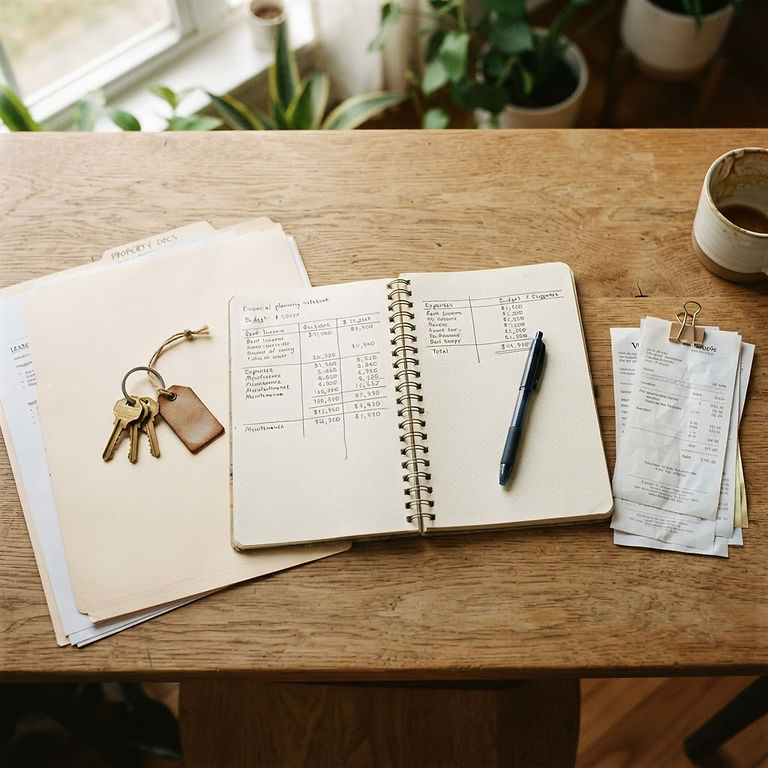
Illustrative photograph of rental property keys and lease documents beside an ownership expense worksheet. Generated illustration.
Prepare the Property
Complete necessary repairs and address safety or compliance requirements before occupancy.
Establish Your Rental Process
Determine how you'll advertise the property, handle inquiries, screen applicants lawfully, and manage leases.
Set Up Financial Tracking
Track rent, expenses, repairs, reserves, and other property-related financial activity.
Create a Maintenance Schedule
Plan for routine maintenance rather than waiting for everything to become an emergency.
Keep Cash Available
Don't assume every rent payment is money you can immediately withdraw for personal use.
Review Performance Regularly
Compare actual income and expenses with your original projections.
If the property isn't performing as expected, identify why.
Continue Learning
Your first separate rental property will likely teach you things that no article or spreadsheet can fully anticipate.
But the more thoroughly you prepare, the better equipped you'll be to handle those lessons.
A rental property becomes a long-term asset through responsible operation—not simply because you purchased it.
Key Takeaways
Buying a separate rental property is different from purchasing your primary residence.
A dedicated rental generally requires financing appropriate to investment-property use.
The down payment is only part of the initial cash requirement.
Your primary residence expenses continue after purchasing another property.
Realistic rent, operating expenses, vacancies, and repairs determine whether the property is financially sustainable.
Positive rental income does not automatically mean positive cash flow.
Cash reserves help protect you when the property is vacant or needs repairs.
A property should be evaluated under both expected and unfavorable scenarios.
And you should be willing to walk away from a purchase that doesn't fit your financial situation.
Building long-term financial security isn't about buying another property as quickly as possible. It's about making sure the next property is a responsibility you're prepared to carry.
What's Next: Long-Term vs. Short-Term vs. Mid-Term Rentals
Once you've decided to purchase a rental property, another important question emerges:
How should you rent it?
Should you look for a tenant who wants to stay for a year or longer?
Would a furnished mid-term rental make more sense?
Or could a short-term rental be appropriate for the property and location?
Each strategy has different income opportunities, operating expenses, vacancy patterns, management requirements, and legal considerations.
In our next lesson, we'll compare these approaches so you can understand which one may fit your goals and property.
Next in the series: FRP-008 — Long-Term vs. Short-Term vs. Mid-Term Rentals
This article is provided for general educational purposes and does not constitute individualized financial, mortgage, investment, legal, tax, or insurance advice. All financial examples are hypothetical and do not represent the author's actual property finances or guarantee rental income, cash flow, appreciation, or investment performance. Mortgage programs, financing requirements, property classifications, rental regulations, taxes, insurance, and landlord-tenant obligations vary by jurisdiction and circumstance. Verify applicable requirements with qualified professionals and relevant authorities before purchasing or operating rental property.
© Brad Merritt. All rights reserved.