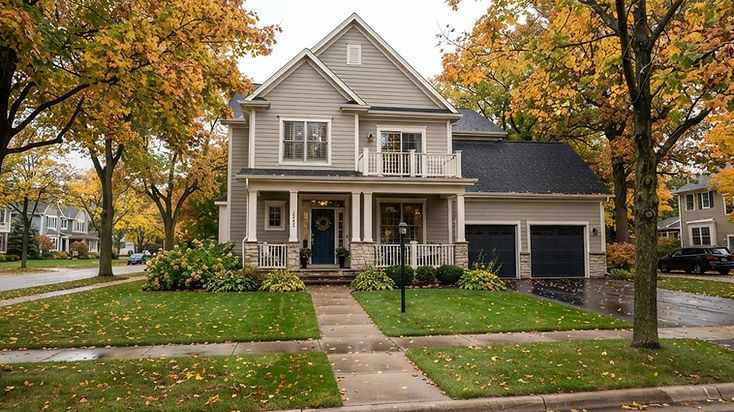
Introduction: The Same Property Can Become Three Very Different Investments
Imagine purchasing a three-bedroom house in a neighborhood where people want to live.
The house has a functional layout, a driveway, a decent backyard, and enough space for a family.
You could rent it to a tenant who signs a twelve-month lease.
You could furnish it and offer it to people who need temporary housing for several months.
Or you could turn it into a short-term rental, welcoming travelers for a few nights at a time.
It's the same house.
The mortgage is the same.
The property taxes are the same.
And the roof will eventually need replacing regardless of who stays there.
But the way you operate that property can be dramatically different.
Your rental income may change.
Your expenses may change.
Your responsibilities will change.
And the amount of time you spend managing the property may change considerably.
I've experienced different forms of rental ownership, including renting rooms in my primary residence, owning a duplex, and hosting short-term guests.
One of the lessons I've taken from those experiences is that rental income is only part of the decision.
The work required to generate that income matters, too.
A rental strategy that looks attractive on paper may not be the right choice for your schedule, financial situation, or long-term goals.
That's why I believe you should evaluate the rental strategy before committing to a property whenever possible.
In this article, we'll compare three common approaches:
- Long-term rentals.
- Mid-term rentals.
- Short-term rentals.
We'll examine how each works, where the income comes from, what expenses to anticipate, and how to decide which approach may make sense for you.
The goal isn't to find the strategy with the highest advertised income. It's to find the strategy that offers the best fit between financial performance, risk, responsibility, and your life.
1. What Are the Three Main Rental Strategies?
The differences begin with how long someone typically stays in the property.
Long-Term Rentals
A long-term rental generally involves a tenant renting a property for an extended period, often under a lease lasting six or twelve months or longer.
The tenant usually treats the property as their primary home.
Mid-Term Rentals
A mid-term rental generally serves someone who needs temporary housing for several weeks or months.
For this article, we'll use stays of approximately 30 days to several months as a practical description.
This is not a universal legal definition.
Short-Term Rentals
A short-term rental generally accommodates guests for relatively brief stays, such as a weekend, several nights, or a vacation.
The exact legal definition of a short-term rental varies by jurisdiction.
Some locations define it by stays shorter than 30 days, while others use different thresholds.
At a Glance
| Feature | Long-term | Mid-term | Short-term |
|---|---|---|---|
| Typical stay | Months to a year or longer | Several weeks to months | Nights to weeks |
| Usually furnished? | Often no | Usually yes | Usually yes |
| Rent structure | Monthly | Monthly or negotiated stay | Nightly or stay-based |
| Turnover frequency | Generally lower | Moderate | Potentially high |
| Utilities | Often tenant-paid | Often owner-paid | Often owner-paid |
| Management intensity | Usually lower | Moderate | Often higher |
| Income predictability | Often more stable during occupancy | Depends on demand and bookings | More variable |
| Local regulation | Landlord-tenant rules | Depends on stay and local rules | Often additional lodging rules |
These are general operating patterns, not guarantees.
The important thing to recognize is that each strategy functions differently.
2. Long-Term Rentals: The Traditional Approach
Long-term rentals are probably the most familiar form of residential rental ownership.
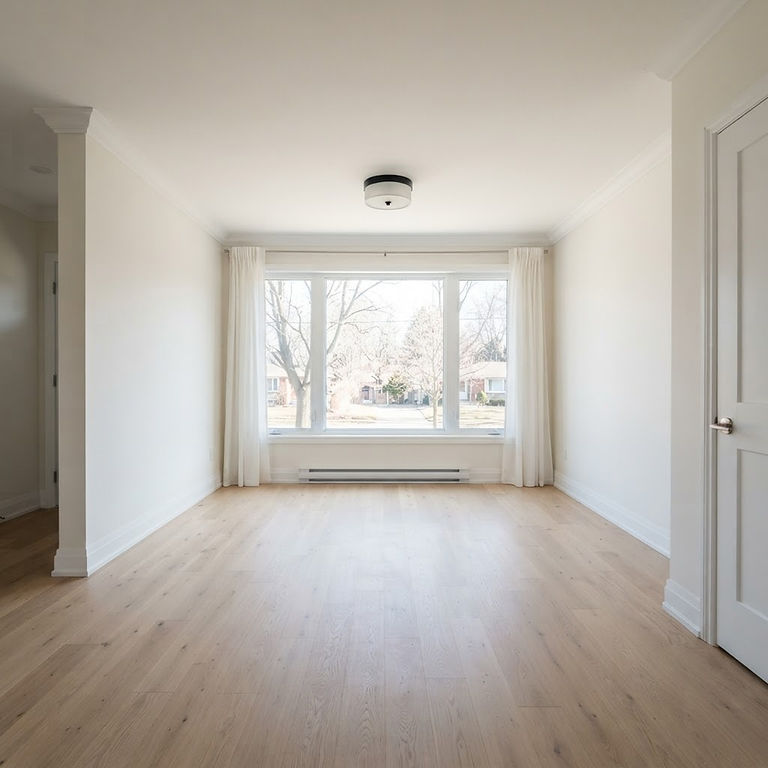
Generated illustration of a long-term rental interior as a resident might furnish it. Not a property owned or offered for rent by the author.
A landlord advertises a property, screens applicants, signs a lease, and collects rent according to the agreement.
The tenant typically lives in the property as their home.
How the Income Works
Imagine renting a house for $1,800 per month.
If it remains occupied for twelve months and the rent is fully collected, scheduled annual rental income is:
$1,800 × 12 = $21,600
That is gross scheduled rent.
It is not profit.
Advantages of Long-Term Rentals
More predictable rental schedules. A fixed-term lease can establish the expected monthly rent and occupancy period.
Fewer turnovers. A tenant may stay for a year or several years.
Less frequent cleaning and furnishing work. The property may not need to be fully furnished, and cleaning is generally less frequent than in a nightly rental.
Potentially lower management intensity. Day-to-day responsibilities may be less frequent than those associated with a high-turnover short-term rental.
Disadvantages of Long-Term Rentals
Limited ability to adjust rent during a lease. Rent changes depend on the lease and applicable law.
Tenant-related financial risk. Nonpayment, property damage, and disputes can create expenses.
Vacancy can still be costly. A property may sit empty while you find a qualified replacement tenant.
Landlord responsibilities remain. Maintenance, habitability, fair housing, and legal compliance still require attention.
Who Might Prefer Long-Term Rentals?
Someone seeking a more predictable operating model may find long-term rentals appealing.
They may also be attractive to owners who don't want to manage frequent guest arrivals, cleaning schedules, and booking calendars.
Long-term rentals aren't necessarily passive, but they can offer a more straightforward operating structure.
3. Mid-Term Rentals: Housing Between a Hotel and a Traditional Lease
Mid-term rentals occupy an interesting space between long-term housing and short-term accommodations.

Generated illustration of a furnished mid-term rental set up with a workspace. Not a property owned or offered for rent by the author.
The renter needs somewhere to live temporarily, but not necessarily for an entire year.
Who Uses Mid-Term Rentals?
Potential guests or tenants include:
- Traveling healthcare professionals.
- Employees on temporary assignments.
- People relocating to a new city.
- Families displaced by home repairs.
- Individuals completing internships or training.
- People waiting for a home purchase or renovation to finish.
How the Income Works
Suppose a furnished home rents for $2,400 per month.
If the property is occupied for ten months during the year, gross collected rent would be:
$2,400 × 10 = $24,000
The remaining two months represent vacancy in this simplified example.
Advantages of Mid-Term Rentals
Potentially higher monthly rates. Furnished temporary housing may command a premium in some markets.
Fewer turnovers than nightly rentals. Guests may stay for several weeks or months.
Different tenant demand. You may serve people who need temporary housing rather than permanent residences.
Potential flexibility. Owners may have more opportunities to adjust their rental approach between stays, subject to leases and applicable law.
Disadvantages of Mid-Term Rentals
Furnishing costs. Beds, furniture, kitchen equipment, and household supplies may be required.
Utilities and internet. These are often included in the rent.
More frequent turnover than traditional leases. Cleaning, scheduling, and marketing may occur more often.
Demand can be uneven. Some markets have strong temporary-housing demand; others do not.
Legal classification can vary. A 30-day stay doesn't automatically eliminate lodging rules, licensing requirements, or tenant protections.
Who Might Prefer Mid-Term Rentals?
An owner who wants to offer furnished housing without operating a nightly vacation rental may find this strategy worth researching.
But the economics need to support the additional furnishing and operating costs.
A higher monthly rental rate doesn't automatically mean a higher monthly profit.
4. Short-Term Rentals: Operating a Hospitality Business
Short-term rentals are often associated with vacation properties, weekend getaways, and platforms such as Airbnb or Vrbo.

Generated illustration of a short-term rental prepared for arriving guests. Not a property owned or offered for rent by the author.
But they can also serve business travelers, people visiting family, and guests attending local events.
How the Income Works
Instead of collecting one monthly rental payment, you charge for individual nights or stays.
Imagine a property with an average nightly rate of $150.
If it books 18 nights in a 30-day month:
$150 × 18 = $2,700
That is gross accommodation revenue before expenses.
Advantages of Short-Term Rentals
Flexible pricing. Rates may change with seasonality, demand, and local events.
Potential for higher gross revenue. Some properties can generate more revenue than a traditional rental.
Flexible availability. Owners may be able to block dates for personal use, where legally and contractually permitted.
Frequent property access. Turnovers create opportunities to inspect and maintain the property.
Disadvantages of Short-Term Rentals
More active management. Guest communication, check-in instructions, cleaning, supplies, and booking coordination can be frequent.
Revenue volatility. Occupancy and nightly rates can change substantially.
Additional operating costs. Furnishing, utilities, platform fees, cleaning, consumables, and hospitality-related insurance can affect profitability.
Regulatory exposure. Some locations restrict or prohibit certain short-term rentals.
Seasonality. A strong summer month may not represent year-round performance.
Who Might Prefer Short-Term Rentals?
Someone comfortable operating a hospitality-oriented business may find short-term rentals appealing.
But owners should understand the time commitment and costs before assuming that higher nightly revenue translates into better investment performance.
A short-term rental is not simply a traditional rental with a different payment schedule. It often requires a different operating mindset.
5. Comparing Rental Income Across All Three Strategies
Let's compare the same hypothetical property under three different rental approaches.
These are illustrative scenarios, not market forecasts.
Gross Revenue Comparison
| Metric | Long-term | Mid-term | Short-term |
|---|---|---|---|
| Rate | $1,800/month | $2,400/month | $150/night |
| Occupancy assumption | 12 months | 10 months | 18 nights/month |
| Gross annual revenue | $21,600 | $24,000 | $32,400 |
| Average gross monthly revenue | $1,800 | $2,000 | $2,700 |
At first glance, the short-term rental appears to win.
It generates $32,400 in hypothetical annual revenue.
That's $10,800 more than the long-term rental.
But we haven't considered the operating expenses.
And that's where the comparison can change.
6. Why Gross Rental Revenue Can Be Misleading
A rental property's gross revenue is only the beginning of the financial analysis.
A short-term rental might collect more money but require more spending.
A mid-term rental might charge higher monthly rent but remain vacant longer between occupants.
A long-term rental might collect less gross rent but require fewer turnovers and lower recurring operating costs.
Illustrative Monthly Operating Comparison
| Item | Long-term | Mid-term | Short-term |
|---|---|---|---|
| Average gross revenue | $1,800 | $2,000 | $2,700 |
| Property taxes | -$250 | -$250 | -$250 |
| Insurance | -$125 | -$150 | -$200 |
| Maintenance | -$125 | -$150 | -$175 |
| Utilities and internet | -$50 | -$250 | -$300 |
| Management | -$145 | -$200 | -$405 |
| Cleaning and turnover | $0 | -$75 | -$300 |
| Supplies and consumables | $0 | -$50 | -$100 |
| Platform and booking fees | $0 | -$50 | -$100 |
| Other operating expenses | -$40 | -$50 | -$75 |
| Simplified NOI | $1,065 | $775 | $795 |
In this example, the long-term rental produces the highest simplified NOI.
The short-term rental collects the most gross revenue but has the highest operating expenses.
This is why comparing nightly or monthly rates alone can lead to poor decisions.
Important Assumptions
These figures are simplified annualized monthly averages.
The occupancy assumptions are already reflected in the average gross revenue.
We are not subtracting an additional vacancy allowance.
Management and platform fees are illustrative expense assumptions, not quotes from specific providers.
Cleaning expense assumes the owner's modeled costs; guest-paid cleaning fees, if any, would need to be treated consistently as revenue and expense.
Financing, capital replacement reserves, income taxes, initial furnishing costs, and certain other potential expenses are not included in NOI.
The strategy with the highest revenue isn't necessarily the strategy with the highest operating income.
7. Comparing Cash Flow After Mortgage Payments
Now let's assume the same property has a monthly mortgage principal and interest payment of $1,050.
We'll also allocate $125 per month toward future capital improvements.
Monthly Cash Flow Comparison
| Item | Long-term | Mid-term | Short-term |
|---|---|---|---|
| Simplified NOI | $1,065 | $775 | $795 |
| Mortgage principal and interest | -$1,050 | -$1,050 | -$1,050 |
| Capital replacement reserve | -$125 | -$125 | -$125 |
| Estimated monthly cash flow | -$110 | -$400 | -$380 |
| Annualized cash flow | -$1,320 | -$4,800 | -$4,560 |
All three strategies produce negative cash flow under these assumptions.
That may be surprising.
But it illustrates an important point.
A property can generate thousands of dollars in gross revenue while still requiring additional cash from the owner.
What About Appreciation and Equity?
Mortgage principal repayment may build equity.
Property values may increase or decrease.
Those factors can matter when evaluating the total investment.
But they don't automatically solve a monthly cash-flow shortfall.
What Should You Learn From This?
You shouldn't choose a rental strategy based only on its revenue potential.
You need to understand how much money remains after the expenses of operating the property.
Cash flow is what remains after the bills—not what appears at the top of the booking report.
8. How Occupancy Changes the Financial Picture
Occupancy is one of the most important variables in rental property performance.
But occupancy is measured differently across strategies.
Long-Term Occupancy
A long-term rental may be occupied for an entire year.
However, tenant turnover, nonpayment, and vacancy can still reduce collected revenue.
Mid-Term Occupancy
A mid-term rental may experience gaps between temporary residents.
A property could be occupied for three months, vacant for several weeks, and then occupied again.
Short-Term Occupancy
Short-term occupancy is commonly measured as booked nights divided by available nights.
A property booked for 18 nights out of 30 has 60% occupancy for that period.
The Occupancy Trap
Suppose a short-term rental charges $150 per night.
| Booked nights per 30-day month | Gross accommodation revenue |
|---|---|
| 10 | $1,500 |
| 15 | $2,250 |
| 18 | $2,700 |
| 22 | $3,300 |
| 26 | $3,900 |
The difference between 10 and 22 booked nights is $1,800 in gross revenue.
Some expenses will change with occupancy.
Others will remain.
That makes it important to test multiple occupancy scenarios.
Don't build an investment plan around your best possible month.
9. Understanding Seasonality and Local Demand
Not every rental market behaves the same way.
A property near a major vacation destination may experience strong seasonal demand.
A home near a hospital or major employer may attract temporary workers.
A suburban house near schools and employment centers may be more suitable for long-term residents.
Questions to Research
- Who would rent this property?
- Why would they choose this location?
- What times of year are busiest?
- What times of year are slowest?
- How many competing rentals are available?
- What do comparable properties actually earn?
- Are there major employers, hospitals, universities, or tourist destinations nearby?
- Are there restrictions on the intended rental use?
Don't Assume Every Market Supports Every Strategy
A property can be attractive without being suitable for short-term rental.
A market with strong long-term demand may have limited demand for furnished temporary housing.
A vacation area may produce strong summer revenue but weak winter occupancy.
The rental strategy should fit the property and the market—not simply the owner's preferred business model.
10. The Hidden Costs of Furnishing a Rental Property
Furnishing is one of the major differences between traditional long-term rentals and many mid-term or short-term rentals.
A furnished property may need:
- Beds and mattresses.
- Sofas and chairs.
- Dining furniture.
- Kitchen supplies.
- Towels and linens.
- Televisions.
- Internet equipment.
- Lamps and lighting.
- Cleaning equipment.
- Appliances.
- Decor and household essentials.
Initial Furnishing Budget
Consider a hypothetical $8,000 furnishing and setup budget.
That money may need to be spent before the first guest arrives.
Replacement Costs
Furniture and household items eventually wear out.
Guests may damage items.
Linens and towels need replacing.
Compare the Investment, Not Just the Rent
If a furnished strategy generates $200 more per month in net operating income but requires an additional $8,000 in initial furnishing costs, it would take 40 months of that incremental NOI to equal the furnishing outlay, ignoring financing, taxes, time value of money, and other differences.
That's not necessarily a bad investment.
But it's a different calculation from simply comparing rental rates.
Furnishing costs are real investment costs, even when they don't appear in the monthly mortgage payment.
11. How Much Work Does Each Rental Strategy Require?
One of the biggest mistakes a new investor can make is ignoring the value of their own time.
Long-Term Rental Responsibilities
Typical activities include:
- Tenant screening.
- Lease administration.
- Rent collection.
- Maintenance.
- Property inspections where permitted.
- Tenant communication.
- Turnover preparation.
Mid-Term Rental Responsibilities
You may also need to manage:
- Furnishing.
- Utility accounts.
- Temporary housing inquiries.
- More frequent scheduling.
- Cleaning between stays.
- Replacement household supplies.
Short-Term Rental Responsibilities
You may need to coordinate:
- Frequent guest messages.
- Reservation requests.
- Check-in and check-out.
- Cleaning teams.
- Supplies.
- Calendar management.
- Pricing changes.
- Guest issues.
- Reviews and listing maintenance.
A Management Comparison
| Activity | Long-term | Mid-term | Short-term |
|---|---|---|---|
| Tenant/guest turnover | Lower | Moderate | Higher |
| Cleaning coordination | Occasional | Between stays | Frequent |
| Guest communication | Usually less frequent | Moderate | Often frequent |
| Pricing adjustments | Less frequent | Periodic | Potentially frequent |
| Furnishing management | Often limited | Common | Common |
| Scheduling complexity | Lower | Moderate | Higher |
These are typical patterns, not fixed rules.
A difficult long-term tenancy can require more work than a well-managed short-term rental.
But as a general principle, more frequent turnover creates more operational activity.
The right rental strategy should fit the time and attention you're realistically willing to provide.
12. Should You Hire a Property Manager?
Professional management can reduce some of the owner's direct workload.
But the services and fees differ by rental strategy.
Long-Term Property Management
A manager may handle leasing, rent collection, tenant communication, and maintenance coordination.
Mid-Term Rental Management
A manager may also coordinate furnishings, temporary stays, utilities, and turnover.
Short-Term Rental Management
A manager or co-host may handle reservations, guest communication, cleaning coordination, listing management, and pricing.
The Financial Tradeoff
Management fees reduce the amount of operating income retained by the owner.
But self-management also requires time and carries responsibilities.
A Useful Question
Would the rental strategy still make financial sense if you needed to hire help?
If the answer is no, consider whether you're comfortable committing to the amount of unpaid work required.
Don't evaluate a rental as if your time has no value.
13. Local Laws Can Determine Which Strategy Is Possible
Before deciding how to rent a property, research the rules that apply to its location.
This is especially important for short-term and furnished rentals.
Potential Requirements
Depending on the jurisdiction and property, you may need to consider:
- Zoning.
- Rental registration.
- Rental licensing.
- Property inspections.
- Short-term rental permits.
- Occupancy limits.
- Fire and safety requirements.
- Lodging or occupancy taxes.
- Homeowners association restrictions.
- Lease and tenant-protection rules.
- Insurance requirements.
Why Stay Length Matters
Some regulations depend on how long a guest or tenant occupies a property.
But a stay of 30 days or more doesn't automatically remove every regulatory obligation.
Likewise, advertising a property as a vacation rental doesn't mean that use is legally permitted.
Verify Before Purchasing
Don't rely only on a listing agent, platform description, or another investor's experience.
Confirm the rules with the appropriate local authority and qualified professionals.
A rental strategy isn't viable if the intended use is prohibited or the required compliance costs make it financially impractical.
14. Insurance Needs Can Change With Rental Strategy
Insurance is another area where the rental model matters.
A policy appropriate for a long-term tenant may not provide the same coverage as one intended for frequent short-term guests.
Long-Term Rental Insurance
Landlord policies may address certain property and liability exposures associated with residential leasing.
Mid-Term Rental Insurance
Coverage needs depend on occupancy, lease arrangements, furnished property, and insurer terms.
Short-Term Rental Insurance
Frequent guest turnover and hospitality operations can create different exposures.
Questions to Ask an Insurance Professional
- Does this policy cover my intended rental use?
- Are furnished stays covered?
- Are there minimum or maximum stay restrictions?
- What liability coverage applies?
- Are guest-caused damages covered?
- What deductibles apply?
- Are there exclusions related to business activity?
- What happens if the property changes rental strategy?
Don't assume a booking platform's protection program replaces appropriate insurance.
The insurance policy should match how the property is actually being used.
15. Can You Switch Between Rental Strategies?
Sometimes.
An owner might begin with a long-term rental and later consider furnished mid-term housing.
A short-term rental might transition to long-term leasing if local rules or market demand change.
But switching strategies isn't always simple.
Potential Transition Costs
- Furniture purchases or removal.
- Different insurance.
- Licensing or permits.
- Utility changes.
- Marketing.
- Cleaning and preparation.
- Lease obligations.
- Vacancy during the transition.
Don't Assume Immediate Flexibility
Existing leases, tenant rights, zoning, permits, and contractual obligations can limit how quickly you can change the property's use.
Plan for an Alternative
Before buying, consider whether the property could work financially as a traditional long-term rental if another strategy becomes unavailable.
That doesn't guarantee the investment will succeed.
But it can help you understand the property's flexibility.
A backup rental strategy can be valuable, provided it's legal, operationally realistic, and financially sustainable.
16. From the Field: Choosing a Strategy That Fits Your Life
One of the things I appreciate about rental property is that there isn't just one way to participate.
I've rented rooms in my own home.
I've owned a duplex with long-term tenants.
And I've worked with short-term guests.
Those experiences involve different types of responsibility.
When someone rents a room in your home, you have to think about how sharing your living space affects your daily life.
With a duplex, you're managing a property that provides housing for other people while also carrying the financial responsibility of ownership.
With short-term guests, the experience can involve more hospitality-related details and more frequent communication.
Each approach has its advantages.
Each has its challenges.
And each requires a different commitment from the owner.
That's why I don't think everyone should automatically pursue the strategy with the highest potential revenue.
I think the better question is whether the strategy fits the life you're trying to build.
If you already have a demanding career, family responsibilities, or other businesses, your available time matters.
If your finances require predictable income, revenue volatility matters.
If you enjoy hospitality and guest experiences, a more active rental model may be appealing.
If you prefer longer-term tenant relationships and fewer turnovers, traditional leasing may be a better fit.
The best rental strategy isn't necessarily the one that produces the most revenue. It's the one you can operate responsibly and sustainably.
17. Try It Yourself: Compare Three Rental Strategies
Before deciding how to rent a property, compare the strategies using consistent assumptions.
Property Information
| Question | Your answer |
|---|---|
| Property location | |
| Property type | |
| Bedrooms and bathrooms | |
| Mortgage principal and interest | $ |
| Monthly property taxes | $ |
| Monthly insurance | $ |
| Rental uses legally permitted | |
| Available management time |
Rental Revenue Assumptions
| Input | Long-term | Mid-term | Short-term |
|---|---|---|---|
| Rental rate | $/month | $/month | $/night |
| Expected occupied months or nights | |||
| Annual gross revenue | $ | $ | $ |
| Average monthly gross revenue | $ | $ | $ |
Operating Expenses
| Expense | Long-term | Mid-term | Short-term |
|---|---|---|---|
| Property taxes | $ | $ | $ |
| Insurance | $ | $ | $ |
| Maintenance | $ | $ | $ |
| Utilities | $ | $ | $ |
| Management | $ | $ | $ |
| Cleaning | $ | $ | $ |
| Supplies | $ | $ | $ |
| Platform fees | $ | $ | $ |
| Other expenses | $ | $ | $ |
| Total operating expenses | $ | $ | $ |
Financial Performance
| Metric | Long-term | Mid-term | Short-term |
|---|---|---|---|
| Average monthly revenue | $ | $ | $ |
| Monthly operating expenses | $ | $ | $ |
| Simplified NOI | $ | $ | $ |
| Mortgage P&I | $ | $ | $ |
| Capital reserve | $ | $ | $ |
| Monthly cash flow | $ | $ | $ |
| Annualized cash flow | $ | $ | $ |
Questions Beyond the Numbers
- Which strategy is legally permitted?
- Which has demonstrated local demand?
- Which requires the most initial investment?
- Which produces the most conservative cash-flow estimate?
- Which is most sensitive to occupancy changes?
- Which requires the most management time?
- Which fits my lifestyle?
- What would I do if the preferred strategy stopped working?
Compare More Than One Scenario
Run a conservative, expected, and optimistic scenario for each rental strategy.
Don't assume the highest occupancy or strongest pricing will continue indefinitely.
Your decision should reflect both the financial results and the work required to produce them.
18. How to Choose the Right Rental Strategy
There isn't a universal answer.
But there is a decision process you can follow.
Step 1: Confirm What's Legal
Eliminate strategies that aren't permitted for the property.
Step 2: Research Local Demand
Determine whether the market supports long-term residents, temporary housing, vacation stays, or some combination.
Step 3: Estimate Realistic Revenue
Use comparable rental evidence and conservative assumptions.
Step 4: Calculate Operating Expenses
Include strategy-specific costs, not just mortgage payments.
Step 5: Evaluate Cash Flow
Calculate NOI, financing costs, reserves, and expected cash flow.
Step 6: Stress-Test Occupancy
Model what happens when demand is weaker than expected.
Step 7: Consider Your Time
Estimate the amount of management work involved.
Step 8: Consider Your Available Capital
Account for furnishings, repairs, reserves, and setup expenses.
Step 9: Evaluate a Backup Strategy
Consider what happens if your preferred rental approach becomes impractical.
Step 10: Choose Based on Fit
Select the strategy that best balances financial performance, risk, time, and long-term goals.
A responsible rental strategy begins with evidence—not with the highest nightly rate you saw advertised online.
19. Your First 30 Days of Rental Strategy Research
If you're considering purchasing or repositioning a rental property, use the next month to research the options.
Week 1: Understand the Market
Research comparable long-term rents, furnished monthly rentals, and short-term listings.
Identify the likely renter or guest for each strategy.
Week 2: Understand the Rules
Confirm local licensing, zoning, insurance, occupancy, and rental requirements.
Determine which strategies are actually available.
Week 3: Build the Financial Comparison
Estimate realistic revenue, expenses, financing, furnishing costs, and cash reserves.
Test different occupancy levels.
Week 4: Make a Decision
Compare financial performance with your available time and willingness to manage the property.
Choose a preferred strategy and identify a realistic alternative.
If the numbers don't work, keep researching.
You don't have to buy a property simply because you've spent time evaluating it.
Sometimes the most valuable outcome of a rental property analysis is deciding not to proceed.
Key Takeaways
Long-term rentals typically involve longer tenant stays and a more traditional leasing model.
Mid-term rentals serve temporary housing needs and often require furnishing and included utilities.
Short-term rentals can offer higher gross revenue potential but often involve more turnover, hospitality work, and revenue variability.
The highest gross revenue does not necessarily produce the highest NOI or cash flow.
Occupancy assumptions can dramatically change financial performance.
Furnishing, cleaning, utilities, management, insurance, and platform costs must be included in the comparison.
Local regulations and property restrictions can determine which strategies are available.
A strategy should be evaluated under conservative, expected, and optimistic scenarios.
Your time and willingness to manage the property matter.
And the best rental strategy is the one that fits your financial goals, risk tolerance, and lifestyle.
Don't choose a rental strategy because it looks exciting. Choose it because you've done the work to understand what it requires.
What's Next: How Much Money Do You Need to Buy Rental Property?
Once you've decided what kind of rental property you want and how you might operate it, the next question becomes more practical.
How much money do you actually need?
Not just the down payment.
But the closing costs, inspections, repairs, furnishings, reserves, and ongoing expenses that come with ownership.
In our next lesson, we'll break down the full cost of purchasing your first rental property and help you estimate how much cash you should prepare before making an offer.
Next in the series: FRP-009 — How Much Money Do You Need to Buy Rental Property?
This article is provided for general educational purposes and does not constitute individualized financial, investment, legal, tax, insurance, or property-management advice. All financial figures and scenarios are hypothetical and are not guarantees of rental revenue, occupancy, cash flow, or investment returns. Rental definitions, licensing, zoning, insurance, taxation, and landlord-tenant obligations vary by jurisdiction and circumstance. Verify applicable requirements with relevant authorities and qualified professionals before buying or operating a rental property.
© Brad Merritt. All rights reserved.