Best for: A peaceful winter outing close to home
Region: Southeast Michigan
Experience: Beginner-friendly on appropriate, relatively level routes
Trail style: Snow-covered woodland paths and approved winter-use areas
Kensington Metropark is one of those places that feels completely different from season to season.
In summer, Kent Lake is surrounded by cyclists, walkers, boaters, and families enjoying the sunshine.
In winter, the park becomes much quieter.
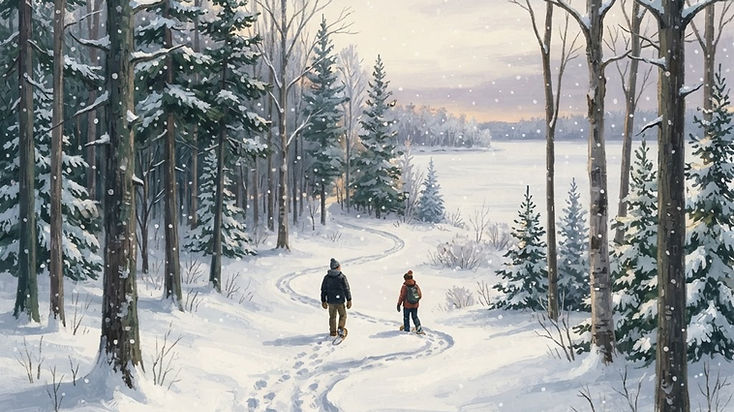
Snow-covered trees, frozen wetlands, and open fields create a beautiful setting for a winter walk.
For someone living around Milford or Brighton, Kensington is a natural place to start exploring winter recreation.
The park has an established cross-country skiing program and a network of nature trails. However, those activities don't automatically share the same routes.
Before snowshoeing, check the park's winter activities map or contact park staff to confirm where snowshoes are permitted.
I especially like the idea of starting with a shorter outing rather than attempting a long loop around Kent Lake.
Why visit in winter: Beautiful local scenery, wildlife observation, and a convenient place to experience the changing seasons.
Planning tip: Avoid groomed ski tracks and follow current winter-use restrictions. Nature trails are not cleared or salted and can become slippery or obstructed.
Make a day of it: Enjoy a short permitted snowshoe outing, stop at a scenic overlook, and warm up afterward in Milford or Brighton.
Best for: A winter woodland adventure with multiple route options
Region: Southeast Michigan
Experience: Beginner to intermediate
Trail style: Ungroomed permitted areas and winter recreation routes
Stony Creek Metropark is a fantastic destination for people who want to experience Michigan's winter landscape without traveling north.
The park covers thousands of acres, with forests, wetlands, open fields, and Stony Creek Lake at its center.
During winter, those landscapes become a playground for outdoor recreation.
Stony Creek explicitly allows snowshoeing in appropriate areas throughout the park, but not on its designated cross-country ski trails.
That distinction is important.
The park also supports fat-tire biking and other winter activities, so visitors need to understand which routes are appropriate for each use.
A quiet snowshoe outing through the woods can be a wonderful alternative to the busy summer lake experience.
Why visit in winter: Varied landscapes, snowy forests, and plenty of room to explore.
Planning tip: Use the park's winter activities map. Do not snowshoe on the groomed cross-country ski trails. Snowshoe rentals are not offered by the park, so plan to bring your own equipment.
Make a day of it: Choose a permitted woodland route, enjoy the winter scenery, and explore another part of the park afterward if conditions allow.
Best for: Rolling hills, quiet forests, and a true winter escape
Region: Southeast Michigan
Experience: Beginner to intermediate, depending on the route
Trail style: Ungroomed forest trails and designated recreation areas
Waterloo Recreation Area is one of Southeast Michigan's most impressive natural landscapes.
Its forests, wetlands, lakes, and glacial hills offer plenty to explore throughout the year.
In winter, Waterloo becomes an especially appealing destination for snowshoeing.
The Michigan DNR identifies snowshoeing as an activity in the recreation area and notes that its cross-country skiing and snowshoeing trails are not groomed.
That means visitors should expect natural winter conditions rather than a maintained, packed walking surface.
For beginners, a shorter route near an established trailhead is a sensible starting point.
More experienced visitors can explore longer outings, provided they understand the terrain, navigation, and current conditions.
The Gerald E. Eddy Discovery Center is also worth checking for seasonal winter programs.
Why visit in winter: Snow-covered forests, rolling terrain, and a sense of being away from the city.
Planning tip: Use the official winter trail and snowmobile maps. Parts of Waterloo are open to snowmobiles, so do not assume every route is nonmotorized.
Make a day of it: Enjoy a short snowshoe outing and explore the Chelsea area afterward.
Best for: A more adventurous winter outing near Southeast Michigan
Region: Livingston and Washtenaw counties
Experience: Intermediate on longer or hillier routes
Trail style: Forested public-land routes, subject to trail-specific restrictions
Pinckney Recreation Area is a familiar destination for hiking, mountain biking, and camping.
But when snow covers the wooded hills, the area offers an entirely different experience.
The recreation area's forests, lakes, and varied terrain make it an appealing place to consider for snowshoeing.
Michigan generally permits snowshoeing on public state land, subject to posted closures and specific trail-use rules.
At Pinckney, that means choosing your route carefully.
Some trails are shared with mountain bikers or have other designated uses. A route that is enjoyable during summer may also be difficult to navigate beneath deep snow.
This is a destination where I would recommend planning conservatively, especially for a first winter visit.
Why visit in winter: Forested hills, quiet natural scenery, and an adventurous feeling close to home.
Planning tip: Contact the park or check current trail maps to identify a permitted winter route. Avoid treating the entire Potawatomi Trail as a beginner snowshoe outing.
Make a day of it: Explore a manageable section of the recreation area, then enjoy a warm meal in Pinckney, Dexter, or Chelsea.
Best for: Towering pine forests and a classic northern Michigan winter experience
Region: Northern Lower Michigan
Experience: Beginner to intermediate, depending on route
Trail style: Snow-covered forest trails and designated winter recreation areas
Hartwick Pines is one of Michigan's most memorable forest destinations.
The park is known for its preserved old-growth pine forest, where enormous trees create a landscape unlike many other places in the Lower Peninsula.
During winter, snow settles across the forest floor and branches, making the trees feel even more impressive.
Snowshoeing through an appropriate section of this landscape can be a peaceful and unforgettable experience.
The Michigan DNR identifies snowshoeing as an activity at Hartwick Pines.
The park also features the Old Growth Forest Trail and a broader trail system, but visitors should confirm which routes are suitable for snowshoes and whether any closures are in effect.
This is a wonderful destination for people who enjoy both outdoor recreation and Michigan's natural history.
Why visit in winter: Towering old-growth pines, beautiful snow-covered forests, and a quiet atmosphere.
Planning tip: Check trail conditions and closures before traveling. A section of the Au Sable River Trail has been closed because of bridge conditions, so do not rely on an outdated loop map.
Make a weekend of it: Explore Hartwick Pines and spend time in the Grayling area.
Best for: Winter dunes, Lake Michigan scenery, and forest trails
Region: West Michigan
Experience: Beginner to intermediate on suitable routes
Trail style: Snow-covered park trails and coastal landscapes
Ludington State Park is beautiful during summer, but winter brings a very different atmosphere.
The crowds thin out, the forest becomes quiet, and Lake Michigan's shoreline takes on a dramatic appearance.
Snow-covered dunes, wooded trails, and views of the water create an interesting combination for winter exploration.
The Michigan DNR lists snowshoeing among the park's recreational activities.
That doesn't mean every summer trail is automatically a good winter route.
Some areas can be exposed to strong wind, drifting snow, and changing shoreline conditions.
A shorter, sheltered forest outing may be a better choice for a beginner than an exposed dune route.
Why visit in winter: Coastal winter scenery, dunes, wooded landscapes, and a peaceful Lake Michigan atmosphere.
Planning tip: Confirm winter parking, trail access, and any seasonal closures before traveling. Stay away from shoreline ice shelves and unstable ice formations.
Make a weekend of it: Explore a permitted winter trail, enjoy the shoreline from a safe location, and visit Ludington.
Best for: Spectacular winter landscapes and Lake Michigan overlooks
Region: Northwest Lower Michigan
Experience: Beginner to advanced, depending on terrain and conditions
Trail style: Snow-covered dunes, forests, and marked winter routes
Sleeping Bear Dunes is one of Michigan's most incredible destinations in any season.
In summer, the dunes rise above brilliant blue Lake Michigan water.
In fall, the surrounding forests turn colorful.
And in winter, the landscape becomes a world of snow-covered hills, quiet woods, and dramatic views.
The National Park Service permits snowshoeing on snow-covered dunes, fields, and forests within the national lakeshore, subject to applicable restrictions.
Visitors are encouraged to stay on well-marked routes.
The park has also offered ranger-led snowshoe hikes, which can be an excellent introduction for beginners when scheduled.
Some of the national lakeshore's cross-country ski routes share the broader winter landscape, so snowshoers should stay off the groomed ski tracks.
Why visit in winter: Dramatic dune scenery, Lake Michigan views, snowy forests, and opportunities for guided outings.
Planning tip: Check the National Park Service winter activities calendar and current trail conditions. Avoid steep icy slopes, dangerous dune edges, and unstable shoreline ice.
Make a weekend of it: Explore a suitable marked winter route, enjoy safe scenic viewpoints, and spend time around Empire or Glen Arbor.
Best for: A quieter northern Michigan adventure near the Straits of Mackinac
Region: Northern Lower Michigan
Experience: Intermediate to advanced for remote routes
Trail style: Snow-covered forest trails and designated winter-access corridors
Wilderness State Park is a beautiful place to experience Michigan's northern landscape.
Located west of Mackinaw City, the park includes forests, wetlands, and a long stretch of Lake Michigan shoreline.
In winter, the area can feel wonderfully remote.
Snow-covered pine forests, open shoreline views, and quiet trails make it an appealing destination for experienced winter explorers.
The park offers rustic lodging options that require winter access by snowshoe or cross-country ski, demonstrating how important these activities are to its colder-season recreation.
However, those cabin approaches are not necessarily appropriate beginner day hikes.
Some require traveling several miles in winter conditions.
Why visit in winter: Remote forests, shoreline scenery, and the atmosphere of northern Michigan.
Planning tip: Choose a short, permitted day route unless you have experience with winter navigation. Confirm winter parking, access, and any overlap with snowmobile or ski routes.
Make a weekend of it: Combine a carefully planned outing with time exploring Mackinaw City or the Straits region.
Best for: Frozen waterfall scenery and snowy Upper Peninsula forests
Region: Eastern Upper Peninsula
Experience: Beginner to intermediate on suitable marked routes
Trail style: Designated snowshoe trails and permitted backcountry areas
Tahquamenon Falls is one of Michigan's most beautiful winter destinations.
The waterfalls are spectacular in warmer months, but during winter, snow and ice transform the surrounding landscape.
The Upper Falls may be framed by enormous ice formations, while the forests surrounding the river become quiet and snow-covered.
The Michigan DNR identifies nine miles of marked snowshoe trails in the Upper Falls and Lower Falls areas.
Backcountry snowshoeing is also permitted in appropriate areas of the park.
That makes Tahquamenon one of the strongest choices for people specifically seeking a snowshoeing destination rather than simply a park where winter walking is possible.
Why visit in winter: Snow-covered forests, dramatic waterfalls, and a true Upper Peninsula winter experience.
Planning tip: Stay on designated safe routes near the waterfalls. Avoid unstable ice, river edges, and restricted areas. Keep off groomed ski trails and check winter access before traveling.
Make a weekend of it: Explore a manageable snowshoe route, enjoy the waterfall overlooks, and spend time around Paradise.
Best for: Deep-snow wilderness and an unforgettable Upper Peninsula adventure
Region: Western Upper Peninsula
Experience: Intermediate to advanced, depending on route
Trail style: Wilderness snowshoeing and designated winter recreation routes
The Porcupine Mountains are one of Michigan's most extraordinary natural areas.
With rugged hills, old-growth forests, waterfalls, and Lake Superior shoreline, the park offers a true wilderness atmosphere.
In winter, that landscape becomes even more dramatic.
Deep snow covers the forests, and the familiar summer trails take on an entirely different character.
For experienced snowshoers, the Porkies can be an incredible place to explore.
The park also offers backcountry cabins and yurts, some of which require winter access by snowshoe or cross-country ski.
Those trips require considerably more preparation than a short afternoon outing.
Winter weather in the western Upper Peninsula can be severe, and navigation becomes more challenging when snow obscures familiar trail features.
Why visit in winter: Deep snow, rugged wilderness, old-growth forests, and unforgettable winter scenery.
Planning tip: Choose a route appropriate for your experience. Check current winter trail and road access, weather forecasts, and park guidance. Do not attempt remote backcountry travel without the necessary equipment, navigation skills, and emergency plan.
Make a weekend of it: Plan a winter getaway around an appropriate park trail or a reserved winter lodging experience, allowing extra time for weather-related travel changes.
| Destination | Best experience | Suggested experience level |
|---|
| Kensington Metropark | Local winter scenery | Beginner, on approved routes |
| Stony Creek Metropark | Wooded winter recreation | Beginner–intermediate |
| Waterloo Recreation Area | Rolling forest trails | Beginner–intermediate |
| Pinckney Recreation Area | Hilly winter landscapes | Intermediate |
| Hartwick Pines State Park | Old-growth pine forest | Beginner–intermediate |
| Ludington State Park | Coastal dunes and forests | Beginner–intermediate |
| Sleeping Bear Dunes | Snow-covered dunes and overlooks | Beginner–advanced |
| Wilderness State Park | Quiet northern forests | Intermediate–advanced |
| Tahquamenon Falls | Waterfalls and marked snowshoe trails | Beginner–intermediate |
| Porcupine Mountains | Deep-snow wilderness | Intermediate–advanced |
These experience levels are general planning guidance, not official difficulty ratings for a particular trail. Your actual route, snow depth, weather, and fitness level matter more than the destination's reputation.
The best time depends on where you plan to go and how much snow has fallen.
In Southeast Michigan, snowshoeing opportunities can be inconsistent. Some winters bring several excellent weeks of snow, while others offer only short windows between thaws.
Northern Lower Michigan often has more reliable winter snow.
The Upper Peninsula generally offers the longest opportunities for deep-snow adventures, although weather and road conditions can make travel more demanding.
For most people, January and February are good months to begin looking for snowshoeing conditions.
But the calendar alone doesn't guarantee snow.
Check current snow depth, trail conditions, and weather before choosing a destination.
Snowshoeing doesn't require an enormous amount of specialized equipment, especially for a short outing near home.
However, having the right gear makes the experience more comfortable and safer.
Choose snowshoes appropriate for your combined body and pack weight, expected snow conditions, and terrain.
Smaller recreational models are often suitable for packed trails. Deeper snow may require more flotation.
Warm, comfortable boots with good support help keep your feet dry and protected.
Make sure your snowshoe bindings work properly with your boots.
Poles aren't always necessary, but they can help with balance, hills, and uneven snow.
Snow baskets are useful in deeper snow.
Wear moisture-managing base layers, insulating midlayers, and a wind-resistant outer layer.
Avoid relying on cotton clothing, which can retain moisture and make you colder.
Keep your hands and head protected, and bring a dry backup layer when conditions justify it.
Snowshoeing can be surprisingly demanding.
Even when the weather is cold, your body still needs water and energy.
Carry an offline map, a charged phone, and basic emergency supplies.
For remote outings, add a reliable navigation system, headlamp, first-aid supplies, and equipment appropriate for potentially being delayed in the cold.
A one-mile snowshoe outing through deep snow can be more tiring than an ordinary one-mile walk.
Begin with manageable distances and build up gradually.
Strong winds, heavy snowfall, and rapidly falling temperatures can create dangerous conditions.
Be especially cautious when traveling to the Upper Peninsula.
Snowshoeing can damage carefully groomed ski tracks.
Follow local park rules. Some locations allow snowshoers beside ski tracks, while others prohibit snowshoeing on the entire designated ski trail.
Ice thickness and strength vary considerably.
A frozen-looking lake is not automatically safe to cross.
For these adventures, stick to approved land-based routes.
Shivering, confusion, numbness, and loss of coordination can signal serious problems.
Turn back early if you or someone in your group is becoming too cold or exhausted.
Share your destination, intended route, and expected return time.
This becomes particularly important in remote northern Michigan parks.
Some public lands permit hunting, snowmobiling, or fat-tire biking during winter.
Know which activities share your route and wear visible clothing when appropriate.
Start by checking conditions at Kensington Metropark.
If enough snow has fallen and the park confirms an appropriate route, plan a short outing through the winter landscape.
This is an easy way to try snowshoeing without committing to a long drive.
Head to Waterloo Recreation Area or Stony Creek Metropark.
Choose a permitted route, bring a warm drink, and allow extra time to enjoy the scenery.
Both are appealing destinations for building confidence before traveling farther north.
For a memorable longer trip, consider Tahquamenon Falls.
Its marked snowshoe routes and waterfall scenery make it an excellent destination for a planned winter adventure.
Experienced snowshoers looking for something more demanding can research the Porcupine Mountains.
Stony Creek Metropark and Waterloo Recreation Area are good starting points. Kensington Metropark and Pinckney Recreation Area also offer winter landscapes worth researching, but confirm permitted snowshoe routes before visiting.
Most people can learn the basic walking technique quickly. Deep snow, hills, and long distances can make it physically demanding, so begin with a short, relatively flat route.
Snowshoes work best when there is enough snow to provide flotation and prevent damage to the equipment. On shallow or icy surfaces, winter boots with suitable traction may be more practical.
Some parks, outfitters, and winter recreation centers offer rentals or guided programs, but availability varies. Confirm rental equipment and operating hours before traveling. Stony Creek Metropark does not currently advertise snowshoe rentals.
It depends on the location. Some agencies permit snowshoeing beside ski tracks, while others prohibit it on designated groomed trails. Follow the rules of the park you're visiting.
Yes, snowshoeing is an established winter activity at Sleeping Bear Dunes National Lakeshore, subject to snow conditions and park restrictions.
Tahquamenon Falls offers marked snowshoe trails, while the Porcupine Mountains provide more demanding wilderness opportunities.
It can be a fun family activity when the route, weather, equipment, and distance are appropriate for the children involved. Begin with short outings and avoid extreme cold or remote terrain.
One of the things I love about living in Michigan is that every season gives us a reason to get outside.
Spring brings wildflowers.
Summer brings hiking, camping, and kayaking.
Fall transforms the forests into brilliant colors.
And winter gives us an opportunity to experience those same places in an entirely different way.
Snowshoeing doesn't have to be complicated.
Sometimes it's simply a matter of finding a beautiful trail after a good snowfall, putting on warm clothes, and heading outside.
Other times, it can become a full winter adventure through northern Michigan's forests or the deep snow of the Upper Peninsula.
Either way, the experience is worth exploring.
The next time Michigan gets a good snowfall, consider trading your regular walk for a pair of snowshoes.
You might discover that some of your favorite places are even more beautiful in winter.
Keep exploring Michigan. Every season has something worth discovering.