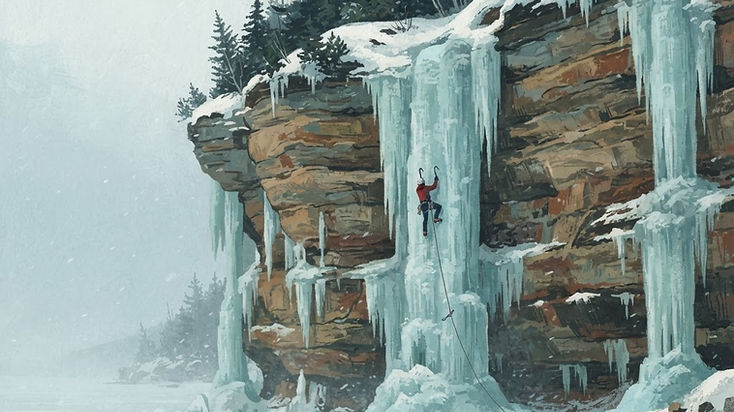
Ice climbing involves ascending frozen waterfalls, ice formations, or specially constructed ice walls using specialized climbing equipment.
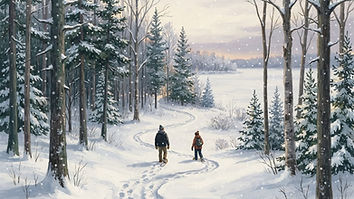
Unlike hiking, where the goal is to follow a trail across the landscape, ice climbing requires technical movement on steep or vertical frozen surfaces.
Climbers commonly use ice tools for their hands and crampons attached to their boots to gain purchase on the ice.
Ropes, harnesses, helmets, anchors, and other protective equipment are essential parts of the activity.
There are several types of ice climbing experiences.
Artificial ice climbing: Specially constructed walls or towers are covered in ice, creating a more controlled setting for instruction and practice.
Natural ice climbing: Climbers ascend naturally frozen waterfalls, ice columns, and other formations outdoors.
Mixed climbing and dry-tooling: These disciplines involve climbing on combinations of rock and ice, or using ice tools on specialized non-ice training surfaces.
For someone who has never climbed before, the differences may seem small.
In practice, they involve different terrain, equipment considerations, and skills.
That's why learning from an experienced instructor is so important.
Peabody Ice Climbing — Fenton, Michigan
One of the most interesting places to discover ice climbing in Michigan is Peabody Ice Climbing near Fenton.
Located at 12326 Foley Road, Peabody operates a specialized ice and mixed-climbing venue on a former apple orchard.
Instead of requiring beginners to travel deep into the Upper Peninsula, the facility offers a place to become familiar with climbing equipment, movement, and instruction much closer to Metro Detroit.
Its winter setup includes two ice towers, approximately 45 and 72 feet tall, along with mixed-climbing and dry-tooling facilities.
The venue also has a heated clubhouse and equipment rentals.
Peabody advertises instruction from an American Mountain Guides Association-certified instructor and welcomes beginners. Previous belaying experience is recommended, but the operator does not describe it as an absolute prerequisite.
That makes it a particularly interesting starting point for people who are curious about the sport but aren't ready to plan a remote winter climbing expedition.
Your first visit should be about learning rather than trying to climb the tallest wall.
An introductory experience may involve becoming familiar with the equipment, understanding rope and belay procedures, practicing movement, and climbing under supervision.
The exact experience depends on the instructor, facility operations, and conditions.
Peabody publishes day-pass and equipment-rental options, but prices, instruction availability, and operating hours can change.
Know before you go: Ice towers are seasonal. A venue may be open for dry-tooling or training even when its ice walls aren't ready for climbing. Confirm the current activity, availability, reservation requirements, and equipment needs directly with the operator.
Official website: peabodyiceclimbing.com
For someone living in Southeast Michigan, this is the kind of adventure that makes trying something new feel much more realistic.
You can begin learning the sport without making your first experience a multi-day winter expedition.
If Peabody represents an accessible place to learn, Pictured Rocks National Lakeshore represents the extraordinary natural side of Michigan ice climbing.
Located along Lake Superior near Munising, Pictured Rocks is famous for its sandstone cliffs, colorful rock formations, waterfalls, and beautiful shoreline.
During winter, water moving through the porous sandstone can freeze into dramatic ice formations.
Some become vertical columns. Others spread across the cliffs in broad, frozen curtains.
The colors can range from white to blue, green, and yellow, depending on the ice and underlying rock.
It's an incredible transformation.
And unlike a constructed climbing wall, these formations are part of a changing natural environment.
The National Park Service identifies ice climbing as an allowed form of cliff climbing within the park, subject to its rules and site-specific restrictions.
But that does not mean every cliff or frozen waterfall is an appropriate climbing destination.
Some areas are prohibited, some are difficult to reach, and others are exposed to particularly dangerous conditions near Lake Superior.
The National Park Service describes ice formation generally beginning around mid-December, with winter ice often lasting into early April.
Those are seasonal patterns, not guaranteed dates.
Temperature changes, snow, water flow, and weather can alter ice formation and climbing conditions.
Never assume that an ice formation is suitable for climbing simply because it looks frozen.
The inland cliffs near Sand Point are among the best-known ice-climbing locations at Pictured Rocks.
This area lies along Sand Point Road between Munising Falls and Sand Point Beach.
During winter, water freezes into columns and curtains along the sandstone escarpment.
The National Park Service describes formations roughly 20 to 50 feet tall in this area.
Sand Point is also one of the more accessible winter locations within the park because Sand Point Road is plowed.
However, reaching the ice still requires winter walking and careful attention to the road and surrounding terrain.
Visitors should use designated parking areas, including the Sand Point Beach parking lot, rather than parking along Sand Point Road.
The National Park Service describes walking approximately one-quarter to one-half mile back along the road to reach nearby ice formations.
The road is narrow and lacks a usable shoulder in winter, so visitors need to watch for vehicles and slippery surfaces.
Other important restrictions include:
- No pets at the Sand Point ice-climbing locations.
- No camping at climbing sites.
- No fires.
- No parking along Sand Point Road.
The park provides an official ice-climbing and viewing map identifying areas along the inland cliffs.
For a beginner, the best way to experience climbing here is through a properly authorized professional guide.
Know before you go: Check current National Park Service alerts, the latest climbing regulations, weather, and ice conditions. Permission to climb at an established area does not guarantee that a specific route is safe or accessible on your chosen day.
Official resource: Ice Climbing at Pictured Rocks, National Park Service
Miners Falls is another natural ice-climbing location identified by the National Park Service.
In sufficiently cold conditions, the waterfall can form an ice column approximately 40 feet tall.
But getting there during winter is very different from visiting the falls in summer.
The National Park Service describes an approach of approximately three miles by ski or snowshoe from the end of the plowed road near the junction of Carmody and Miners Castle Roads.
That means a winter visit involves much more than the climb itself.
You need to account for snow travel, navigation, cold temperatures, changing daylight, and the return journey.
For beginners, this is not the kind of location to approach independently simply because it appears on a list of Michigan ice-climbing destinations.
A qualified guide or experienced climbing team is essential to making an appropriate decision about the outing.
Know before you go: Confirm the current road closures, access route, applicable climbing rules, and conditions with the National Park Service before planning a trip. Do not confuse the shorter summer waterfall walk with the winter approach.
The Munising area offers additional winter scenery beyond the main Pictured Rocks shoreline.
Grand Island National Recreation Area, administered by the Hiawatha National Forest, is known for dramatic ice curtains.
The National Park Service identifies climbing activity on Grand Island, but reaching its formations involves a separate set of access and safety considerations.
One especially important warning concerns travel across the ice between Sand Point and Grand Island.
Lake currents can create hazardous, unpredictable ice conditions, including thin ice and open water.
Travel across that ice is not recommended.
For visitors interested in Grand Island, the appropriate starting point is researching current Forest Service guidance and legitimate guided access options—not attempting a shortcut across frozen water.
The cliffs directly above Lake Superior also deserve caution.
Although ice can form along those cliffs, the National Park Service does not recommend climbing them because of their hazardous exposure to the lake.
Michigan's winter scenery is remarkable, but there is no reason to turn a sightseeing trip into an unnecessary risk.
This is one of the most important distinctions in the entire guide.
A frozen waterfall can be beautiful without being an appropriate or permitted place to climb.
Michigan has many winter waterfall destinations worth exploring purely for the scenery.
Tahquamenon Falls in the eastern Upper Peninsula is an outstanding winter sightseeing destination.
The park offers winter recreation opportunities, including designated skiing and snowshoeing routes, and views of the falls from authorized areas.
Visitors can experience snow-covered forests and dramatic winter scenery without climbing the waterfall.
Stay on maintained or authorized routes, follow current park notices, and remember that some connecting trails are not maintained in winter.
Munising Falls has historically been a popular location for winter waterfall viewing.
However, the National Park Service closed the trail after significant washout damage in April 2025, when approximately 75 feet of the paved path washed out.
As of this writing, the park lists the trail as closed until further notice, with no reopening date announced, and travel in the Munising Falls area is strictly prohibited.
Until the National Park Service announces reopening, visitors should not plan to access the waterfall overlook.
Ice climbing at Munising Falls is prohibited regardless of the trail's reopening status.
For visitors who want to see dramatic ice formations without climbing, the inland cliffs near Sand Point can offer a memorable experience when winter conditions allow.
The National Park Service provides viewing guidance and an official map.
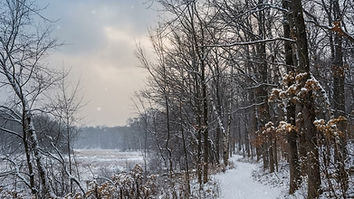
Expect snow, slippery ground, and uneven winter travel. Ice cleats may be necessary, and snowshoes may help after heavy snowfall.
Viewing an ice formation is not permission to climb it, enter a restricted area, or walk onto lake ice.
Ice climbing requires more specialized equipment than ordinary winter hiking.
Some of the major equipment categories include:
Helmet: Protects against impacts and falling debris, including ice.
Harness: Connects the climber to the rope and protection system.
Ice tools: Designed for movement and support on steep ice.
Crampons: Specialized traction devices attached to compatible boots for climbing frozen surfaces.
Climbing boots: Footwear suited to the activity and compatible with the required crampons.
Ropes and belay equipment: Used as part of a properly managed climbing protection system.
Technical protection and anchors: Used by trained climbers and guides according to the climbing environment.
Winter clothing: Insulating layers, weather protection, gloves, and other equipment suitable for cold conditions.
The equipment is only part of the equation.
Knowing how to use it properly is essential.
For a first experience, renting appropriate equipment through a legitimate climbing facility or guide is often more practical than purchasing an entire technical climbing setup.
Don't buy expensive specialized gear before understanding what your instructor recommends.
Ice climbing difficulty varies widely.
A beginner-friendly instructional experience on a supervised ice wall is very different from a long natural ice route with a remote approach.
Climbing grades may describe the steepness, technical demands, and sustained difficulty of a route, but they do not capture every hazard.
A route that appears manageable on paper can become significantly more serious because of unstable ice, weather, poor visibility, difficult access, or the experience of the climbing team.
For your first outing, focus on finding appropriate instruction rather than choosing a particular grade.
A qualified instructor can evaluate the setting, introduce essential skills, and help you understand whether the activity is right for you.
If ice climbing sounds interesting, here's how I would approach planning that first experience.
Look for an established climbing facility or a qualified guide who offers beginner instruction.
Ask what experience is required, what equipment is provided, and how the outing is supervised.
A controlled training venue is a very different undertaking from a remote natural waterfall.
If you've never used climbing equipment, starting with instruction is the sensible choice.
Ice climbing depends on actual winter conditions.
A destination may be open for other activities before its ice formations are ready.
Check with the operator or managing agency rather than relying on an article's publication date.
For Upper Peninsula destinations, consider the driving distance, winter road access, approach on foot or snowshoes, weather exposure, and daylight.
The journey to the climb can be a significant part of the adventure.
At Pictured Rocks, commercial guided climbing is subject to National Park Service authorization requirements.
Use the park's current list of authorized guiding businesses when planning a guided trip.
Winter weather changes.
If climbing conditions aren't appropriate, consider a permitted scenic viewing location, a guided snowshoe outing, or another winter activity.
The goal is to enjoy Michigan outdoors, not force a particular plan when conditions don't support it.
| Destination | Experience | Best Suited For |
|---|
| Peabody Ice Climbing, Fenton | Constructed ice towers, instruction, dry-tooling | Beginners and training |
| Sand Point, Pictured Rocks | Natural ice columns and curtains | Guided beginners and experienced climbers, depending on route and conditions |
| Miners Falls, Pictured Rocks | Natural ice formation with a longer winter approach | Experienced teams or appropriately guided outings |
| Grand Island | Remote natural ice formations | Experienced, properly equipped parties with verified access |
| Tahquamenon Falls | Winter waterfall viewing | Scenic winter visitors; not presented as an ice-climbing destination |
| Munising Falls | Trail closed; climbing prohibited | Not currently a visitor-accessible waterfall destination |
This table describes general opportunities and restrictions, not real-time climbing conditions or guaranteed availability.
Yes. Specialized facilities such as Peabody Ice Climbing advertise beginner instruction, and authorized guides may offer introductory experiences around Pictured Rocks. Confirm current programs before booking.
Not necessarily. Some climbing facilities and guides provide rental or included equipment. Confirm exactly what is supplied and what you must bring.
Peabody Ice Climbing near Fenton is a specialized venue worth investigating for introductory instruction. Confirm that ice climbing, rather than only dry-tooling, is available on your intended date.
Natural ice generally develops during sustained winter cold. At Pictured Rocks, the National Park Service describes a typical formation period beginning around mid-December and sometimes extending into early April. Conditions vary considerably.
Ice climbing is allowed in certain areas, subject to park regulations. Sand Point and Miners Falls are identified climbing locations. Munising Falls is prohibited, and some exposed Lake Superior cliffs are not recommended.
No trip should be planned around assuming the lake ice is safe. The National Park Service specifically warns against travel across the ice between Sand Point and Grand Island because of hazardous conditions.
Absolutely. Winter waterfall and ice-curtain viewing can be an adventure in its own right. Choose locations with authorized access, follow posted restrictions, and use appropriate winter traction and clothing.
One of the things I enjoy most about exploring Michigan is realizing how many different adventures are available without leaving the state.
The same landscape can offer completely different experiences depending on the season.
A waterfall that attracts photographers in summer can become a towering wall of ice in winter.
A forest trail that feels familiar in October can become a snow-covered route that requires a completely different set of skills and equipment.
And sometimes, discovering a new activity is enough to make you see the outdoors differently.
Ice climbing won't be for everyone.
It requires preparation, instruction, respect for changing conditions, and a willingness to learn.
But for someone looking for a new Michigan winter adventure, it offers an opportunity to experience the season in a way that most people never consider.
You don't need to begin on a remote frozen waterfall.
You can start by learning what the sport involves, visiting a reputable training venue, or simply exploring the extraordinary ice formations that Michigan winters create.
The important part is knowing your limits, respecting the places you visit, and choosing an experience that fits your ability.
Keep exploring Michigan. There's an entirely different world waiting when winter arrives.