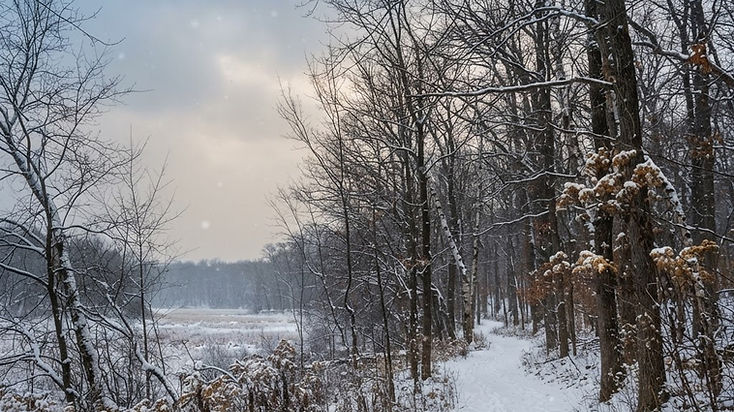
These recommendations prioritize scenic winter landscapes, established hiking access, and practical route choices. Difficulty depends on snow, ice, temperature, and trail maintenance.
Location: Milford / Brighton area
Best for: Short scenic nature walks
Kensington is one of the most approachable places to enjoy a winter walk near Milford.
The Nature Center's Deer Run and Aspen trails are each 1.5 miles, with shorter options available.
Forests, wetlands, and boardwalks create a beautiful winter landscape.
Winter tip: Nature trails are not cleared or salted. Watch for icy boardwalks, and keep off designated groomed ski trails.
Location: Commerce Township
Best for: Peaceful woodland hiking
With approximately 3,000 acres and an extensive trail network near the Huron River, Proud Lake offers an appealing winter escape.
The mix of forest, open spaces, and river scenery is particularly attractive after fresh snowfall.
Winter tip: Choose designated hiking trails using the DNR map; the park also accommodates equestrians, cyclists, and other winter users.
Location: Brighton
Best for: Varied terrain and longer hikes
Island Lake's 5-mile Hickory Ridge Hiking Trail winds through varied habitats and offers shorter-loop options.
If you prefer a less rugged outing, the park also has a paved connection toward Kensington.
Winter tip: Check conditions before attempting the longer natural-surface route. Shared cycling trails require extra awareness.
Location: Dexter
Best for: A more predictable winter walking surface
Hudson Mills offers a 3-mile paved hike-bike loop with views of the Huron River.
The Metroparks reports that this trail is cleared and salted in winter, making it a particularly practical choice after snowfall.
The 2-mile Acorn Nature Trail offers a quieter alternative.
Winter tip: Choose the paved loop when trail maintenance matters most. The Acorn Trail is not cleared or salted.
Location: Northville
Best for: Wooded trails and rolling hills
Maybury combines open meadows, wooded trails, and rolling terrain across approximately 1,000 acres.
It's a good destination when you want a hike that feels removed from suburban streets without traveling far from Metro Detroit.
Winter tip: The DNR permits snowshoeing and asks users to avoid damaging groomed ski tracks. Follow hiking signs and check trail renovation notices.
Location: White Lake
Best for: Wetlands and quieter nature trails
Indian Springs has relatively level gravel nature trails, woodland routes, and boardwalks through wetland areas.
The 1.5-mile Farmland Trail passes old fields and wooded areas, offering a distinctive winter landscape.
Winter tip: Natural trails are not cleared or salted; choose a shorter route if conditions are icy.
Location: Shelby Township / Washington Township
Best for: Lake views and route variety
Stony Creek has several kinds of trails, from shorter fitness loops near Eastwood Beach to wooded Trolley Trails and more rugged Inwood trails.
Winter tip: For an easier outing, start with a shorter designated walking route. The rustic Inwood trails can be slippery, narrow, and uneven. Some Nature Center trails have been affected by construction, so verify access.
Location: Clarkston
Best for: Lake and forest scenery
Independence Oaks offers more than 12 miles of natural and paved trails around Crooked Lake and surrounding woodlands.
It's a strong choice for a quiet winter outing, with several route combinations.
Winter tip: Use the dedicated winter trail map and respect any ski-specific trail designations.
Location: Northern Oakland County
Best for: A more adventurous winter walk
Addison Oaks offers an extensive trail network, wooded scenery, and the Buhl Lake area.
Winter hiking is supported on ungroomed trails, while a separate groomed multi-use system serves fat-tire biking.
Winter tip: Consult the winter map to avoid conflicts with cyclists and other trail users.
Location: Lyon Township
Best for: A local nature walk
Lyon Oaks is one of the Oakland County parks specifically identified for winter hiking and snowshoeing on ungroomed trails.
It's a useful alternative when you want a less elaborate outing rather than a full-day excursion.
Winter tip: Expect natural winter surfaces rather than maintained pavement, and check the park map before choosing your route.
Location: Orion Township
Best for: A quiet, flexible winter hike
Orion Oaks is another Oakland County destination where ungroomed trails can be used for winter hiking and snowshoeing.
It offers an alternative to the busier Metroparks and larger state recreation areas.
Winter tip: Verify trail access and parking before visiting, especially after a significant snowfall.
Location: Near Holly
Best for: A quieter woodland escape
Rose Oaks rounds out the list with another established Oakland County winter hiking destination.
Its ungroomed trails are suitable for visitors seeking a natural winter setting rather than a heavily maintained walking route.
Winter tip: Bring traction appropriate to conditions and plan a route that allows you to return well before dark.
Not every winter outing needs to be a challenging hike.
Sometimes the best choice is a short walk with reliable footing, a scenic destination, and somewhere warm to go afterward.
| Your Goal | Recommended Destination |
|---|
| A relatively well-maintained paved route | Hudson Mills' paved loop |
| A short nature walk near Milford | Kensington's Deer Run Trail |
| A longer woodland adventure | Island Lake's Hickory Ridge Trail |
| Wetlands and winter wildlife | Indian Springs |
| Lake and forest scenery | Independence Oaks |
| A quieter, natural-surface outing | Rose Oaks or Lyon Oaks |
For someone new to winter hiking, I'd start with Hudson Mills or Kensington.
Both offer shorter, well-defined options.
Hudson Mills' paved loop is particularly useful because the park reports winter clearing and salting, although ice can still develop.
A trail that feels easy in September can be surprisingly challenging in January.
Snow hides roots, rocks, and uneven ground.
Repeated melting and freezing can create patches of hard ice.
Wooden boardwalks become slippery, while exposed areas can feel significantly colder when the wind picks up.
The biggest adjustment is learning to plan around conditions rather than distance alone.
A few inches of fresh snow can make familiar trails beautiful.
Deep or wet snow, however, increases effort and can slow your pace considerably.
For deeper snow, snowshoes may be more useful than ordinary hiking boots, provided they're permitted on your chosen route.
Ice is often the more difficult winter hazard.
Use winter footwear with suitable traction, and consider removable traction devices when conditions warrant.
Even with traction, avoid steep or exposed icy areas where a fall could be serious.
Winter days are shorter, and wooded areas can grow dark earlier than expected.
Choose a realistic turnaround time and carry a headlamp, even if you're planning to finish before sunset.
Many parks accommodate hiking, cross-country skiing, snowshoeing, and fat-tire cycling.
A hiking trail isn't necessarily a ski trail, and vice versa.
Avoid walking in groomed ski tracks, follow posted restrictions, and yield appropriately to other users.
The Huron-Clinton Metroparks instructs visitors to use designated hiking routes rather than ski trails or golf courses.
A successful winter hike often comes down to wearing the right clothing.
You don't necessarily need expensive mountaineering equipment for a short park walk, but staying warm and dry matters.
- Base layer: Moisture-wicking clothing rather than cotton against your skin.
- Insulating layer: Fleece or another warm midlayer.
- Outer layer: Wind-resistant or waterproof jacket as conditions require.
- Footwear: Water-resistant winter boots with good traction.
- Accessories: Warm socks, gloves, and a hat.
- Essentials: Water, snacks, charged phone, offline map, and headlamp.
Dress in layers that you can adjust as your body warms up.
Sweating heavily and then stopping in cold weather can leave you chilled.
For a relaxed weekend outing, you don't need a complicated itinerary.
- Before leaving: Check the weather, wind chill, park access, and trail conditions.
- First 10 minutes: Start slowly, assess footing, and adjust clothing.
- Next 40–50 minutes: Explore a short loop or out-and-back trail, stopping to enjoy the landscape.
- Final 20–30 minutes: Return without rushing, allowing extra time for icy sections.
- Afterward: Change out of damp clothing and warm up with a drink or meal.
If the trail is unexpectedly icy or conditions deteriorate, shorten the outing.
There's no need to finish a planned loop simply because you started it.
Winter hiking is enjoyable, but cold weather changes the consequences of getting delayed or injured.
Tell someone where you're going and when you expect to return.
Carry a charged phone, but don't assume you'll have reliable reception everywhere.
Pay attention to cold-related warning signs such as persistent shivering, confusion, loss of coordination, or numbness.
Seek shelter and medical help when needed.
Never walk onto frozen lakes, ponds, or rivers just because they appear solid.
Ice thickness and strength can vary considerably, especially around currents and inlets.
At state recreation areas such as Proud Lake and Island Lake, hunting is among the permitted activities.
Review seasonal hunting information and consider wearing visible clothing when appropriate.
Most importantly, check conditions on the day of your hike.
A trail's reputation as beginner-friendly doesn't override ice, storms, closures, or dangerous temperatures.
Yes. Many Michigan state parks and recreation areas offer year-round hiking opportunities.
Some trails have seasonal restrictions or shared uses, so check the individual park's current guidance.
Hudson Mills' 3-mile paved loop is a practical choice because the Metroparks reports winter clearing and salting.
Kensington's shorter nature trails are also appealing, although they aren't cleared or salted and can be icy.
Not always.
For packed or lightly snow-covered trails, suitable winter boots may be enough.
Snowshoes become more useful in deeper snow, while traction devices may be better for icy conditions.
Some paved hike-bike paths are cleared, but natural-surface hiking trails often are not.
Never assume a specific trail is maintained without checking its park's information.
It depends on the park and trail.
Some shared-use paths permit leashed dogs, while designated nature trails at Metroparks may prohibit pets.
Review the rules for your exact route before visiting.
Michigan state parks and recreation areas generally require a Recreation Passport for vehicle entry.
Metroparks and Oakland County Parks have their own admission arrangements.
Confirm current requirements before traveling.
Winter changes the landscape, but it doesn't make Michigan's outdoor destinations any less interesting.
The same trails that draw hikers in summer offer a completely different experience beneath bare branches, frosted wetlands, and fresh snow.
You don't need a long drive, an elaborate expedition, or perfect weather to enjoy the season.
Start with a familiar park.
Choose a trail that matches the conditions.
Dress appropriately and give yourself time to explore.
You might discover that some of your favorite Michigan hiking experiences happen during the months when most people stay inside.
To keep planning, these guides pair well with this one: 15 Incredible Hiking Trails in Southeast Michigan Worth Exploring, The Ultimate Guide to Proud Lake Recreation Area, The Best Weekend Outdoor Adventures in Southeast Michigan, 15 of the Best Hiking Trails in Michigan Worth Exploring, and Winter Camping in Michigan.
Keep exploring Michigan. Adventure doesn't have an off-season.