| Interest | Recommended museum |
|---|
| Famous shipwrecks | Great Lakes Shipwreck Museum |
| World War II submarines | USS Silversides |
| Interactive shipwreck exhibits | Great Lakes Maritime Heritage Center |
| Historic sailing | Michigan Maritime Museum |
| Detroit shipping history | Dossin Great Lakes Museum |
| Car ferries and Coast Guard history | Port of Ludington Maritime Museum |
| Lighthouse and Lake Superior history | Marquette Maritime Museum |
Location: Whitefish Point, near Paradise, Michigan
Region: Upper Peninsula
Great Lake: Lake Superior
Few places capture the power and tragedy of the Great Lakes quite like Whitefish Point.
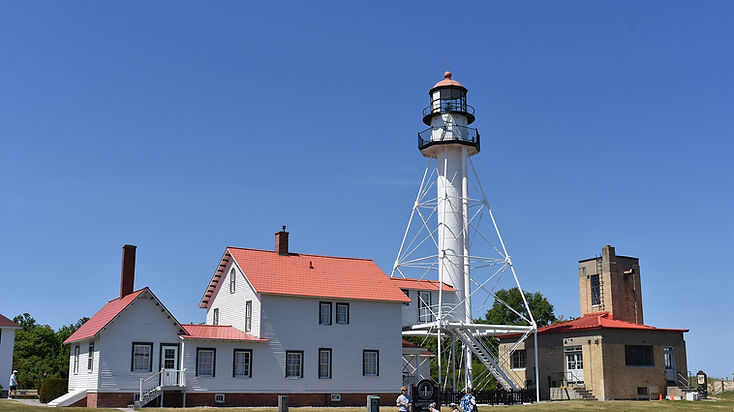
Located on Lake Superior's southeastern shore, the Great Lakes Shipwreck Museum occupies part of a historic light-station campus overlooking waters notorious for dangerous storms and shipwrecks.
The museum's most recognizable artifact is the original bell from the Edmund Fitzgerald, the freighter that sank during a storm on November 10, 1975, taking all 29 crew members with her.
Standing before that bell is a reminder that shipwreck history isn't just about lost vessels. It's about the sailors, families, and communities whose lives were forever changed.
Beyond the museum gallery, visitors can explore historic lifesaving buildings and learn how lighthouse keepers and rescue crews worked to protect mariners along this treacherous coastline.
The Whitefish Point Light has operated since 1861, adding another dimension to the experience.
Why visit: The combination of shipwreck artifacts, lighthouse history, and the dramatic Lake Superior shoreline makes this one of Michigan's most meaningful maritime destinations.
Planning tip: The museum operates seasonally, generally May through October. Check the official schedule before traveling to this remote Upper Peninsula location.
Official website:
shipwreckmuseum.com
Location: Muskegon, Michigan
Region: West Michigan
Great Lake: Lake Michigan
Imagine stepping into a submarine where sailors once lived, worked, and fought beneath the Pacific Ocean during World War II.
At the USS Silversides Submarine Museum in Muskegon, that history becomes tangible.
The centerpiece is the USS Silversides (SS-236), a preserved Gato-class submarine and National Historic Landmark. It is one of the most successful American submarines of World War II.
A visit offers a remarkable perspective on the conditions submarine crews endured: confined spaces, complex machinery, limited privacy, and the constant demands of life at sea.
The museum also includes exhibits on World War II, military service, submarine technology, and the experiences of those who served.
The vessel underwent a major dry-dock restoration in 2026 and returned to Muskegon in early November, adding a new chapter to its preservation story.
Why visit: Few historical experiences compare with seeing an authentic World War II submarine up close.
Planning tip: Submarine access may involve narrow passages and steep ladders. Confirm vessel-tour availability and accessibility before visiting.
Official website:
silversidesmuseum.org/visit
Location: Alpena, Michigan
Region: Northeast Lower Peninsula
Great Lake: Lake Huron
If you love shipwrecks but don't scuba dive, Alpena offers one of Michigan's most accessible ways to explore the underwater world.
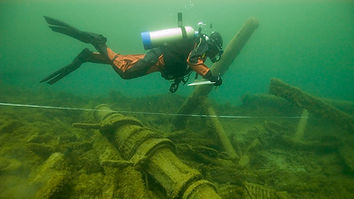
The Great Lakes Maritime Heritage Center is the visitor center for NOAA's Thunder Bay National Marine Sanctuary, an area known for its extraordinary concentration of historic shipwrecks.
Inside, visitors can explore interactive exhibits about Great Lakes shipping, maritime archaeology, and the dangers of navigation.
One memorable experience is a life-size schooner exhibit designed to convey the power of a Lake Huron storm. Other displays help visitors imagine what divers and researchers encounter beneath the surface.
The center also introduces visitors to the work of preserving shipwrecks as historical and archaeological resources.
Why visit: It's an especially good destination for families, history enthusiasts, and anyone curious about shipwreck exploration.
Planning tip: The heritage center offers free admission. Glass-bottom shipwreck tours are a separate activity and depend on seasonal schedules and availability.
Official website:
thunderbay.noaa.gov
Location: South Haven, Michigan
Region: Southwest Michigan
Great Lake: Lake Michigan
South Haven's Michigan Maritime Museum offers something especially appealing: the opportunity to experience Great Lakes history both inside museum exhibits and out on the water.
The waterfront campus explores shipbuilding, passenger steamships, commercial fishing, lifesaving, and the vessels that connected Michigan communities.
One of its signature attractions is Friends Good Will, a replica early-19th-century merchant sloop. During the sailing season, the vessel offers experiences that introduce visitors to traditional sailing and the work of a historic crew.
Instead of simply reading about Michigan's maritime past, you can experience a small part of what sailing under canvas might have felt like.
The museum also maintains historic and replica vessels and exhibits focused on the people who worked the Great Lakes.
Why visit: It's a particularly good choice for visitors who want an active, hands-on maritime experience rather than a traditional indoor museum alone.
Planning tip: Vessel sails require separate reservations and depend on weather and seasonal operations.
Official website:
michiganmaritimemuseum.org
Location: Belle Isle, Detroit, Michigan
Region: Southeast Michigan
Waterway: Detroit River
Detroit's connection to the Great Lakes is much deeper than its waterfront skyline.
For generations, the Detroit River has been a major shipping corridor connecting the upper Great Lakes with Lake Erie and destinations beyond.
The Dossin Great Lakes Museum on Belle Isle brings that history to life.
Among its notable exhibits is the restored pilot house of the freighter William Clay Ford, offering visitors a sense of the captain's perspective while navigating the waterways.
The museum also preserves the Gothic Room from the passenger steamer City of Detroit III, the championship hydroplane Miss Pepsi, and an anchor associated with the Edmund Fitzgerald.
These exhibits reveal how the Great Lakes supported commerce, recreation, passenger travel, and the growth of Detroit itself.
Why visit: It's an accessible introduction to Great Lakes maritime history for visitors in Southeast Michigan, and a natural addition to a day exploring Belle Isle.
Planning tip: The museum has limited weekly operating days, and vehicles entering Belle Isle generally need a Michigan Recreation Passport or applicable entry pass. Check both before visiting.
Official website:
detroithistorical.org
Location: Ludington, Michigan
Region: West Michigan
Great Lake: Lake Michigan
Ludington's maritime story is closely tied to car ferries, commercial shipping, lighthouses, and the Coast Guard.
The Port of Ludington Maritime Museum occupies a former U.S. Coast Guard station near the harbor.
Inside, three floors of exhibits explore the ships and people that made Ludington an important Great Lakes transportation center.
One of the highlights is an interactive pilothouse simulator where visitors can experience navigating the historic car ferry Pere Marquette 22 into Ludington Harbor.
Other exhibits explore the SS Badger, lighthouse technology, rescue operations, and the devastating Armistice Day Storm of 1940.
The museum's location near the harbor also makes it easy to connect the exhibits with the waterfront that inspired them.
Why visit: It's an excellent choice for anyone interested in historic transportation, Coast Guard operations, or interactive maritime exhibits.
Planning tip: The museum has a seasonal operating calendar, so verify open days before making the trip.
Official website:
masoncountymihistory.org
Location: Marquette, Michigan
Region: Upper Peninsula
Great Lake: Lake Superior
Marquette's maritime history reflects the power of Lake Superior and the industries that depended on it.
The Marquette Maritime Museum explores shipwrecks, lifesaving services, lighthouse technology, and the vessels that navigated these challenging waters.
One of its distinctive collections features Fresnel lighthouse lenses, remarkable examples of the optical engineering that allowed lights to be seen far across the water.
The museum also interprets famous Lake Superior wrecks, including the Edmund Fitzgerald and Henry B. Smith.
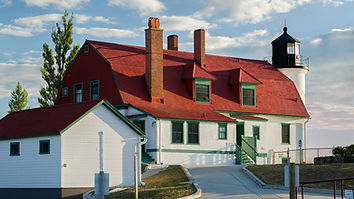
Visitors can complement the museum with a guided tour of the nearby Marquette Harbor Lighthouse when tours are operating.
Why visit: It combines maritime history, engineering, shipwreck stories, and a memorable Lake Superior setting.
Planning tip: Museum and lighthouse tours are seasonal, and lighthouse access may require reservations and stair climbing.
Official website:
mqtmaritimemuseum.com
Michigan's maritime museums are spread across both peninsulas, so choosing a region makes the most sense for most visitors.
Dossin Great Lakes Museum — Detroit
A convenient destination for Southeast Michigan visitors interested in commercial shipping, Detroit's maritime history, and Belle Isle.
Great Lakes Maritime Heritage Center — Alpena
An excellent choice for shipwreck history, interactive exhibits, and exploring the Thunder Bay National Marine Sanctuary region.
Michigan Maritime Museum — South Haven
A strong choice for historic sailing experiences and waterfront exploration.
USS Silversides Submarine Museum — Muskegon
A memorable destination for military history and an authentic World War II submarine.
Port of Ludington Maritime Museum — Ludington
A destination for Great Lakes car ferry history, Coast Guard heritage, and interactive exhibits.
Marquette Maritime Museum — Marquette
A destination for lighthouse technology, Lake Superior shipwrecks, and maritime heritage.
Great Lakes Shipwreck Museum — Whitefish Point
A powerful destination for understanding Lake Superior shipwreck history and the legacy of the Edmund Fitzgerald.
If you're most interested in famous shipwrecks and the Edmund Fitzgerald, start with the Great Lakes Shipwreck Museum at Whitefish Point.
If World War II and submarines fascinate you, visit USS Silversides in Muskegon.
For interactive shipwreck exhibits and family-friendly maritime history, consider the Great Lakes Maritime Heritage Center in Alpena.
For traditional sailing experiences, explore the Michigan Maritime Museum in South Haven.
For Detroit's shipping history and Great Lakes commerce, visit the Dossin Great Lakes Museum.
For car ferries and Coast Guard history, explore the Port of Ludington Maritime Museum.
And for lighthouses and Lake Superior history, visit the Marquette Maritime Museum.
A little preparation can make a big difference when visiting maritime museums, particularly in Michigan's more remote coastal regions.
Check operating schedules before leaving home. Several museums are seasonal, while others operate on reduced winter schedules. Special events, restoration projects, and weather can also affect access.
If you want to board a historic ship, submarine, or lighthouse, verify that experience separately from general museum admission. Vessel tours may involve ladders, narrow doorways, uneven surfaces, or other accessibility limitations.
For families, look for interactive exhibits and ship tours that suit the ages and interests of your group. And if you're traveling across the Upper Peninsula, consider building additional time into the trip to enjoy the lakeshore rather than treating the museum as a quick stop.
Michigan's maritime history is about far more than ships.
It's about the people who crossed dangerous waters to deliver goods, the families waiting for their return, the engineers who designed vessels and navigation systems, and the rescue crews who went into storms when others were trying to escape them.
It's also about the Great Lakes themselves: enormous bodies of freshwater that can appear peaceful one moment and become unforgiving the next.
These museums preserve the evidence of that history and make it possible for new generations to understand how deeply the lakes shaped Michigan.
You don't need to be a scuba diver, sailor, or historian to appreciate them. You just need a little curiosity about what lies beyond the shoreline.
And once you begin exploring, you'll discover that every harbor, lighthouse, and shipwreck has another story waiting to be told.